A beginner-friendly guide to mapping raised beds for sunlight, airflow, drainage, and easy access. Get practical spacing rules and orientation tips that actu...
Veg Loom
October 17, 2026
By Maggie O'Connell
5 Easy DIY Trellis Systems for Raised Beds
Build sturdy, space-saving trellises right inside your raised beds with simple materials like cattle panels, conduit, twine, and bamboo. Great for tomatoes, cucumbers, peas, and beans.

Maggie O'Connell
Maggie O'Connell is a lifelong gardener and the voice behind Vegloom, dedicated to helping people grow their own food regardless of their yard size. With over 15 years of hands-on experience in backyard agriculture, she specializes in raised bed gardening, organic soil building, and seasonal planting calendars. When she isn't writing, Maggie can usually be found tending to her sprawling heirloom tomatoes or experimenting with new compost recipes.
Climbing vegetables are some of the most generous plants in the garden, as long as you give them something dependable to grab onto. In raised beds, a good trellis does three big jobs at once: it saves space, improves airflow (hello, fewer mildew problems), and makes harvesting feel like a pleasant stroll instead of a jungle expedition.
Below are five DIY trellis systems I have used, tweaked, or borrowed from fellow gardeners over the years. They are beginner-friendly, sturdy, and designed to be installed inside raised beds so your vines stay where you want them.
Before you build: quick checks
Take two minutes to plan and you will avoid the classic midsummer heartbreak of a trellis that leans, snaps, or pulls out of the bed after a thunderstorm.
- Match the trellis to the crop. Peas and pole beans are light climbers. Cucumbers get surprisingly heavy. Indeterminate tomatoes can grow into tall, heavy vines that need frequent tying and pruning no matter what system you use.
- Anchoring matters more than materials. A simple trellis that is well-anchored will outlast a fancy one that is only zip-tied to the bed rail.
- Mind the bed width. In a 4-foot-wide bed, a center trellis can shade one side. I like trellises on the north side of a bed (in the Northern Hemisphere) so they do not block sun from shorter crops.
- Use soft ties. Old T-shirt strips, tomato clips, or soft garden tape is better than thin string that can cut stems.
1) Cattle panel arch
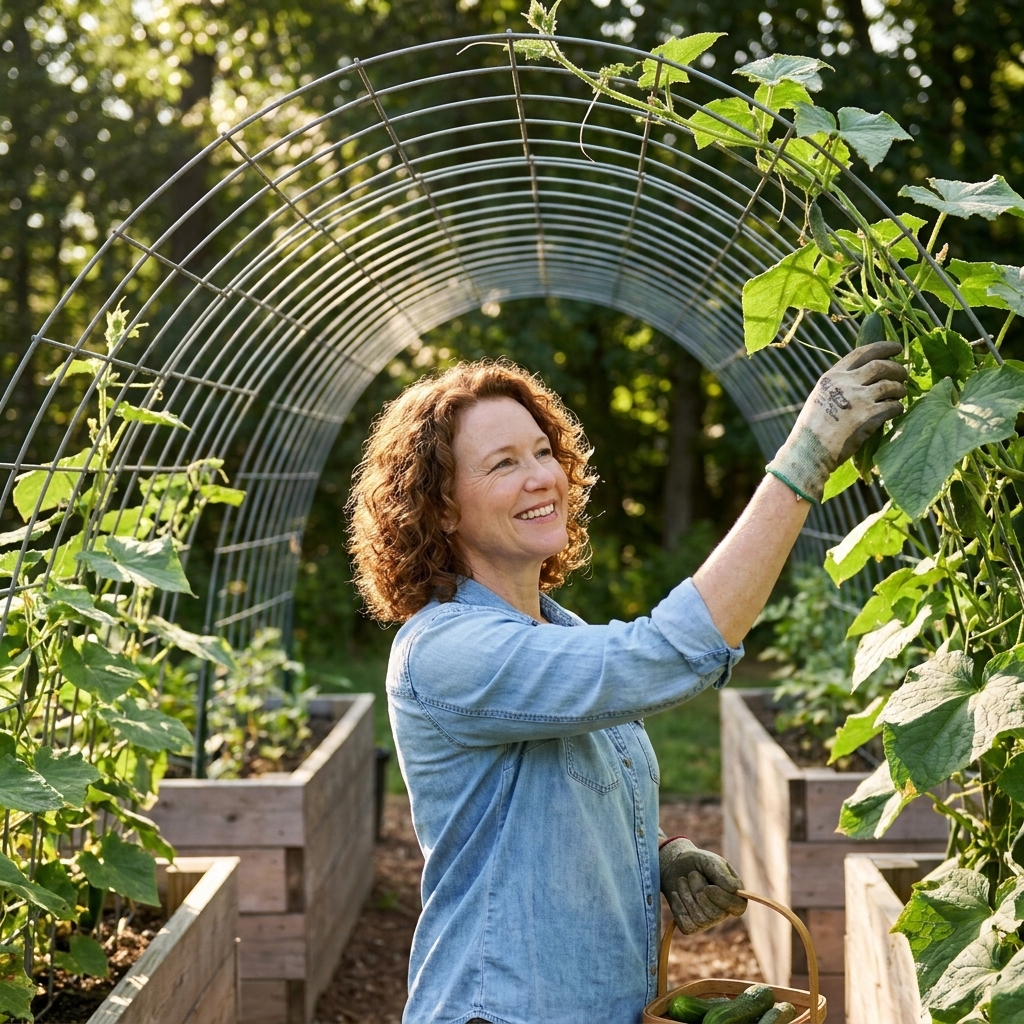
If you grow cucumbers, pole beans, or small winter squash, a cattle panel arch is one of the most satisfying upgrades you can make. It is strong, long-lasting, and turns harvesting into a stand-up job instead of a crawl.
Best for
Cucumbers, pole beans, peas, mini pumpkins, delicata squash (train early), and even cherry tomatoes if you prune and tie.
Materials
- 1 cattle panel (often 16 ft long by 50 to 52 in tall)
- 4 to 6 heavy-duty U-posts or T-posts or 2x2 wood stakes (for lighter loads)
- Zip ties or fence clips (optional)
- Work gloves (those cut wire ends are no joke)
- Optional: safety glasses, especially when cutting or bending wire
Build steps
- Position your beds. This works best spanning two raised beds with a path in between, but you can also span the long edges of one wide bed if you have the space.
- Pound in posts. Place two posts on each side, about 12 to 24 inches in from each end of where the arch will sit. Sink them deep so they do not wobble.
- Bend and attach the panel. With a helper, bow the cattle panel into an arch and secure it to the posts with fence clips or zip ties. Go slowly. Panels can spring back if you lose your grip.
- Plant at the base. Plant climbers on both sides and guide the first few tendrils upward.
Maggie tip: If your cucumbers drop fruit on the inside of the arch, tuck a piece of cardboard in your harvest bucket. It cushions the inevitable “thunk” cucumbers make when you miss one hidden in the leaves.
2) EMT conduit A-frame
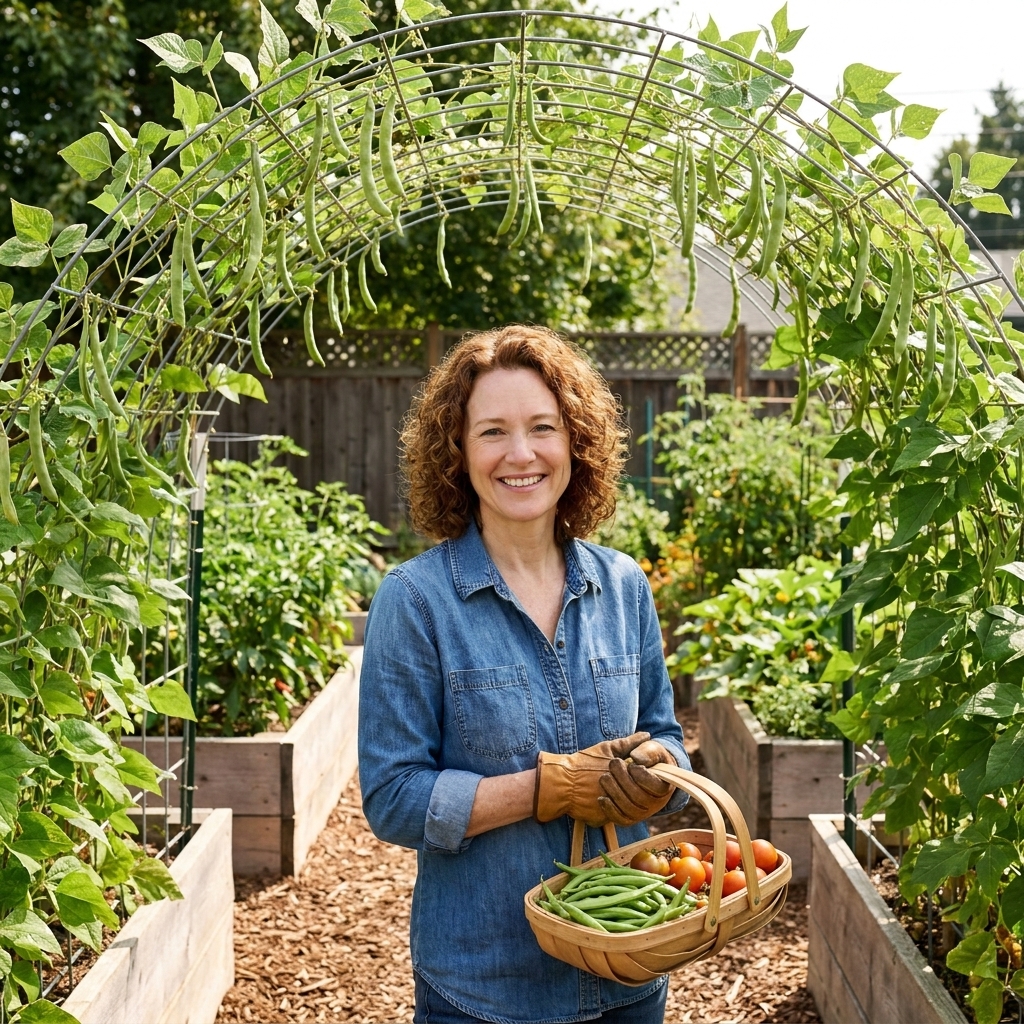
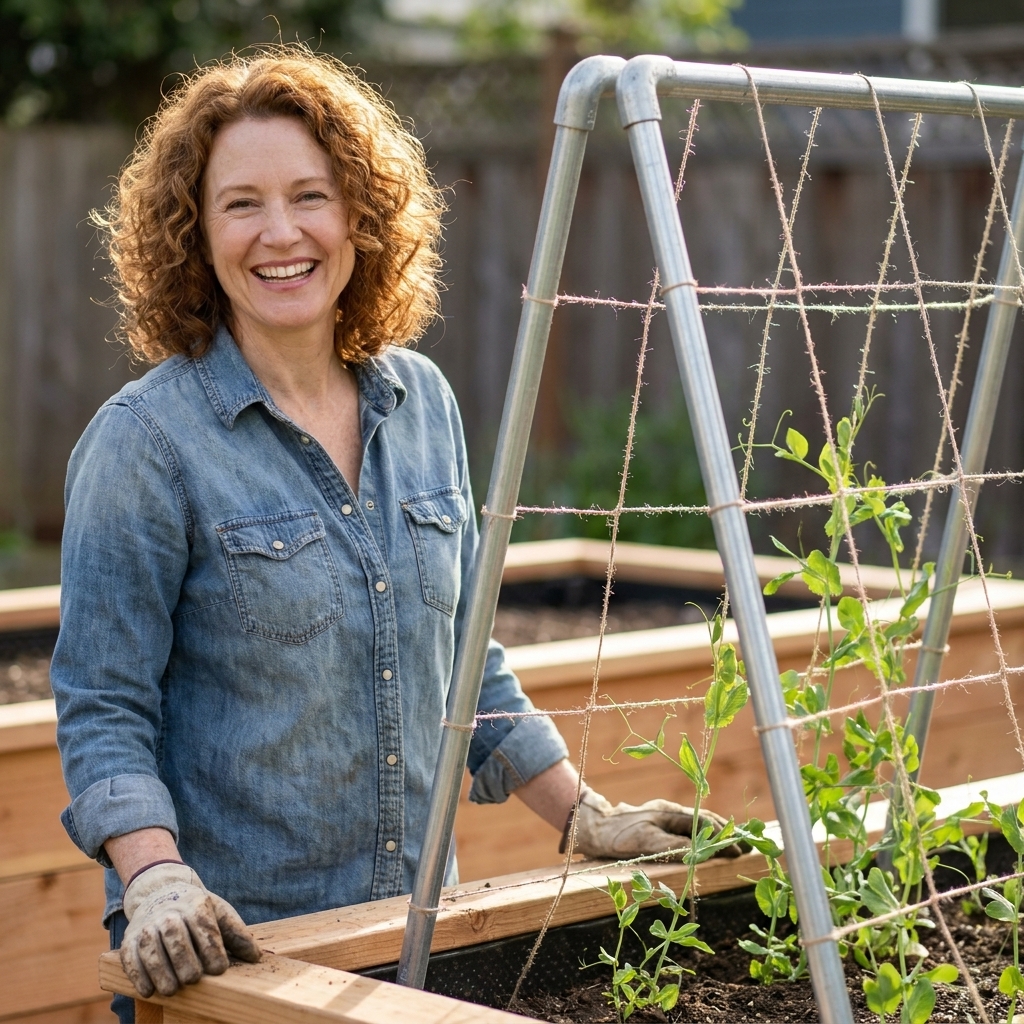
This is my favorite “clean lines” trellis. EMT conduit (the metal pipe used for electrical) is often reasonably priced, easy to cut, and looks tidy in a raised bed. An A-frame gives you strength without needing guy lines.
Best for
Cucumbers, peas, pole beans, indeterminate tomatoes (with pruning and ties), and any vining crop you want to keep off the soil.
Materials
- Three lengths of 1/2-inch or 3/4-inch EMT conduit (length depends on bed)
- Two 90-degree conduit elbows (optional but helps)
- Conduit straps or heavy-duty pipe clamps
- Exterior screws (if attaching to wood bed sides)
- Trellis netting, cattle panel offcuts, or twine for the climbing surface
Build steps
- Decide your footprint. For a 4x8 bed, I like an A-frame that runs the 8-foot length, centered or along the north side.
- Build two legs. Create two identical triangles (or angled legs) and connect them with a ridge pole along the top.
- Attach to the bed. Use conduit straps screwed into the inside of the bed wall, or sink the legs into the soil and brace against the bed frame.
- Add the climbing surface. Stretch trellis netting from one side to the other, or weave twine in a zig-zag pattern.
Safety note: File or cover any sharp cut ends. A tomato vine will forgive a lot, but your forearm will not.
3) Classic string trellis
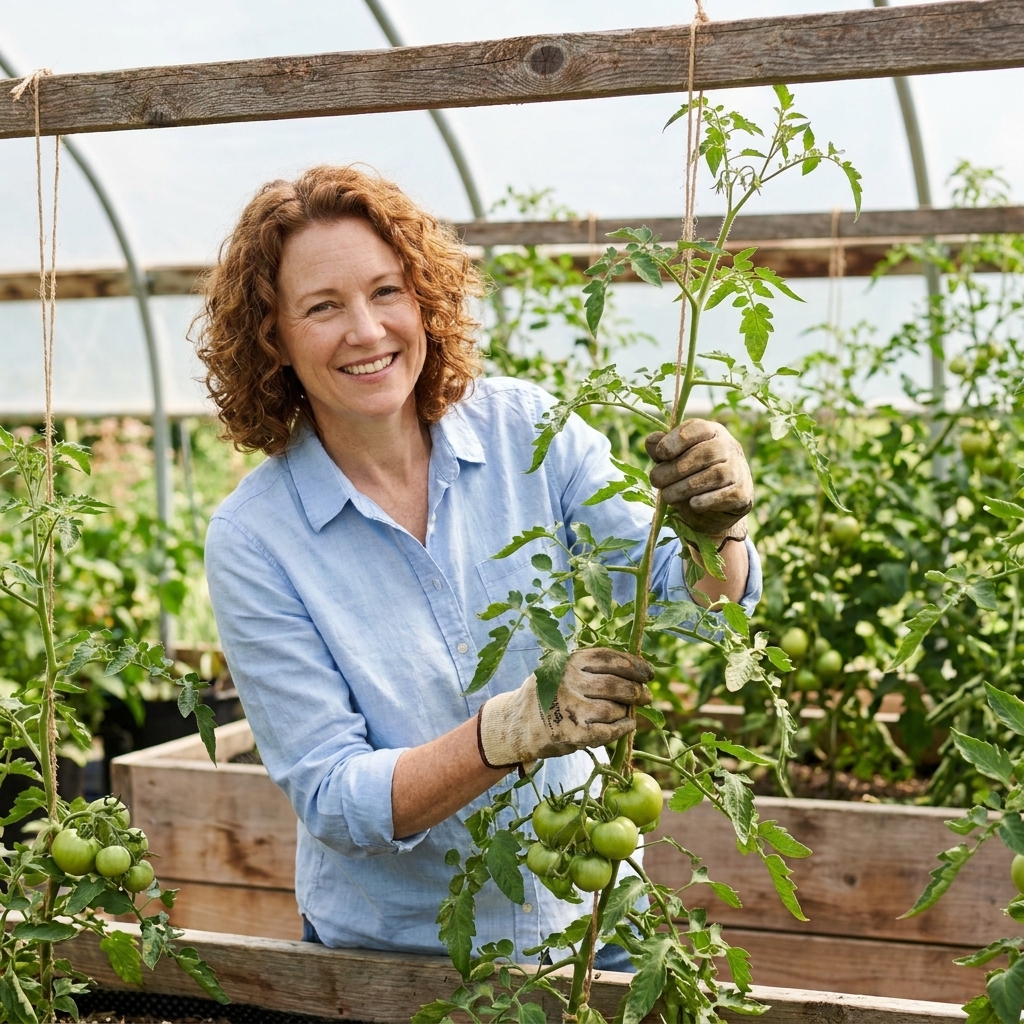
If you have ever watched indeterminate tomatoes sprawl like they are trying to colonize the whole yard, you will appreciate how well a simple string system keeps them vertical. This one is quick, cheap, and shockingly effective.
Best for
Indeterminate tomatoes, cucumbers, pole beans. For peppers, use the same overhead frame as a support line system (soft ties from the frame to a stake or two) rather than expecting a pepper plant to climb a single string.
Materials
- Two sturdy end posts (4x4s, metal posts, or thick wooden stakes)
- One top rail (2x2, 1x2, or metal conduit)
- Tomato twine or strong garden string (poly twine holds up best in rain)
- Screws or bolts for the top rail
Build steps
- Install end posts. Place one at each end of the bed, inside the bed if possible. Sink deep and pack the soil firmly.
- Add the top rail. Secure it across the posts so it does not sway.
- Hang strings. Tie one string per plant from the top rail down to the base of the plant.
- Train weekly. Wrap tomato leaders around the string as they grow, or use clips. For cucumbers, encourage tendrils to grab the string early.
Maggie tip: With tomatoes, choose one or two leaders and prune the rest if you want a truly tidy vertical system. Leaving every sucker turns your string trellis into a leafy traffic jam.
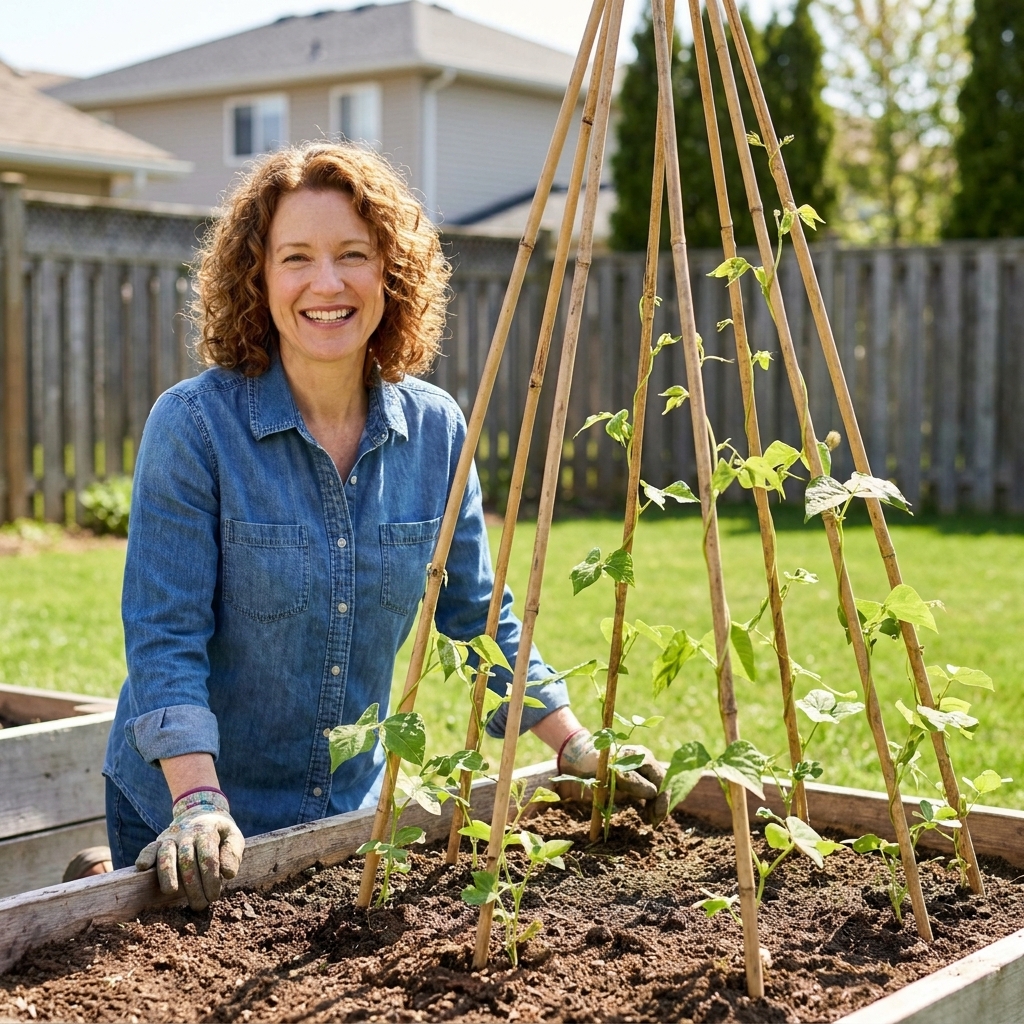
4) Bamboo teepee
Bamboo is light, strong, and easy to work with. A teepee trellis is perfect for smaller beds, kids’ gardens, or anywhere you want something simple that still looks charming.
Best for
Pole beans, cucumbers (smaller varieties), and sweet peas. For heavy slicer cucumbers, use thicker bamboo and more legs.
Materials
- 6 to 10 bamboo poles (6 to 8 feet tall is a sweet spot)
- Outdoor twine, jute, or zip ties
- Optional: smaller bamboo pieces for horizontal rungs
Build steps
- Push poles into the bed. Arrange them in a circle or oval and sink each pole 8 to 12 inches into the soil.
- Tie at the top. Pull the tops together and lash tightly with twine.
- Add rungs (optional). Tie smaller bamboo pieces around the sides to give more climbing points.
- Plant and guide. Plant 1 to 2 bean plants per pole base (depending on variety and bed fertility).
Maggie tip: A bamboo teepee is only as strong as its lashings. I wrap twine several times, then finish with a square knot and a second backup knot. Wind is patient.
5) Wire mesh panel trellis
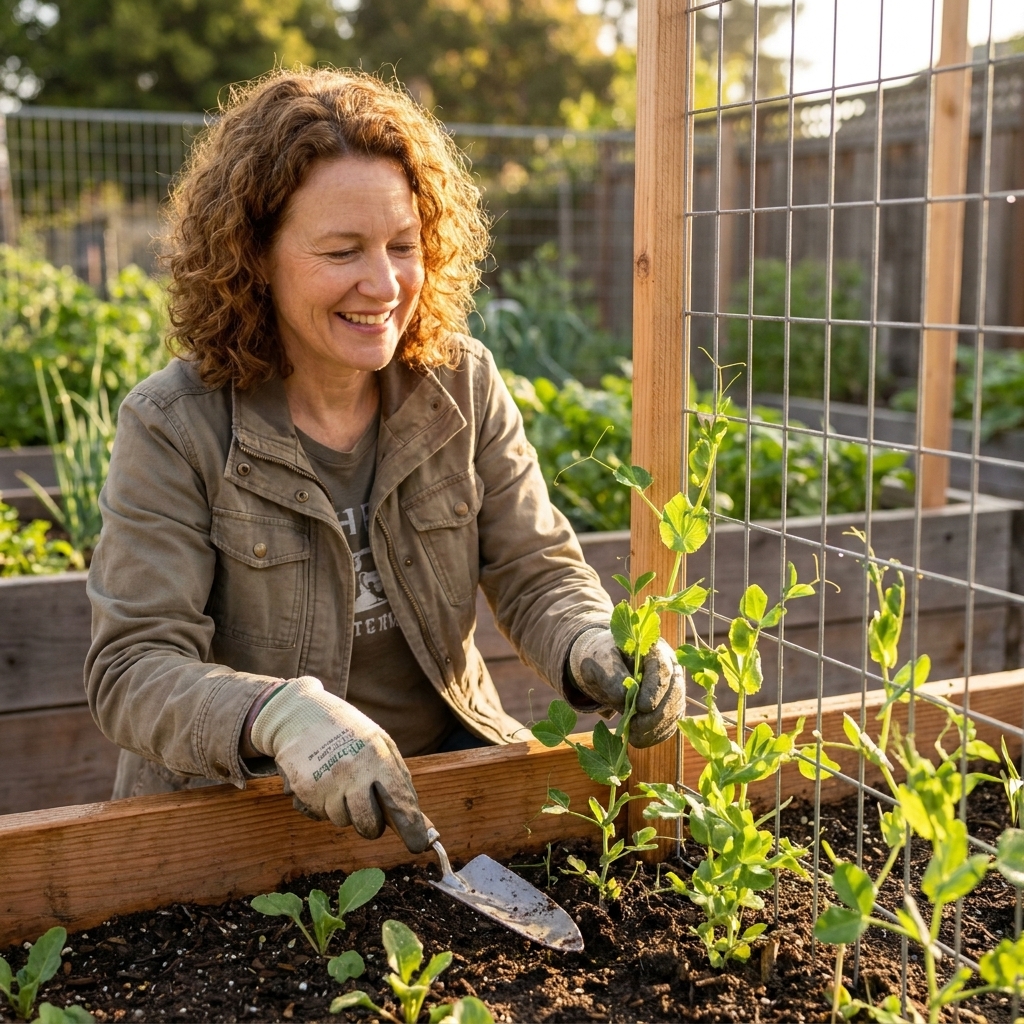
Peas do not need anything fancy, but they do want lots of grab points. A simple wire mesh panel, secured well, makes pea season feel effortless. This is also a great option when you want a trellis you can lift out at the end of the season.
Best for
Snap peas, snow peas, shelling peas, and lighter cucumbers. It also works for nasturtiums and other edible climbers.
Materials
- One panel of concrete reinforcing mesh, welded wire fencing, or a premade garden fence panel
- 2 to 3 sturdy stakes (wood or metal)
- Zip ties or wire
Build steps
- Cut to size. If needed, use bolt cutters to trim mesh to fit the bed length.
- Drive stakes inside the bed. Place stakes every 3 to 4 feet for stability.
- Attach mesh to stakes. Zip tie securely at multiple points so it does not rattle.
- Plant peas close. Sow pea seeds 2 inches from the mesh. They will reach for it as soon as they get their tendrils.
Maggie tip: If peas struggle to find the mesh, loosely weave a few strands of twine through the lower openings. It gives them a starter ladder.
Where to put a trellis
Placement can make or break your harvest, especially in small suburban spaces where every hour of sun counts.
- Put tall trellises on the north side of the bed (Northern Hemisphere) to reduce shading.
- Keep paths wide enough to harvest. You will be out there every couple of days in peak season. Give your elbows room.
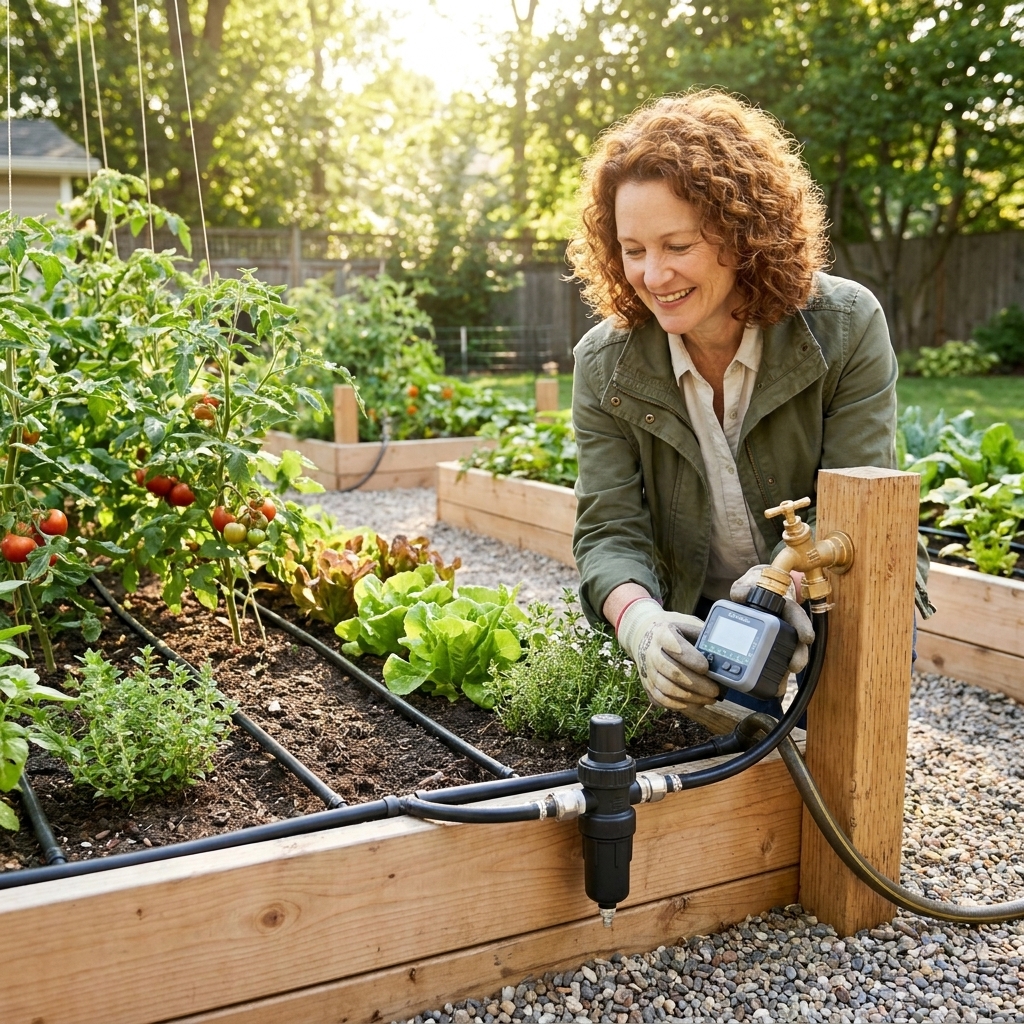
- Think about watering. Dense vines shed water. Drip lines or soaker hoses under the canopy help a lot.
- Plan for access. Cucumbers love to hide. A trellis you can reach from both sides saves time and missed fruit.
Trellis sizing by crop
- Peas: 3 to 5 feet tall is plenty. Mesh openings help.
- Pole beans: 6 to 8 feet tall is ideal. They will climb higher if you let them.
- Cucumbers: 5 to 7 feet tall. Sturdy support matters more than height.
- Indeterminate tomatoes: 6 to 8 feet tall, plus strong anchoring and regular tying and pruning.
Keeping trellises solid
Most trellis failures happen for one of two reasons: weak anchoring or waiting too long to train the plants.
- Anchor posts deep. In a raised bed, that can mean driving posts down through the bed soil and into the native ground below if possible.
- Tie early and often. A few minutes each week prevents snapped stems later.
- Do a midseason tighten. Check knots, zip ties, and screws once plants get heavy with fruit.
- Do not be afraid to prune. Airflow is your friend, especially with tomatoes and cucumbers.
- Plan for weather and wear. Galvanized conduit and galvanized wire mesh generally last longer outdoors. Bamboo is fantastic but usually needs replacing after a season or two. If you can store panels and netting out of the elements in winter, they will reward you with extra years of use.
FAQ
Can I attach a trellis directly to the raised bed frame?
Yes, if your bed is built from sturdy lumber and the trellis is not carrying a huge load. For cucumbers loaded with fruit or long-season tomatoes, I prefer posts that are sunk into the soil (or even into the ground below the bed) so the bed walls are not doing all the work.
What is the easiest trellis for a complete beginner?
A wire mesh panel on stakes is the simplest and most forgiving. For tomatoes, a basic string trellis is also very beginner-friendly as long as you remember to tie and prune regularly.
What is the cheapest DIY trellis?
Bamboo teepees and string trellises usually win on cost, especially if you already have stakes, scrap wood, or bamboo on hand.
Do cucumbers need trellising in raised beds?
They do not need it, but they are much easier to manage when they climb. Trellised cucumbers stay cleaner, often have fewer rot issues, and are easier to spot before they turn into baseball bats overnight.
How do I trellis tomatoes in a raised bed?
Indeterminate tomatoes do best with a string trellis, sturdy cages, or a strong A-frame. Start tying when plants are still flexible, and pick one or two main leaders to train upward for the tidiest results.
Pick one and build it
If you are feeling stuck, pick the trellis that matches your most enthusiastic climber. For many gardens, that is cucumbers or indeterminate tomatoes. Build it a little sturdier than you think you need, then enjoy the magic trick of vertical growing: the same raised bed suddenly produces more food, with less mess.
And if your first trellis is a little crooked, welcome to the club. The plants do not mind. They are just happy you gave them something to climb.