A practical, beginner-friendly tutorial for choosing safe lumber, assembling a durable raised bed, and calculating how much soil you need without overspending.
Veg Loom
October 17, 2026
By Maggie O'Connell
Best Soil Mix for Raised Beds
Use this high-yield raised bed soil recipe with ratios of compost, topsoil, and aeration materials, plus volume math, sourcing tips, and easy crop tweaks.

Maggie O'Connell
Maggie O'Connell is a lifelong gardener and the voice behind Vegloom, dedicated to helping people grow their own food regardless of their yard size. With over 15 years of hands-on experience in backyard agriculture, she specializes in raised bed gardening, organic soil building, and seasonal planting calendars. When she isn't writing, Maggie can usually be found tending to her sprawling heirloom tomatoes or experimenting with new compost recipes.
I still remember my first raised bed like it was yesterday: a neat wooden box sitting on top of dense clay that could have doubled as pottery. I filled it with whatever was “on sale,” planted tomatoes, and wondered why everything looked tired by July. The good news is raised bed soil is one of the easiest gardening problems to solve once you have a repeatable recipe.
Below is the soil mix I use for high-yield vegetable beds, plus the exact ratios, substitutions, and a few small adjustments that make a big difference over a full season.
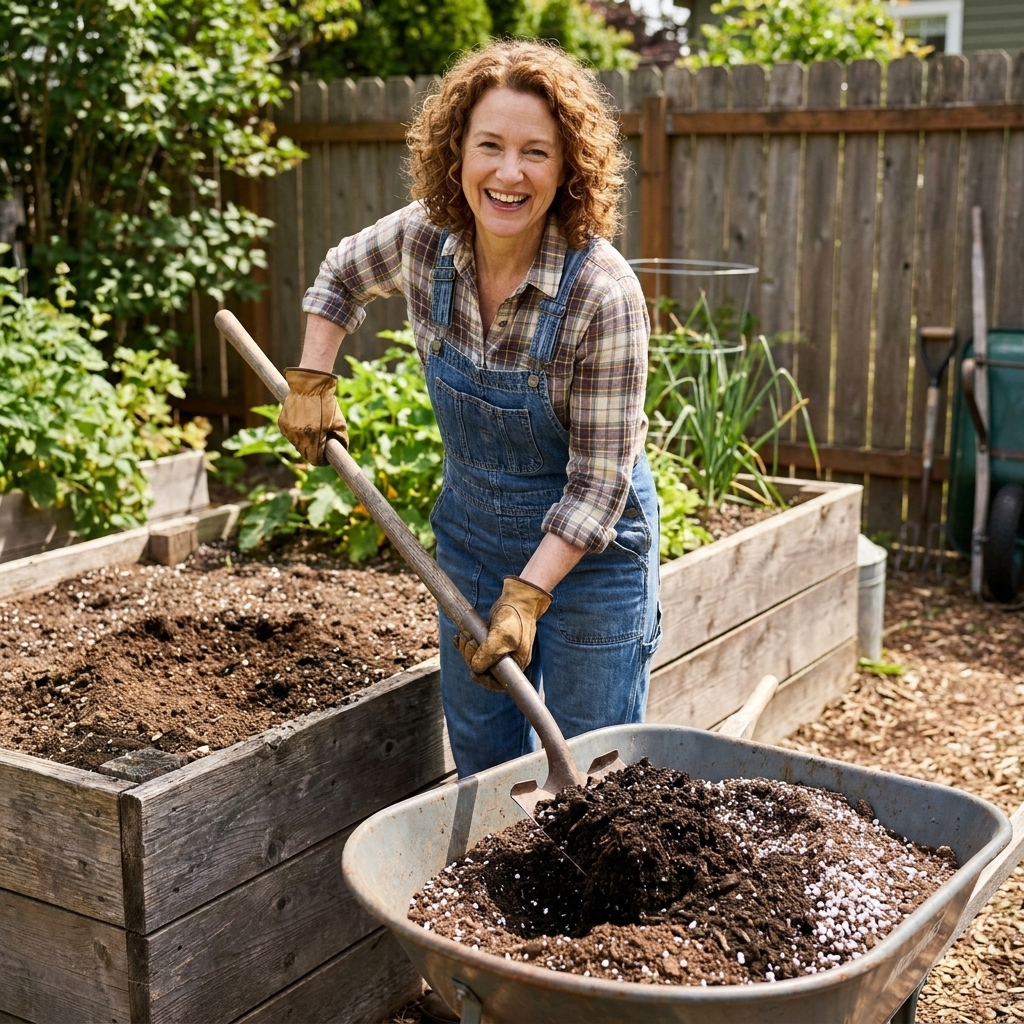
The simple raised bed soil recipe
This mix is designed to do three things at once: feed plants, hold moisture evenly, and stay airy enough for roots to breathe.
Quick qualifier: there is no one perfect ratio for every yard. Climate, bed height, crop choices, and especially the texture of your “topsoil” all matter. But if you want one dependable starting point, this blend is hard to beat and easy to tweak.
My go-to high-yield blend
- 40% quality topsoil
- 40% finished compost
- 20% aeration material (choose one or mix options below)
If you like it as a ratio, think 2 parts topsoil : 2 parts compost : 1 part aeration.
What I mean by “quality topsoil”: screened loam or a loamy blend, not fill dirt, not subsoil scraped from a construction site, and not a heavy clay “topsoil” that smears when wet.
Best aeration options
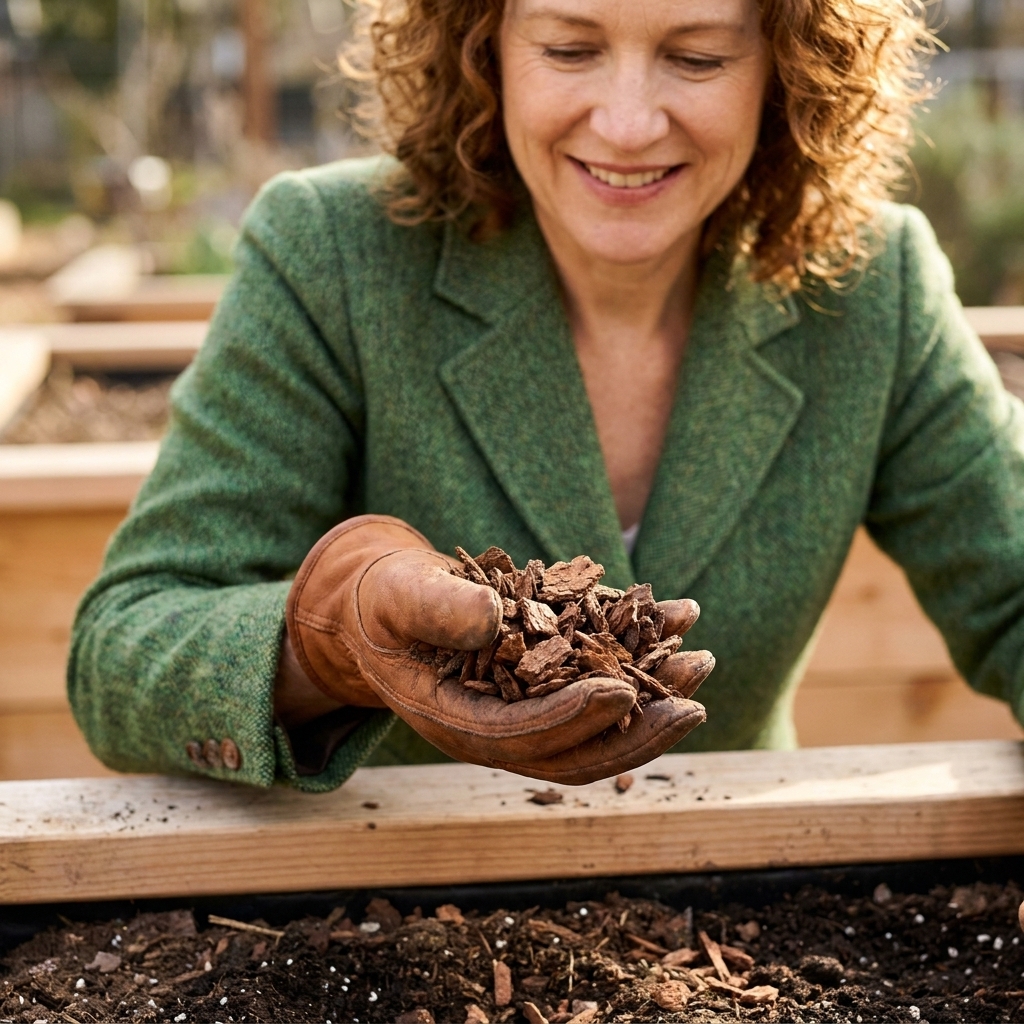
- Coarse pine bark fines (sometimes sold as “pine bark mini nuggets”): long-lasting structure, my favorite for vegetables
- Pumice: excellent drainage and air space, great for wetter climates
- Perlite: works well and is easy to find, but it can float up over time (mulch helps keep it in place)
- Rice hulls: lightweight, great texture, breaks down faster than bark
About sand: I usually skip it in raised beds. Sand can help in some mixes, but adding sand to clay-heavy soil in the wrong proportions can create a concrete-like texture. For most gardeners, bark, pumice, perlite, or rice hulls are safer and more forgiving.
Why these ratios work
Compost: the pantry
Finished compost supplies slow-release nutrients, biology, and water-holding capacity. In a raised bed, compost is also your main buffer against swings in moisture and fertility.
What counts as “finished” compost: it smells earthy, is no longer heating up, and the original ingredients are mostly broken down into a crumbly, uniform material.
Compost tip from my own hard-earned mistakes: more compost is not always better. Beds that are mostly compost can either compact and stay too wet (common with fine, manure-heavy composts) or turn overly fluffy and shrink fast (common with very woody composts). Compost type and particle size matter.
Topsoil: the backbone
Topsoil adds mineral content and helps the bed behave like real ground. Depending on what your “topsoil” actually is, it can help hold onto nutrients and moisture better than a peat-heavy, soilless blend. If you want certainty, a basic soil test takes out the guesswork.
Look for screened topsoil that is dark brown and crumbly, not full of sticks, trash, or funky, sour odors.
Aeration: the yield multiplier
Vegetables yield best when roots can explore a big, oxygen-rich zone. Aeration material is what keeps your bed from settling into a soggy brick by midseason. This is especially important for crops like tomatoes, peppers, squash, cucumbers, and anything in the cabbage family.
How much soil do you need?
Raised bed soil is easiest to buy and mix when you know your volume. Use this:
Cubic feet = length (ft) × width (ft) × soil depth (ft)
Example: 4x8 bed, 12 inches deep
- 4 ft × 8 ft × 1 ft = 32 cubic feet
Now apply the recipe (rounding is fine):
- Topsoil: 40% of 32 = about 13 cu ft
- Compost: 40% of 32 = about 13 cu ft
- Aeration: 20% of 32 = about 6 cu ft
Reality check: soil settles. If you are filling a brand-new bed, I like to order or mix 10% extra, especially if your compost is fluffy or you are using a lot of bark.
Mixing and filling
- Lay down cardboard over grass or weeds (remove tape first). Use plain brown cardboard when you can, overlap pieces like shingles, and water it well to keep it from blowing around.
- Measure ingredients by volume. Buckets, storage totes, or a wheelbarrow all work, just stay consistent.
- Pre-mix if you can. The most even beds are mixed outside the box, then shoveled in. If that is not realistic, layer ingredients in thirds and mix thoroughly with a shovel as you go.
- Water while you fill. A light watering every few inches helps ingredients settle together and prevents dry pockets.
- Stop 1 to 2 inches below the top. This gives you a tidy watering lip and keeps mulch from washing out.
- Mulch after planting (straw, shredded leaves, or untreated grass clippings in thin layers). Mulch is your secret weapon for stable moisture and fewer weeds.
Drainage note: raised beds still need somewhere for water to go. If your bed sits on compacted clay, it helps to loosen the native soil under the bed with a garden fork before you fill, especially for low beds that can get waterlogged.
Tweaks for vegetables
Heavy feeders
For tomatoes, peppers, squash, and corn: stick with the base recipe, then consider adding:
- Worm castings: optional, up to 5% of the total mix is plenty for most beds (go higher, up to 10%, only if budget allows). A simple approach is mixing 1 inch into the top layer or adding a handful or two in each transplant hole.
- Balanced organic fertilizer at label rates (especially helpful if your compost is woody or very “finished” and low in nitrogen)
I also like to tuck a couple handfuls of compost around each transplant, then water deeply to settle roots into the mix.
Root crops
Carrots, beets, and radishes want deep, consistent moisture and no clods. Do this:
- Use pumice or perlite for aeration instead of chunky bark
- Screen your compost if it is lumpy
- Avoid fresh manures or very “hot” compost right before sowing
Leafy greens
Greens love compost, but they hate soggy feet. The base recipe works well, and I often lean slightly airier in cool, wet seasons:
- 35% topsoil, 40% compost, 25% aeration in spring or rainy climates
Choosing ingredients you can trust
What good compost looks like
- Smells earthy, like a forest floor
- Mostly uniform and dark, with a few harmless bits (small wood chips are fine)
- Not slimy, not ammonia-sharp, not sour
Mix compost sources
For raised beds, I get the most consistent results using a blend, for example:
- Half plant-based compost (yard waste)
- Half manure-based compost that is fully finished (mushroom compost can be great, but watch salts and pH in some brands)
If your only compost option is very woody, plan on adding a little nitrogen support (worm castings or an organic fertilizer) so plants do not stall early.
A quick warning about herbicide contamination
One real raised-bed heartbreak is compost or manure contaminated with persistent herbicides (often from treated hay or pasture). If you are buying bulk compost or manure and you are not sure of the source, ask the supplier about herbicide testing. You can also do a simple home bioassay: plant a few peas or beans in a pot of the compost mix and compare them to a control pot of known-good soil. If the seedlings come up twisted or stunted, do not use that compost in your beds.
Topsoil: avoid mystery dirt
Bagged “topsoil” varies wildly. Bulk screened topsoil from a reputable landscape yard is often better, but still ask what it is screened from. If possible, look at it before delivery.
Common mistakes
- Filling with only compost: can compact and stay wet or shrink and dry fast, depending on the compost
- Too much peat or coco coir: helpful in moderation for moisture, but alone it can act like a sponge and then a brick when it dries
- Skipping aeration material: the bed settles hard by midseason and roots struggle
- Using unfinished compost: it can steal nitrogen while it finishes breaking down
- Assuming raised beds never need feeding: high yields remove nutrients, especially potassium and nitrogen
Keep it productive
The best raised beds get better with time, as long as you top them up correctly.
Each season
- Add 1 to 2 inches of compost on top
- Loosen the top 3 to 4 inches with a garden fork (no deep digging needed)
- Refresh aeration if the bed feels heavy or water sits on top: add a thin layer of bark fines, pumice, or perlite and mix into the upper layer
- Mulch after planting
If your bed is sinking
Settling is normal. Rather than dumping in random bags of soil, use the same ratio approach:
- For every 10 gallons of volume you need to replace, add about 4 gallons topsoil, 4 gallons compost, and 2 gallons aeration.
FAQ
Can I use bagged raised bed soil?
You can, but many bagged “raised bed” mixes are mostly peat or forest products and can shrink dramatically, dry out fast, or lack minerals. If you use bags, I still recommend blending in topsoil and compost, plus some aeration, so the bed behaves like stable garden soil.
Is peat moss necessary?
No. Peat can help with moisture retention, but compost already does that, and aeration keeps things from turning swampy. If you want to add peat or coco coir, keep it to 10% or less of the total volume and reduce topsoil slightly to compensate. With coco coir, it is also worth buying a reputable, rinsed product since some bricks can be salty.
What pH should raised bed soil be?
Most vegetables are happiest around 6.0 to 7.0. If plants struggle despite good watering and sunlight, a simple soil test is worth it. Compost sources can nudge pH up or down, so testing removes the guesswork.
Do I need to sterilize soil?
No, and I usually avoid it. Healthy, living soil is part of what makes raised beds so productive. Focus on good ingredients, crop rotation, and keeping plants vigorous.
What if my bed is on clay?
That is exactly why raised beds shine. Put down cardboard to smother weeds, build your soil mix in the bed, and aim for 12 inches minimum of soil depth for most vegetables. If you are growing deep-rooted or heavy-feeding crops like tomatoes and squash, 18 inches is even better if your bed design allows it. Over time, earthworms and roots will improve the clay underneath too.
Bottom-line recipe
If you only take one thing from this page, let it be this: 2 parts topsoil, 2 parts compost, 1 part aeration. It is simple, forgiving, and it produces the kind of beds that keep giving all season long.
Once your mix is in, the “high yield” part comes from consistency: deep watering, mulch, and a little compost top-dressing every season. That is how you turn one raised bed into a salad bar, a salsa garden, and a pride-of-the-neighborhood tomato patch.