A practical, beginner-friendly tutorial for choosing safe lumber, assembling a durable raised bed, and calculating how much soil you need without overspending.
Veg Loom
October 17, 2026
By Maggie O'Connell
Critter-Proof Raised Beds with Hardware Cloth
Stop gophers, moles, and voles from chewing vegetables underground. Learn how to install hardware cloth and smart edge barriers under and around raised beds for long-term protection.

Maggie O'Connell
Maggie O'Connell is a lifelong gardener and the voice behind Vegloom, dedicated to helping people grow their own food regardless of their yard size. With over 15 years of hands-on experience in backyard agriculture, she specializes in raised bed gardening, organic soil building, and seasonal planting calendars. When she isn't writing, Maggie can usually be found tending to her sprawling heirloom tomatoes or experimenting with new compost recipes.
The first time a gopher tunneled under my raised bed, it felt personal. One day the peppers looked fine, the next day they were flopped over like someone cut the strings. If you have gophers, voles, or moles in your yard, raised beds are not automatically safe. They are basically a salad bar with a roof.
The good news is you can critter-proof a raised bed during setup with hardware cloth and a few thoughtful barriers. Do it once, do it right, and you can garden with a lot more peace.
Know your underground visitors
Different critters leave different clues. You do not need to become a wildlife biologist, but it helps to know what you are protecting against.
- Gophers: Big eaters that pull entire plants down from below. Look for soil mounds that are often fan- or crescent-shaped (they vary by soil and species) and sudden plant collapse.
- Voles: Small rodents that chew roots and crowns and can girdle stems. Look for narrow surface runways in grass and small entrance holes.
- Moles: Mostly insect-eaters that tunnel for grubs and worms. They can still disturb roots and make a mess, but if you are losing entire plants or root crops, voles and gophers are usually the main suspects. Look for raised ridges and volcano-like mounds.
Whether the culprit is a gopher or a vole, the fix for raised beds is the same: block access from below and remove easy entry points at the sides.
Hardware cloth basics
Hardware cloth is welded wire mesh, usually galvanized steel. It is stronger and more critter-resistant than chicken wire. Chicken wire is fine for chickens, not for determined rodents.
Best mesh size
- 1/2 inch: Great for gophers and general backyard protection.
- 1/4 inch: The safer choice for vole-heavy areas, or if you want to block smaller rodents and juveniles that may squeeze through 1/2 inch.
Gauge and coating
- 19 gauge is common and works well for most backyard beds.
- 16 gauge is heavier duty for high gopher pressure or if you never want to think about it again.
- Galvanized after welding usually lasts longer than galvanized before welding, especially in damp soils.
- Stainless steel costs more, but it is worth considering for coastal gardens, very wet sites, or acidic soils where corrosion is a constant battle.
If you are building beds directly on soil, I recommend buying the best hardware cloth you can reasonably afford. You are burying it under hundreds of pounds of soil mix, so swapping it later is not a fun weekend project.
Tools and materials
- Hardware cloth roll (1/2 inch or 1/4 inch)
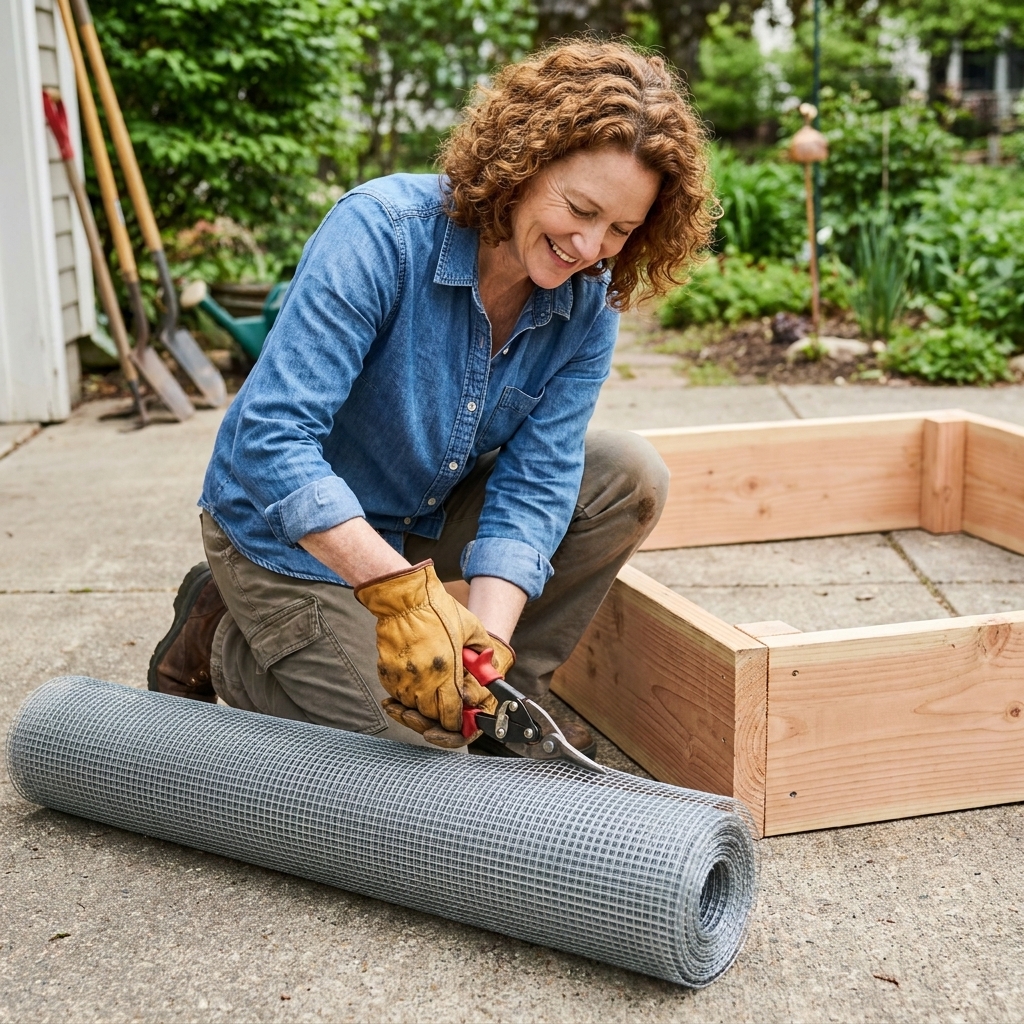
- Tin snips or heavy-duty wire cutters
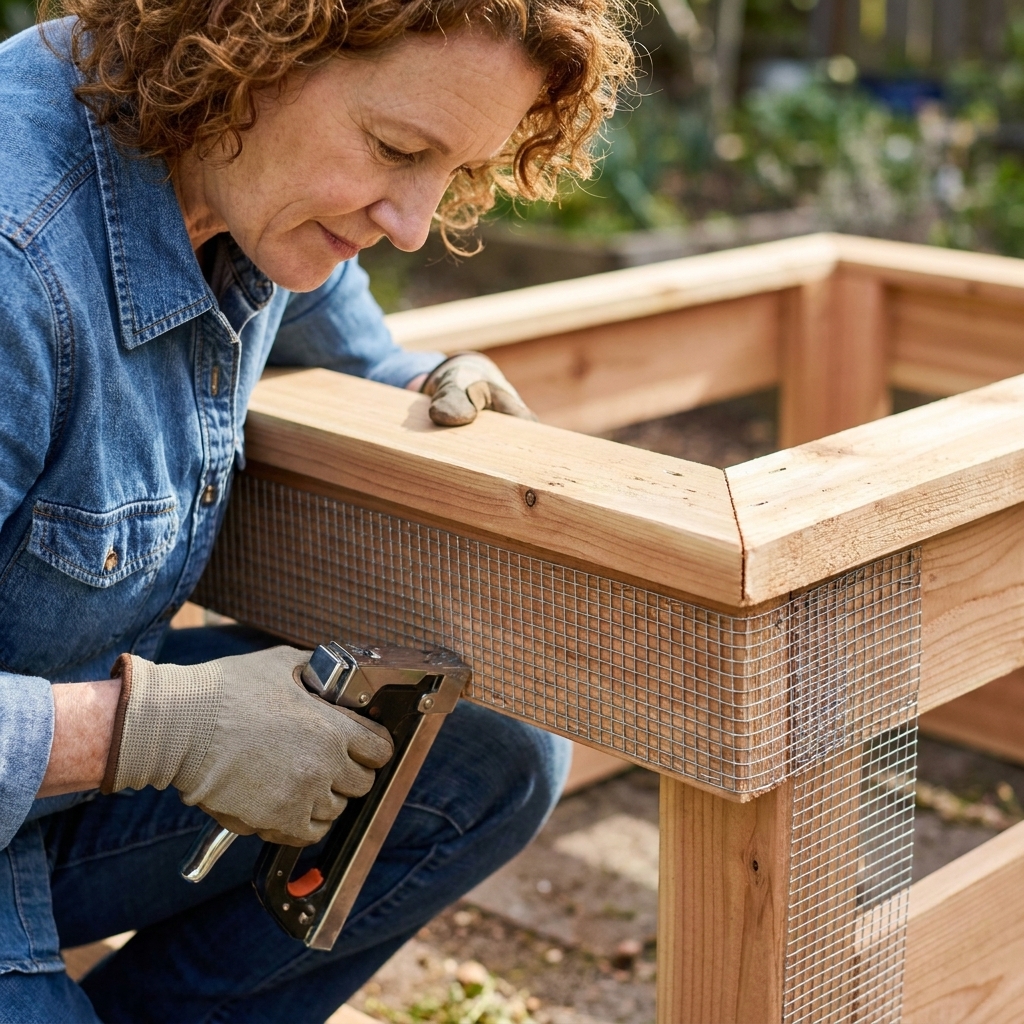
- Galvanized staples (for wood frames) and a staple gun or hammer
- Exterior-grade screws with washers (optional but very secure)
- Work gloves and eye protection
- Measuring tape and marker
- Landscape staples or U-pins (if adding side aprons)
- Optional: untreated 1x2 battens to sandwich mesh on the underside
Safety note: Cut hardware cloth edges are sharp. Wear gloves, and after cutting, fold the cut edge over on itself (or tap stray wire ends down with a hammer) so you do not get sliced later.
Install hardware cloth on bottom
This is the core of critter-proofing. Install the mesh before you fill the bed.
1) Measure and cut
Cut a piece of hardware cloth that covers the entire footprint of the bed with at least 2 to 4 inches of extra on every side. Overlap is your friend. It gives you room to fasten securely and reduces gaps.
2) Overlap seams
For large beds, you may need two pieces. Overlap seams by at least 4 to 6 inches. If gopher pressure is high in your area, go closer to 8 inches.
In high-pressure areas, do not rely on overlap alone. Fasten the overlap to itself with galvanized wire, hog rings, or outdoor-rated zip ties, then fasten the perimeter to the bed frame. The goal is simple: no easy lip for an animal to push through.
3) Attach it tight
Lay the bed frame upside down on a flat surface. Stretch the mesh taut and fasten every 2 to 3 inches along the perimeter.
- Staples: Fast and effective if you use plenty.
- Screws + washers: Slower, but extremely secure and less likely to loosen over time.
- Best of both: Staples first to hold tension, then screws and washers at corners and seams.
4) Lock down corners
Corners are where shortcuts become holes later. Fold and crease the mesh neatly at corners, then fasten heavily. If there is any puckering, add another screw and washer.
5) Add sandwich strips (optional)
If you want the mesh to stay tight for years, screw untreated 1x2 strips along the bottom edges over the mesh. This clamps the wire between wood pieces so it cannot pull away.
Already filled beds
If your bed is already in place and full, you still have a few workable choices. None are as easy as doing it during setup, but they can help.
Option A: Add an inner liner bed
If the bed is large, you can build a slightly smaller inner frame, attach hardware cloth to its bottom, then place it inside the existing bed and backfill around it. You lose some growing space, but you protect the roots where it matters.
Option B: Reset, then add barriers
If you are seeing fresh tunneling, addressing the animal first is often necessary. Once activity calms down, add a perimeter apron (more on that below) and tighten up any side gaps where they may be entering.
Option C: Containers for vulnerable crops
If you cannot retrofit right now, consider growing carrots, beets, and potatoes in large containers or fabric grow bags for a season. It is not a perfect fix, but it keeps dinner on the table while you plan a long-term solution.
Side barriers
Hardware cloth on the bottom stops most damage, but gophers and other diggers can still tunnel up right next to a bed and try to squeeze in through a gap between soil and wood, or through a loose corner.
Two simple add-ons help a lot:
1) Perimeter skirt
Before placing the bed, dig a shallow trench around the footprint, about 8 to 12 inches deep. Attach hardware cloth to the lower sides of the bed so it drops into the trench, then backfill. This creates a vertical barrier that discourages tunneling right at the edge.
2) Ground apron
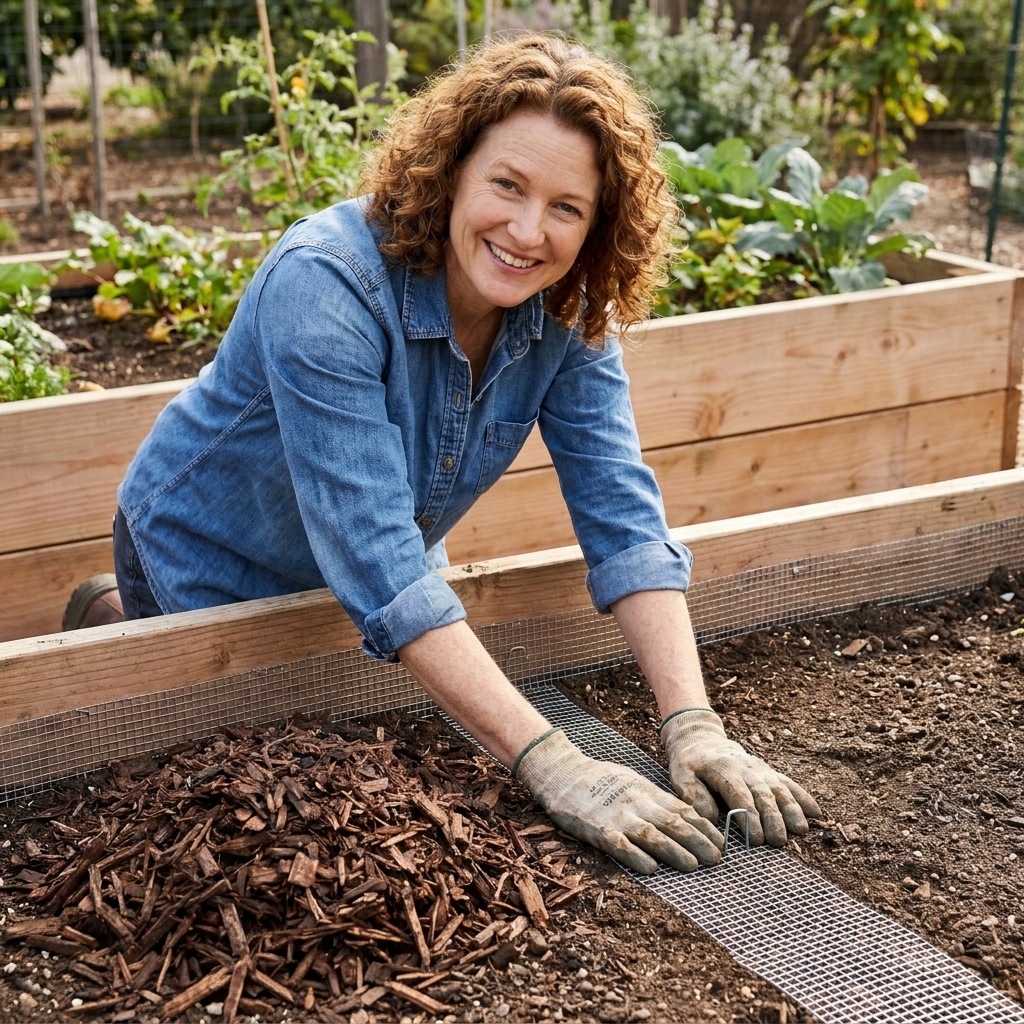
Lay hardware cloth flat on the ground around the outside of the bed like a placemat, extending out 12 to 18 inches. Pin it down with landscape staples, then cover with mulch, gravel, or a pathway material.
Keep the apron fully covered so no one trips and no sharp edges end up exposed.
When an animal tries to dig at the bed edge, it hits wire immediately and usually moves on.
Top protection
Underground barriers save roots, but in many yards the same critters also nibble above ground. If seedlings keep disappearing, pair your underground defense with one of these:
- Floating row cover over hoops for tender greens and brassicas.
- Wire cloche over individual plants for the first few weeks.
- Low fencing if rabbits are part of the problem.
Common mistakes
- Using chicken wire: It is too flexible and openings are too large.
- Not enough staples: If you can lift the mesh anywhere, a critter can work it loose over time.
- Weak seams: Seams need generous overlap and should be tied together in tough areas, not just laid on top of each other.
- Gaps at corners: Corners must be folded and fastened like they matter, because they do.
- Forgetting that beds settle: Soil drops after watering and decomposition. Check the first season for new gaps along edges and address them early.
- Leaving sharp edges exposed: Fold, clamp, or cover cut wire ends so they do not become a future hand or knee injury.
Drainage and soil life
This is the question I hear from gardeners who are trying to do right by their soil. Hardware cloth does not meaningfully hurt drainage in a raised bed. Water moves through the mesh easily.
Some worms will still move through 1/2 inch mesh, and smaller worms may pass through 1/4 inch, but do not count on every large earthworm commuting freely through tighter mesh. The good news is the soil food web that matters most, microbes and fungi, is unaffected. What you are blocking is the chewing and tunneling that wrecks root systems.
Quick shopping checklist
- High gopher pressure: 1/2 inch or 1/4 inch mesh, heavier gauge if possible, tight fastening, consider a perimeter skirt.
- Mostly voles: 1/4 inch mesh is safest, add an apron if they tunnel near bed edges.
- Occasional issues: 1/2 inch mesh, well stapled, corners reinforced.
FAQ
How long does hardware cloth last underground?
It depends on soil moisture, chemistry, and the quality of the coating. Good galvanized hardware cloth can last many years, but there is no universal timeline. As a rough expectation, many gardeners see something like 5 to 15+ years, while very wet or acidic soils can shorten that. If your garden stays soggy, focus on drainage and consider heavier gauge, higher-quality galvanizing, or stainless steel.
Can gophers chew through hardware cloth?
Welded hardware cloth is designed to resist chewing and tearing. The failures I see are almost always installation-related: loose edges, weak corner fastening, or seams with minimal overlap.
Should I put landscape fabric under the bed instead?
Landscape fabric blocks weeds for a little while, but it will not stop gophers or voles. For critters, you need metal mesh.
Do I need to line the sides too?
If the bed sits on soil and the bottom is fully covered with properly fastened hardware cloth, side lining is optional. Side barriers become useful when gophers tunnel right alongside the bed and you suspect they are exploiting gaps at the edges, or if you want maximum protection from the start.
Troubleshooting
If plants are still disappearing after you install mesh, do a quick check before you blame the wire:
- Look for side gaps where soil settled below the top edge or where a corner loosened.
- Check corners and seams for pull-outs, lifted edges, or overlaps that were not tied together.
- Watch for bypass tunnels that come up right beside the bed. That is where an apron or skirt earns its keep.
My simple rule
If you live anywhere gophers, voles, or moles have been spotted, treat hardware cloth under a raised bed like a seatbelt. You hope you never need it, but the day you do, you will be grateful it is there.
Once the barrier is in place, you can get back to the fun parts of raised bed gardening: building fluffy soil, planting too many tomatoes, and pretending the squirrels are not watching.