A step-by-step, beginner-friendly guide to designing and installing an automated drip system for raised-bed vegetables, plus run-time tips, capacity checks, ...
Veg Loom
October 17, 2026
By Maggie O'Connell
Deep Watering Techniques for Summer Veggies
Deep watering helps summer vegetables handle heat with stronger roots and steadier growth. Learn how deep to water, how often, and how to calibrate drip, soaker, and sprinkler output.

Maggie O'Connell
Maggie O'Connell is a lifelong gardener and the voice behind Vegloom, dedicated to helping people grow their own food regardless of their yard size. With over 15 years of hands-on experience in backyard agriculture, she specializes in raised bed gardening, organic soil building, and seasonal planting calendars. When she isn't writing, Maggie can usually be found tending to her sprawling heirloom tomatoes or experimenting with new compost recipes.
I grew up thinking “more water” was always the answer. Then I bought my first house, met my yard’s brick-hard clay soil, and learned a humbling truth: watering often is not the same as watering well. In summer, shallow daily sprinkles can train vegetable roots to stay near the surface where soil bakes fastest. Deep watering does the opposite. It coaxes roots down, steadies growth, and helps plants handle heat like they have a little extra resilience tucked underground.
This is the deep watering approach I use in raised beds, in-ground rows, and even containers when the forecast starts throwing 90°F days at us like confetti.
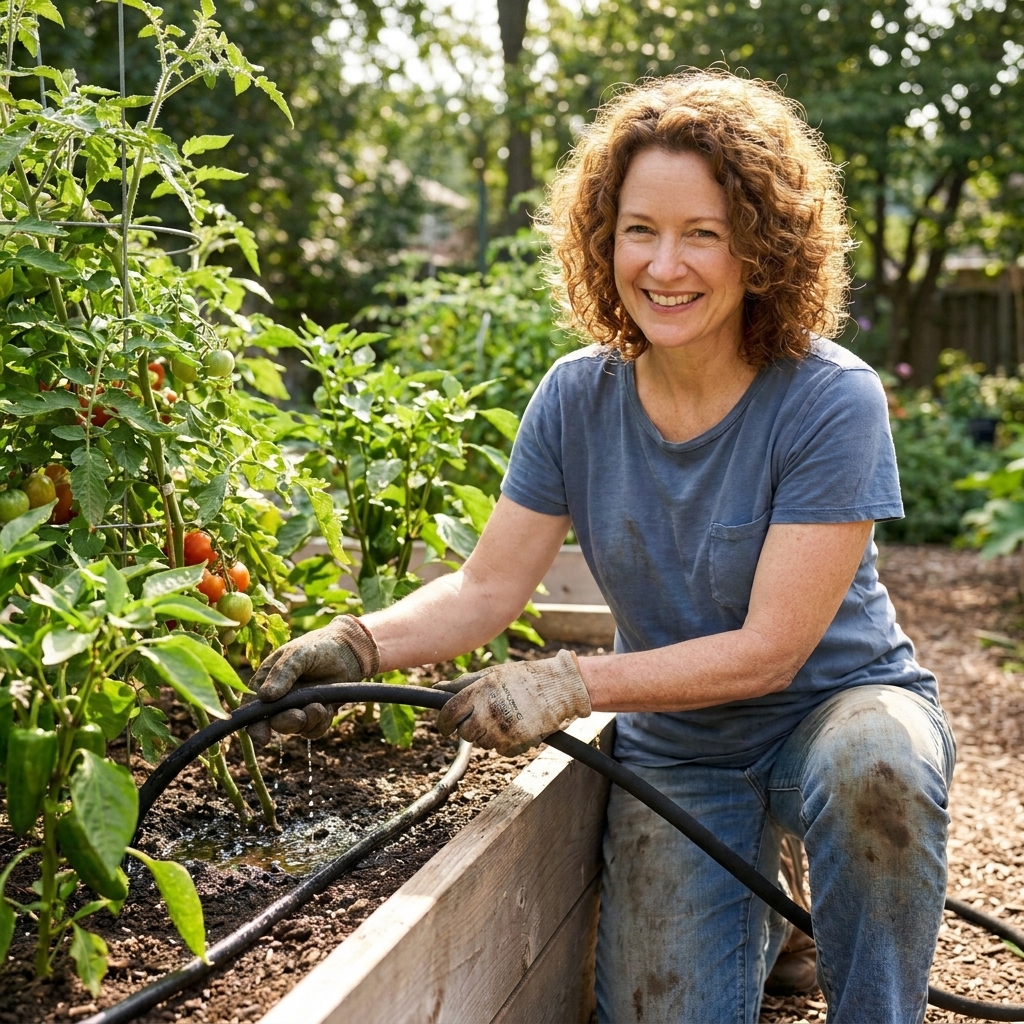
What deep watering means
Deep watering is applying water slowly enough that it soaks down into the root zone instead of running off, pooling, or evaporating. For many summer vegetables, you are often aiming to wet the soil to roughly 6 to 12 inches deep (deeper for big, established tomatoes and squash). The exact target shifts with cultivar, soil texture, compaction, and plant maturity, so treat any number as a starting point, not a rule carved in stone.
Deep, infrequent is the key pairing:
- Deep so roots follow the moisture downward.
- Infrequent so the upper few inches can dry a bit between waterings, which discourages weak surface rooting and can help reduce pest issues in consistently damp potting mixes (especially in containers).
Why it matters in summer
- Stronger roots: Plants with deeper roots ride out hot afternoons and missed waterings better.
- Fewer leaf issues: Watering at the soil line, early, with time for foliage to dry can reduce disease pressure.
- Less waste: Slow, targeted watering reduces evaporation and runoff.
- More consistent harvests: Even moisture can help reduce blossom end rot risk in tomatoes and peppers and can reduce stress-related bitterness in some crops.
How deep is deep enough?
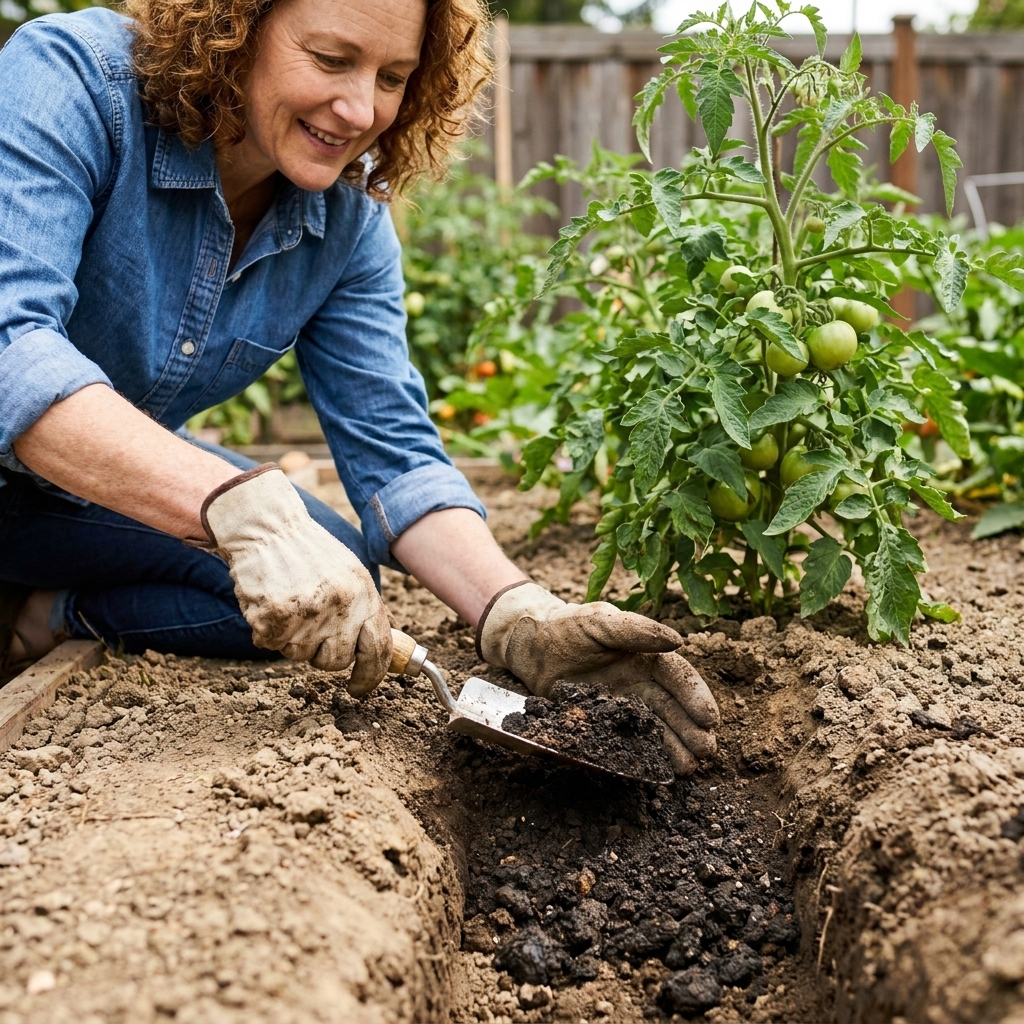
The easiest way to check is old-school: dig and look.
- Water as you normally would for a deep soak.
- Wait 30 to 60 minutes.
- Use a trowel to dig a small test hole a few inches away from a plant.
- Look for evenly moist soil (not mud) down in the profile.
As a starting target (adjust for your soil and how established the plant is):
- Leafy greens (in heat): Often 4 to 8 inches, but they usually need more frequent watering because of shallow roots.
- Beans, cucumbers, peppers: Often 6 to 10 inches.
- Tomatoes, squash, melons: Often 8 to 12+ inches once established.
If your soil is dry at 3 or 4 inches after “watering,” that was a surface rinse, not a deep drink.
Best ways to deep water
Soaker hoses
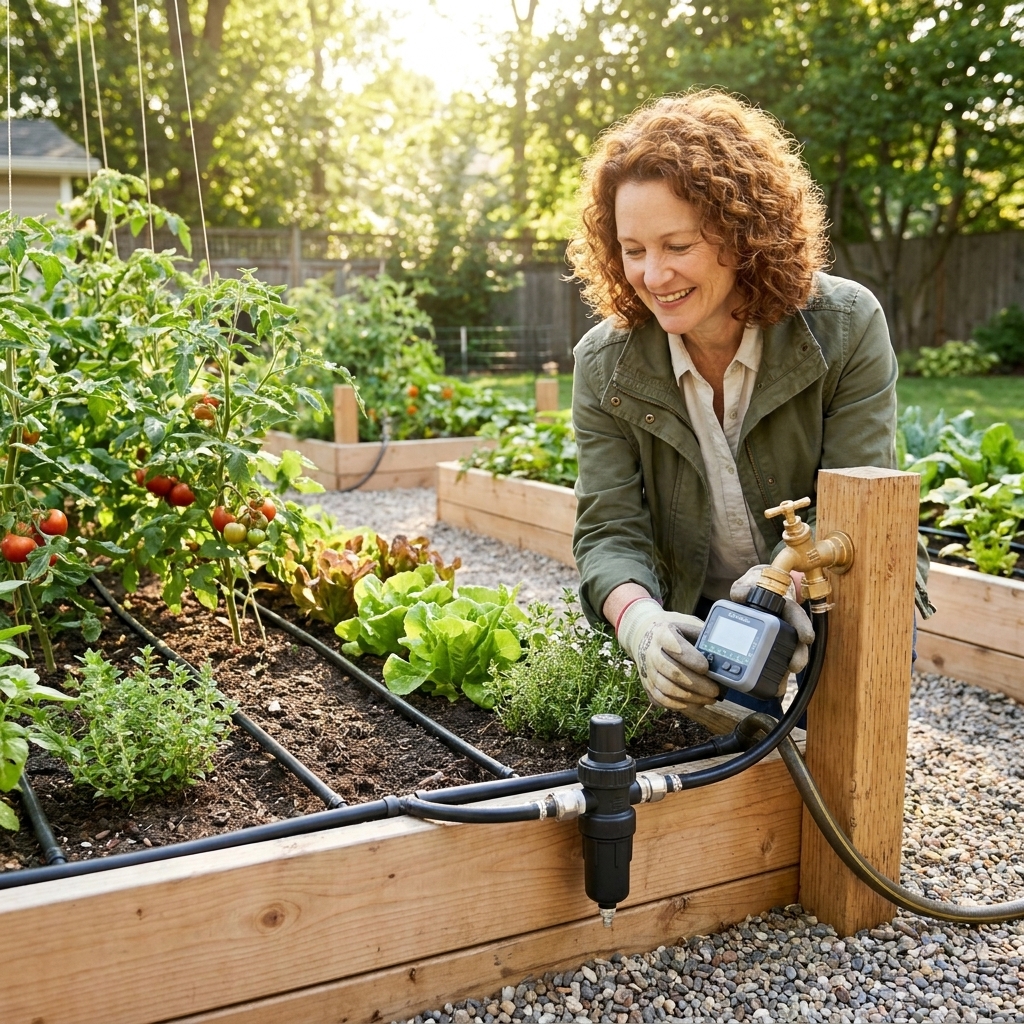
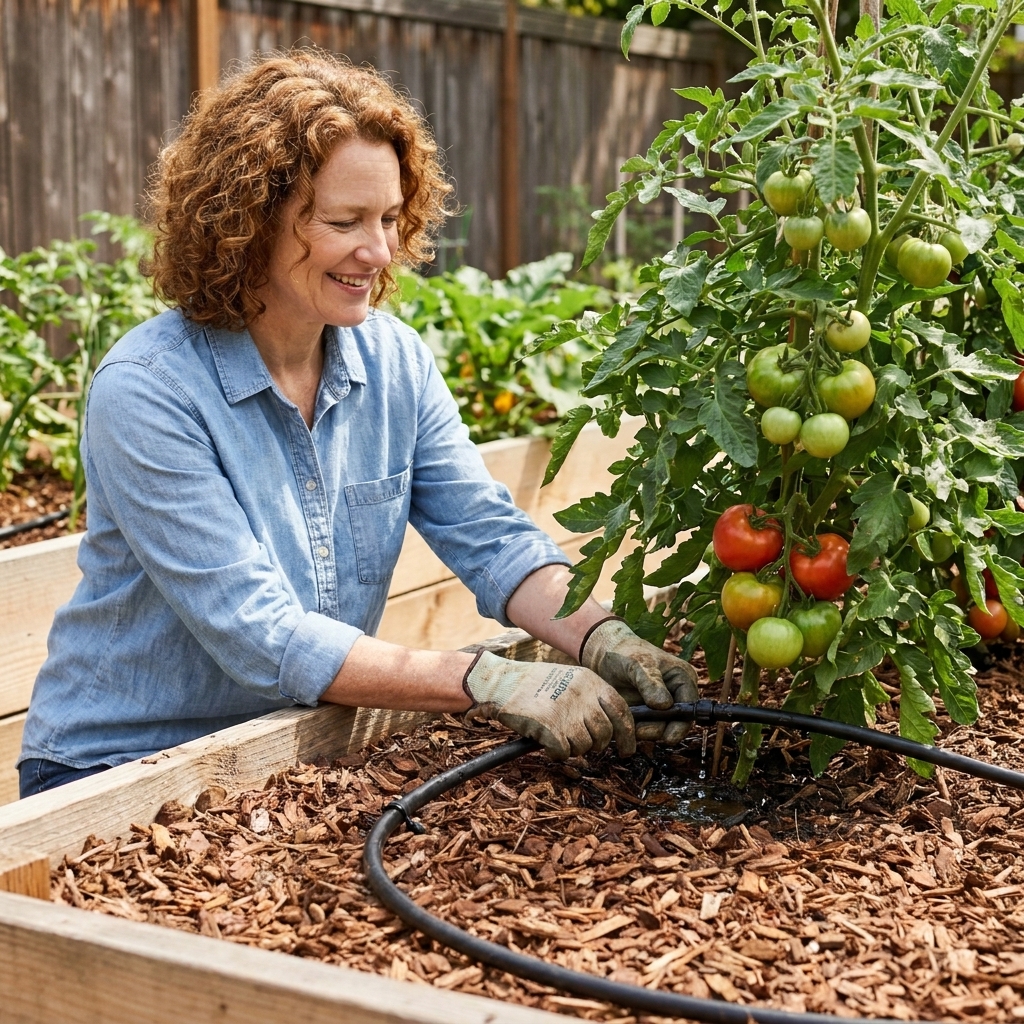
Soaker hoses are my go-to for raised beds. They deliver water slowly along their length and keep foliage mostly dry.
- How to set them up: Weave the hose along the plant row, about 2 to 4 inches from stems. Cover with 1 to 3 inches of mulch to reduce evaporation.
- How long to run: There is no universal number. Start with 30 to 60 minutes, then do the trowel test to see how deep the moisture went.
- Pro tip: Use a simple timer so you do not “accidentally” water for three hours while you’re inside answering one email.
Drip irrigation
If you want the most control, drip is it. It is also fantastic in containers.
- Why it works: You can target each plant, adjust flow, and avoid soggy paths.
- Where it shines: Tomatoes, peppers, eggplant, cucumbers on trellises, and mixed raised beds.
- Pro tip: Put emitters a few inches away from the main stem to encourage roots to spread outward.
Hand watering
Hand watering can still be “deep watering” if you slow down.
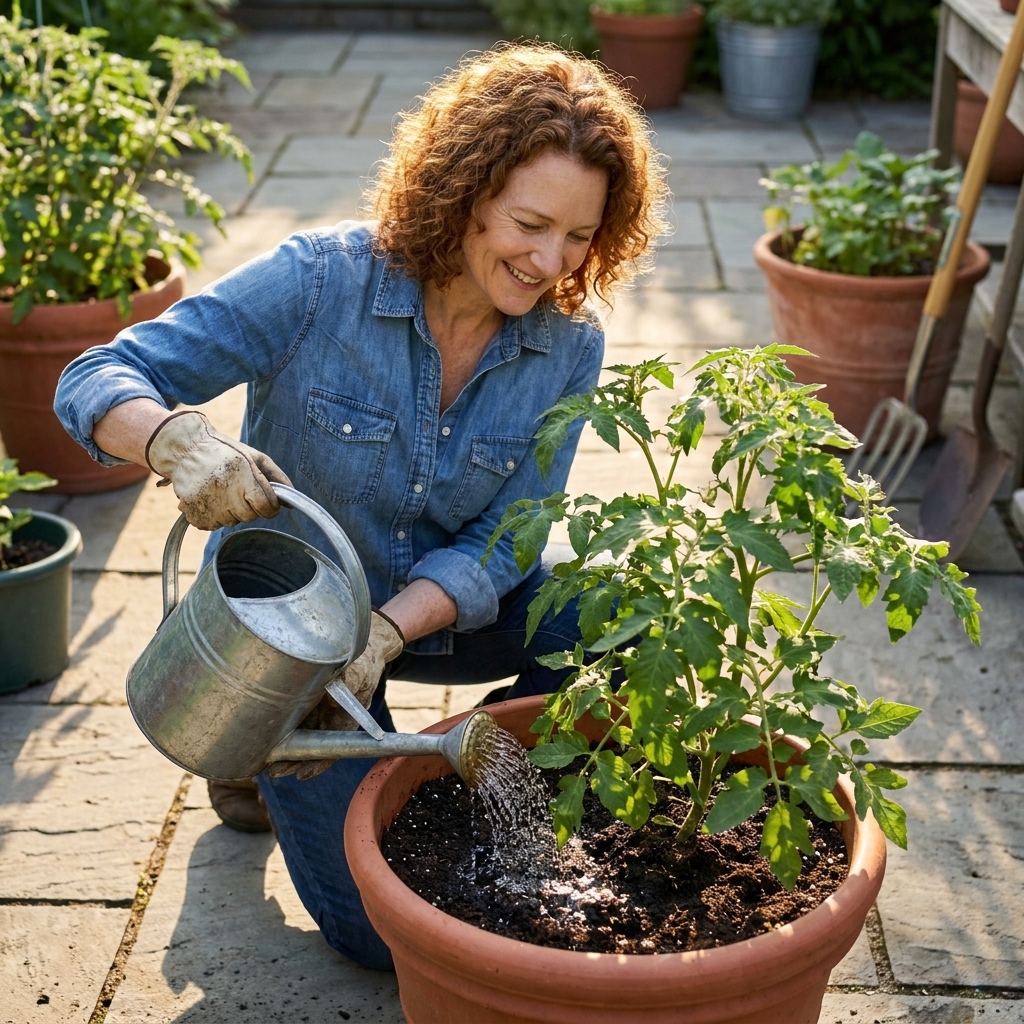
- Technique: Water at the base of the plant, low pressure, until the surface glistens and you see it begin to soak in instead of running off, then move to the next plant.
- Cycle and soak: Do one pass through the bed, wait 10 to 15 minutes, then do a second pass. This helps water penetrate instead of racing away.
- Avoid: Regularly spraying leaves late in the day. Long periods of leaf wetness overnight can invite trouble.
Sprinklers
Sprinklers are not my first choice for summer vegetables because they wet foliage, but they can be useful for large garden plots or newly seeded beds.
- Best time: Early morning so leaves dry quickly.
- Best use: Establishing seedlings and germinating seed. Once plants are up and growing, switching to drip or soaker is usually a better disease and efficiency tradeoff.
- Cooling note: Light sprinkler use can take the edge off during extreme heat, but it is easy to waste water or increase disease pressure if you repeatedly wet the canopy. If you try it, keep it brief and early, and do not make it your daily plan.
How often to water in summer
Frequency depends on heat, wind, plant size, and soil type. Instead of clinging to a calendar, watch for cues and adjust. Also remember: deep watering is not the same thing as keeping soil constantly saturated. Roots need oxygen too, especially in heavy clay.
A baseline to start with
- Raised beds (summer): Deep water about 2 to 4 times per week.
- In-ground gardens: Deep water about 1 to 3 times per week.
- Containers: Often daily in hot spells, but still aim for a slow, thorough soak until water exits the drainage holes.
During heat waves, you may water more often, but keep the “deep” part. Two shallow waterings rarely equal one true soak because evaporation steals so much from the surface.
Use the finger test plus plant body language
Stick your finger 2 inches into the soil.
- If it is moist, wait.
- If it is dry, plan a deep soak.
Then look at plants around mid-morning, not at 4 p.m. when everything looks dramatic.
- Healthy: Leaves are firm in the morning and only slightly relaxed in intense afternoon heat.
- Needs water: Morning wilting, dull leaf color, slower growth, blossoms dropping.
How much water is enough?
If “run it for 20 minutes” feels like a made-up number, you are not wrong. Time only matters once you know your output.
- For sprinklers: Put a few straight-sided containers (tuna can, cat food can, or a small measuring cup) around the watered area and run the sprinkler for 15 minutes. Measure how much collected, then do the math to estimate inches per hour. Now you can water on purpose instead of by vibes.
- For drip: Check your emitter rate (often listed as GPH) and multiply by run time. Then confirm with the trowel test. Numbers are helpful, but soil is the final judge.
- For soaker hoses: Output varies wildly by brand and pressure. Treat your first few waterings as calibration runs: water, wait, dig, adjust.
A common summer target for established gardens is roughly 1 to 1.5 inches of water per week from rain plus irrigation, but that can swing with heat, wind, crop type, and soil. Use it as a loose reference, not a rigid quota.
How soil type changes things
Sandy soil
Sandy soil drains fast. Deep watering still matters, but you will do it more often.
- Strategy: Deep water more frequently, add compost generously, and mulch heavily.
- Goal: Hold moisture long enough for roots to access it.
Clay soil
Clay holds water well, but it absorbs slowly. If you blast it with water, it runs off and fools you into thinking you “watered.” Ask me how I know.
- Strategy: Water slowly (soaker or drip), use cycle-and-soak with a hose, and improve structure with compost.
- Goal: Gentle infiltration, not puddles. If water sits for long stretches, you are flirting with oxygen-starved roots.
Loam
Loam is the sweet spot. Deep watering works beautifully here, and mulch makes it even more forgiving.
Mulch helps deep watering
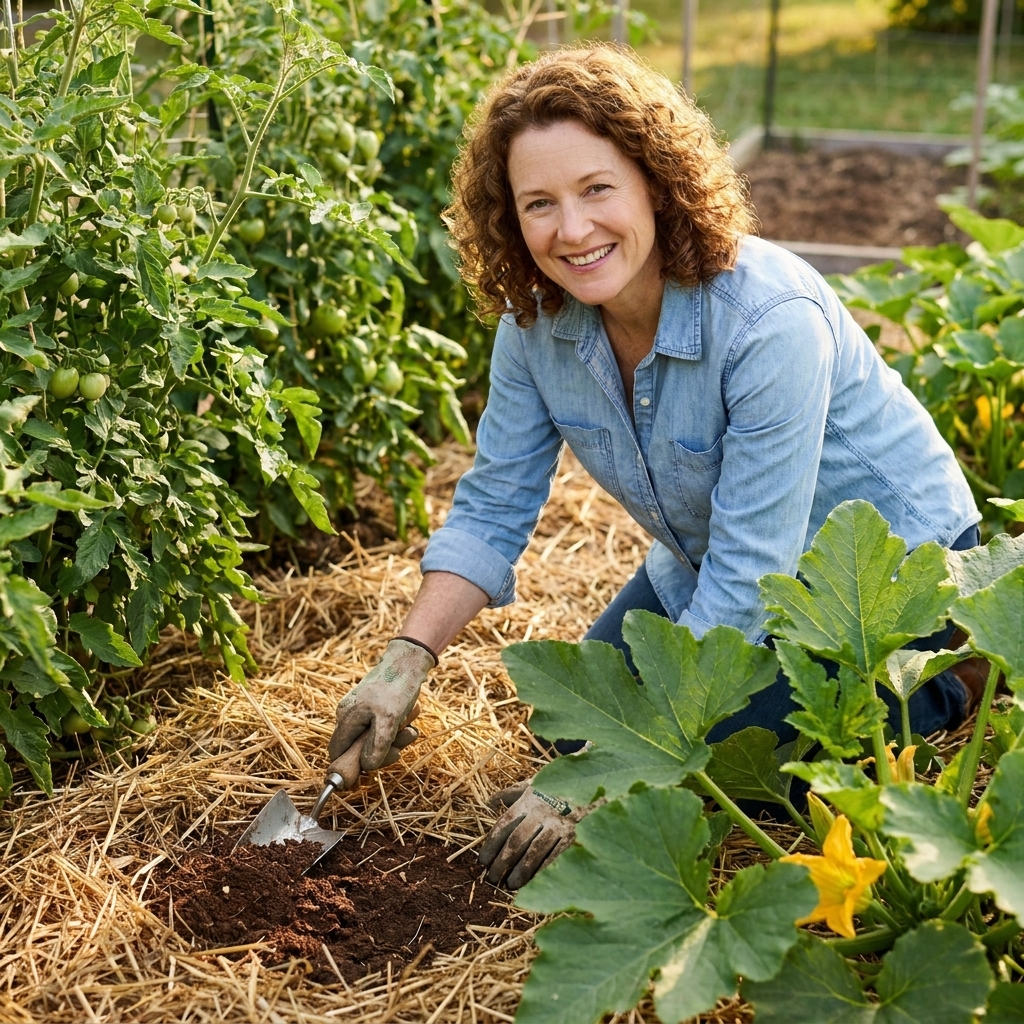
If deep watering is the drink, mulch is the lid on the cup.
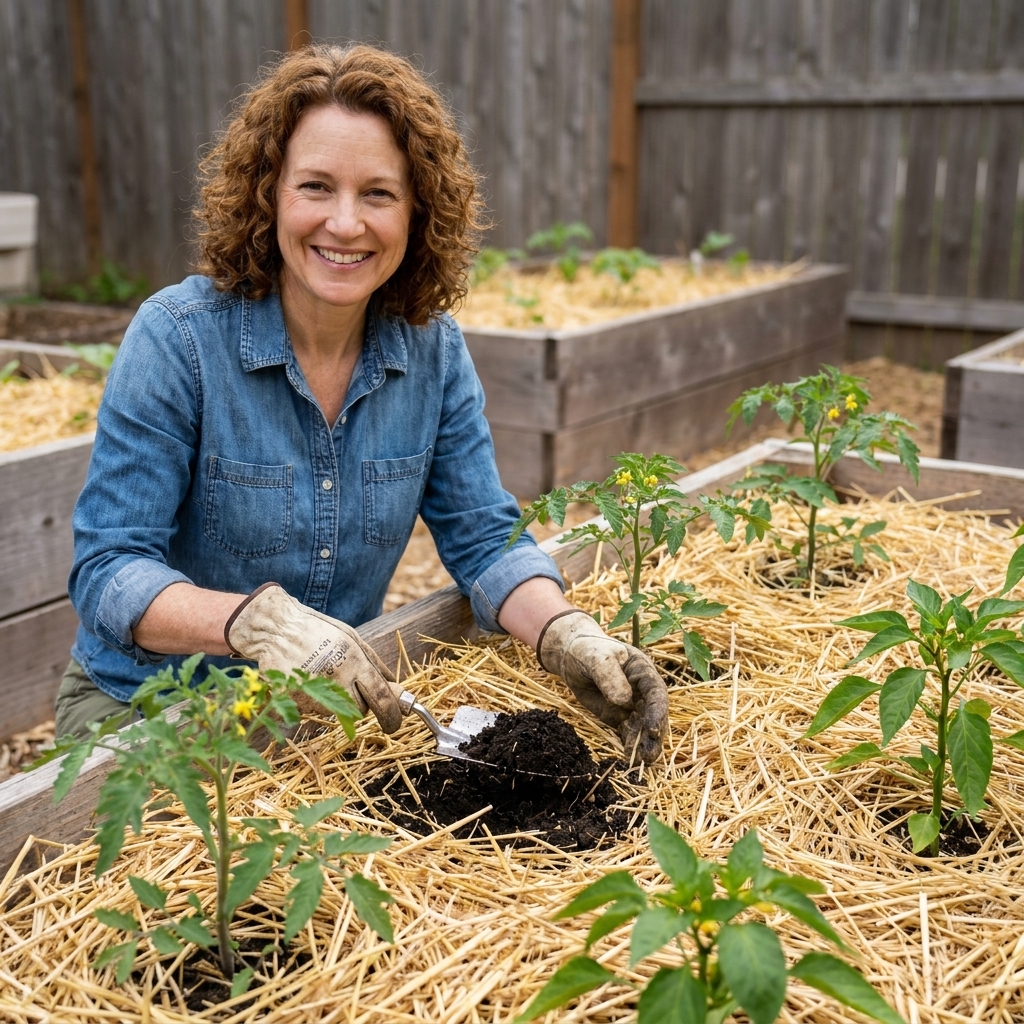
A 2 to 4 inch layer of mulch can dramatically reduce evaporation and keep the soil surface cooler. My favorites for vegetable gardens:
- Clean straw (not hay, unless you enjoy surprise weeds).
- Shredded leaves (especially in pathways and around brassicas).
- Untreated grass clippings in thin layers that dry between applications.
- Compost as a 1 to 2 inch base layer, topped with straw for longer-lasting coverage.
Keep mulch pulled back an inch or two from the main stem to discourage rot and hiding spots for pests.
Deep watering by crop
Tomatoes
- Water deeply and consistently. Big swings between bone-dry and soaked can contribute to cracking.
- Aim at the root zone. Wet leaves plus heat often equals higher blight pressure.
- Container tomatoes: In extreme heat, they may need daily watering, sometimes twice. Go slow each time so the whole root ball gets wet.
Peppers and eggplant
- Even moisture can reduce blossom end rot risk.
- Do not keep them soggy. Let the top inch or two dry slightly between deep waterings.
Cucumbers
- They are thirsty. Deep water helps reduce bitterness and keeps vines productive.
- Water earlier when you can. It supports steady growth and reduces stress.
Squash and melons
- Water at the base. Large leaves love to trap moisture.
- Once fruit is sizing up, keep moisture steady. Stress can reduce yield and flavor.
Beans
- Deep water during flowering and pod set. Drought stress here can cut harvests.
- Avoid overhead watering late in the day. Bean leaves can be mildew magnets.
Best time of day
Early morning wins for summer vegetables.
- Less evaporation than midday.
- Plants are primed to take up water as the day heats up.
- Foliage dries quickly if it gets splashed.
If you must water later, aim for late afternoon at the soil level and keep leaves as dry as possible. Try not to water at night unless you are dealing with a true emergency wilt situation.
Heat waves
When temperatures spike, you are balancing hydration with plant stress.
- Water earlier than usual. Pre-hydrated plants handle heat better.
- Prioritize containers and new transplants. They dry fastest.
- Do not flood a scorching hot, bone-dry bed all at once. Use cycle-and-soak to help water penetrate and avoid runoff.
- Add temporary shade. Shade cloth or a light row cover over hoops can reduce water demand dramatically.
If your plants wilt in the afternoon but recover by evening, that can be a normal heat response. If they are still wilted at sunset, it is time to water deeply.
Common mistakes
- Watering too fast: Runoff is not hydration. Slow it down or switch to drip or soaker hoses.
- Watering too often: Constantly wet topsoil encourages shallow roots and can invite rot.
- Wetting leaves regularly: Many summer diseases thrive with frequent leaf wetness.
- Ignoring mulch: Bare soil is a moisture leak.
- Assuming “15 minutes” means anything: Time is meaningless without knowing your flow rate and soil absorption.
A simple routine
For raised beds
- Lay soaker hose or drip line close to plant rows.
- Mulch 2 to 3 inches deep.
- Water early morning for a long soak.
- Once a week, do the trowel test to confirm you are reaching roughly 6 to 12 inches for established plants.
- Adjust run time as plants grow and temperatures rise.
For containers
- Water slowly until water runs out the bottom.
- Wait 5 minutes, then water again briefly if the potting mix was very dry (dry mix can repel water at first).
- Mulch the surface with straw, shredded leaves, or compost.
- Check daily in hot, windy weather.
FAQ
Is deep watering the same as bottom watering?
Not exactly. Deep watering is about soaking the root zone in the ground or a pot. Bottom watering is a container technique where water is supplied from below. Both can be useful, but for garden beds, deep watering usually means slow watering at the soil surface so moisture moves downward.
Can deep watering prevent blossom end rot?
It can help reduce the risk. Blossom end rot is tied to calcium uptake problems, and inconsistent soil moisture is a major trigger. Deep, steady watering plus mulch is one of the best practical defenses, along with avoiding over-fertilizing with nitrogen.
Should I water every day in summer?
In-ground gardens and raised beds usually do better with fewer, deeper waterings. Containers are the exception, especially in heat waves, because they can dry out fast. If you are watering daily in beds, it is worth checking whether you are only wetting the top inch.
How do I know if I overwatered?
Signs include consistently wet soil, yellowing leaves, fungus gnats in potting mix, and plants that look wilted even though the soil is damp. Overwatering can also reduce oxygen around roots. Let the top couple inches dry slightly between deep waterings in most summer beds.
One last reminder
Deep watering is less about following a perfect schedule and more about building a relationship with your soil. Once you start checking moisture depth, paying attention to output, and watering slowly on purpose, your plants respond fast. You will see sturdier growth, fewer stress tantrums, and a garden that stays productive even when summer turns the dial up.
If you want a small challenge for the week: do the trowel test after your next watering. It is the quickest way I know to turn watering from a guess into a skill.