A practical herb calendar for vegetable gardeners: when to start seeds, when to transplant, and how to harvest for steady kitchen flavor all season.
Veg Loom
October 17, 2026
By Maggie O'Connell
How to Harvest Basil Without Killing the Plant
Learn exactly where to pinch or cut basil so it keeps branching instead of bolting. Step-by-step harvest tips for bushier plants, bigger yields, and better flavor.

Maggie O'Connell
Maggie O'Connell is a lifelong gardener and the voice behind Vegloom, dedicated to helping people grow their own food regardless of their yard size. With over 15 years of hands-on experience in backyard agriculture, she specializes in raised bed gardening, organic soil building, and seasonal planting calendars. When she isn't writing, Maggie can usually be found tending to her sprawling heirloom tomatoes or experimenting with new compost recipes.
Basil is one of those herbs that will give and give, but only if you harvest it like you mean it. The goal is not to “take leaves.” The goal is to tell the plant to branch. Once you learn where to pinch and where to cut, basil turns into a little leaf factory instead of a tall, skinny plant that rushes into flowering.
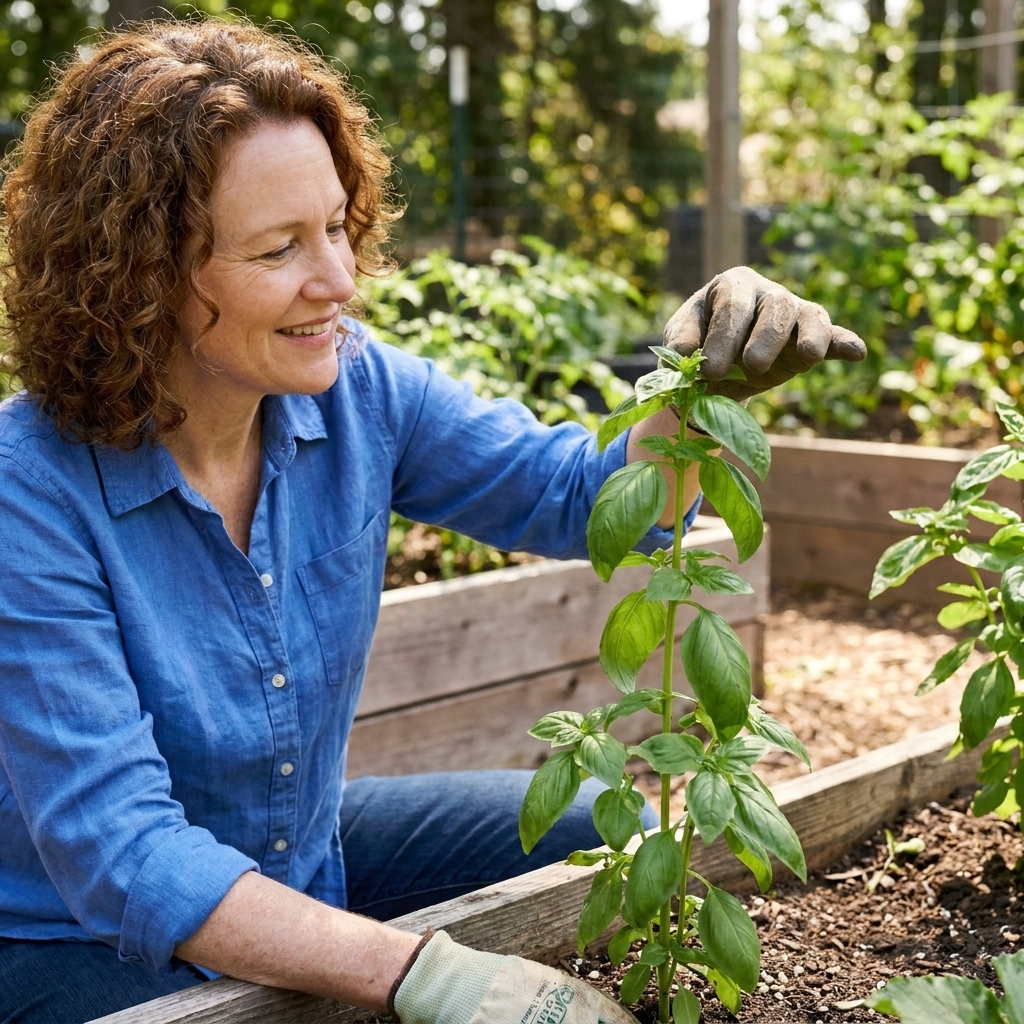
Pinching vs. cutting: what is the difference?
Both methods work. They are just different tools for different moments in the season.
- Pinching means using your fingers to remove the tender top growth (the tip) right above a leaf node. It is fast, gentle, and perfect for small harvests.
- Cutting means using snips or scissors to remove longer stems cleanly. It is better for bigger harvests and for keeping plants tidy and disease-free.
In both cases, the “magic” happens at the leaf node, that spot where leaves grow out of the stem. Basil usually responds to being cut above a node by pushing out new side shoots from that node, which makes the plant bushier.
Quick rule of thumb: Pinch for a quick handful. Cut when you want a bigger harvest or you need to reshape the plant.
When to start harvesting
Start once the plant is clearly established and putting out fresh growth. For most basil, that means it is at least 6 to 8 inches tall with several sturdy stems and multiple sets of true leaves.
A set of leaves is simply a pair (or cluster) of leaves growing from the same spot on the stem. Those spots are the nodes you will harvest above.
The one rule that keeps basil alive
Do not pluck random leaves off the lower stem. That is the quickest way to end up with a bare, top-heavy basil stick.
Instead, harvest stems by removing the growing tip right above a node. This preserves the plant’s structure and triggers branching.
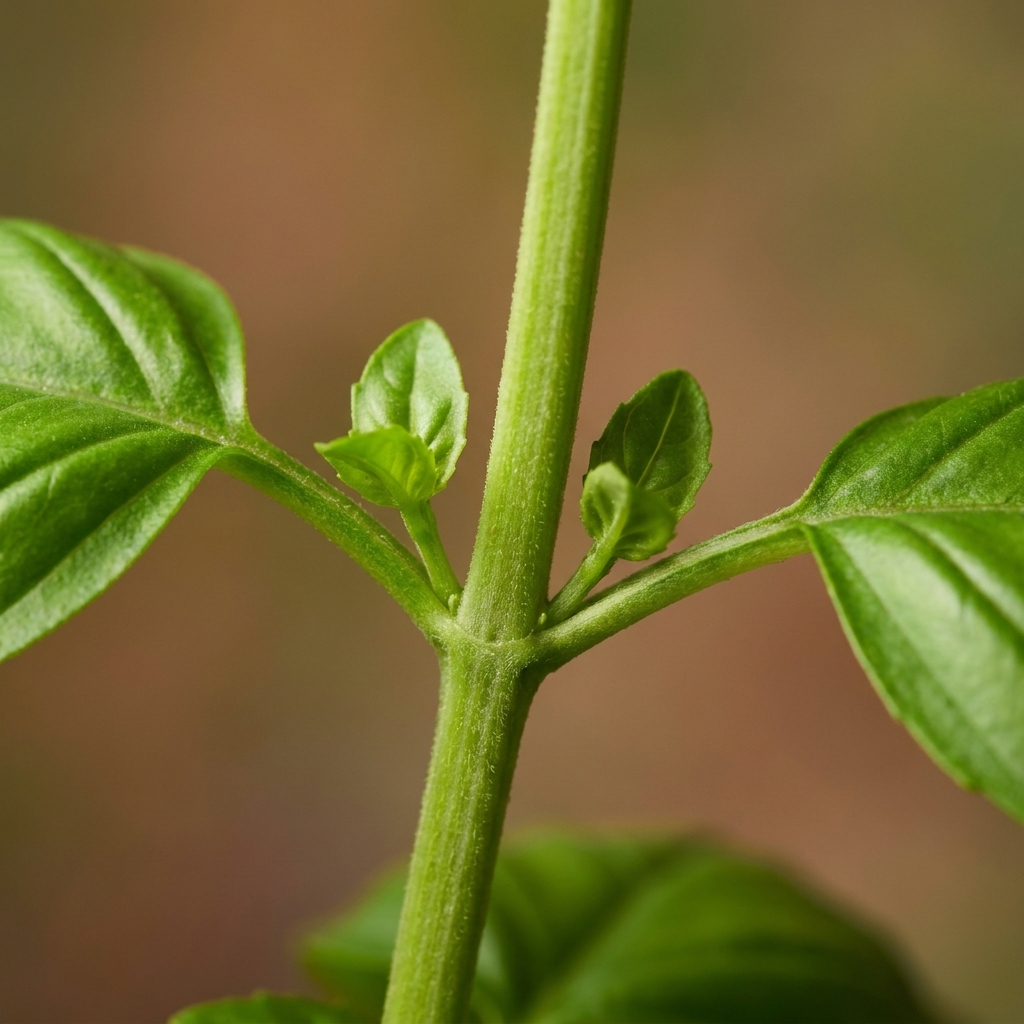
How to pinch basil
If you are grabbing basil for eggs, pasta, or a quick salad, pinching is ideal.
Step-by-step
- Find the top of a stem with 2 to 3 sets of leaves below it.
- Locate the topmost leaf node you want to keep (a pair of leaves coming out opposite each other).
- Pinch just above that node, removing the soft tip and leaving the node intact.
- Repeat across the plant instead of stripping one stem bare.
How much to take: As a general guideline, it is usually safe to remove up to about one-third of the plant at a time. Recovery depends on heat, light, water, and whether your basil is in a container. If it is a small transplant that is still settling in, keep it lighter.
How to cut basil
When you want enough for pesto, a big caprese platter, or to preserve a batch, grab clean snips.
Step-by-step
- Sanitize your snips if you have had any disease issues in the garden. A quick wipe with rubbing alcohol works.
- Choose a stem to harvest and follow it down until you find a strong node with healthy leaves.
- Cut 1/4 inch above the node. Avoid cutting into the node itself.
- Make the cut clean and decisive, not crushed or jagged.
Why cutting can be better: Clean cuts heal faster than torn stems, and harvesting longer stems encourages the plant to branch lower, creating a sturdier, more productive shape.
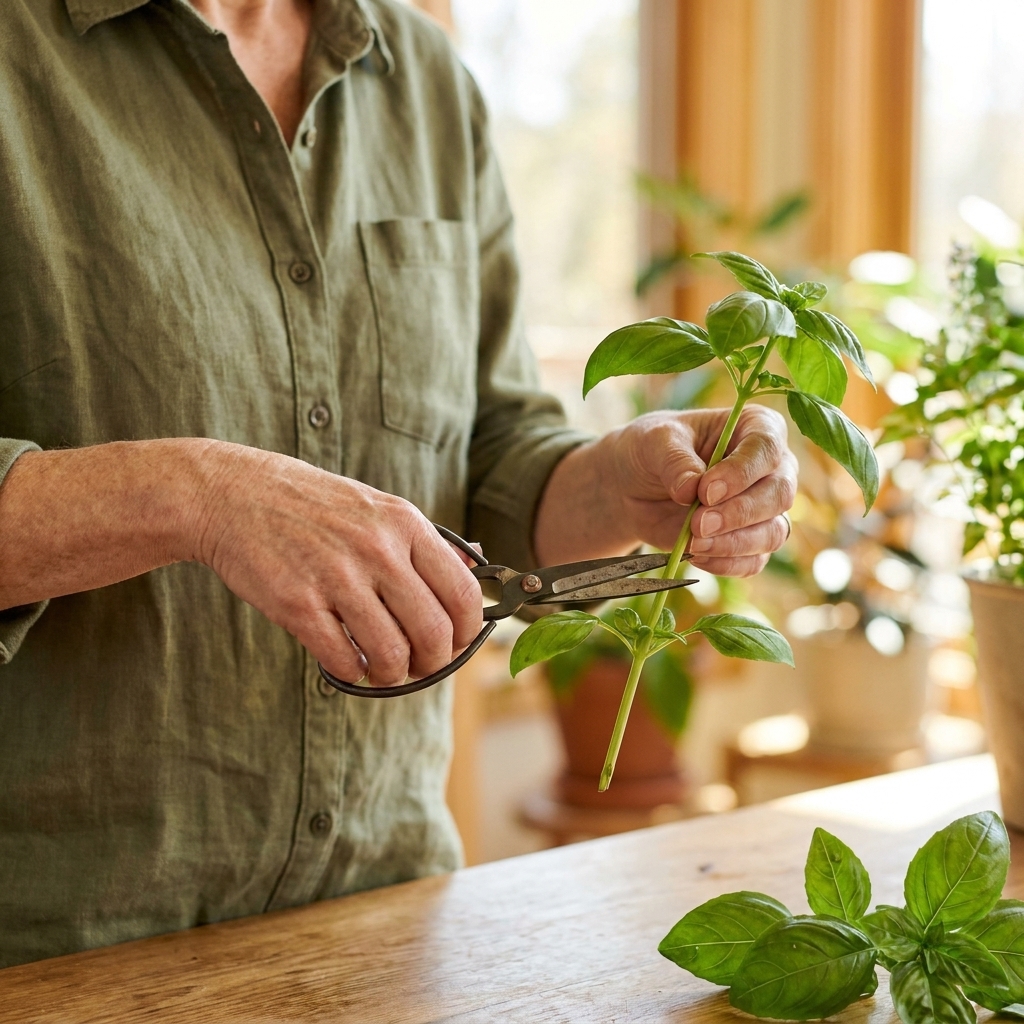
Where to harvest for bushy growth
If your basil is young and you want it to fill out, harvest higher at first, then gradually start taking stems a little lower as it grows. This builds a plant with lots of branching points.
- Early season: Pinch the top growth once the plant has several sets of true leaves. This encourages the first big fork.
- Midseason: Cut stems back to just above sturdy nodes, rotating around the plant.
- Late season: Take bigger cuts if you need them, but leave enough leaf area for the plant to keep photosynthesizing and bouncing back.
How often to harvest basil
Basil likes regular harvesting. In warm weather, I often harvest lightly every few days and do a larger tidy-up harvest once a week or every other week.
Two timing tips that matter:
- Harvest in the morning after dew dries, especially if you are storing it or making pesto. Leaves are at peak hydration and handle better.
- Do not wait until it is huge and woody. Frequent trimming keeps stems tender and leaves coming.
Stopping flowers
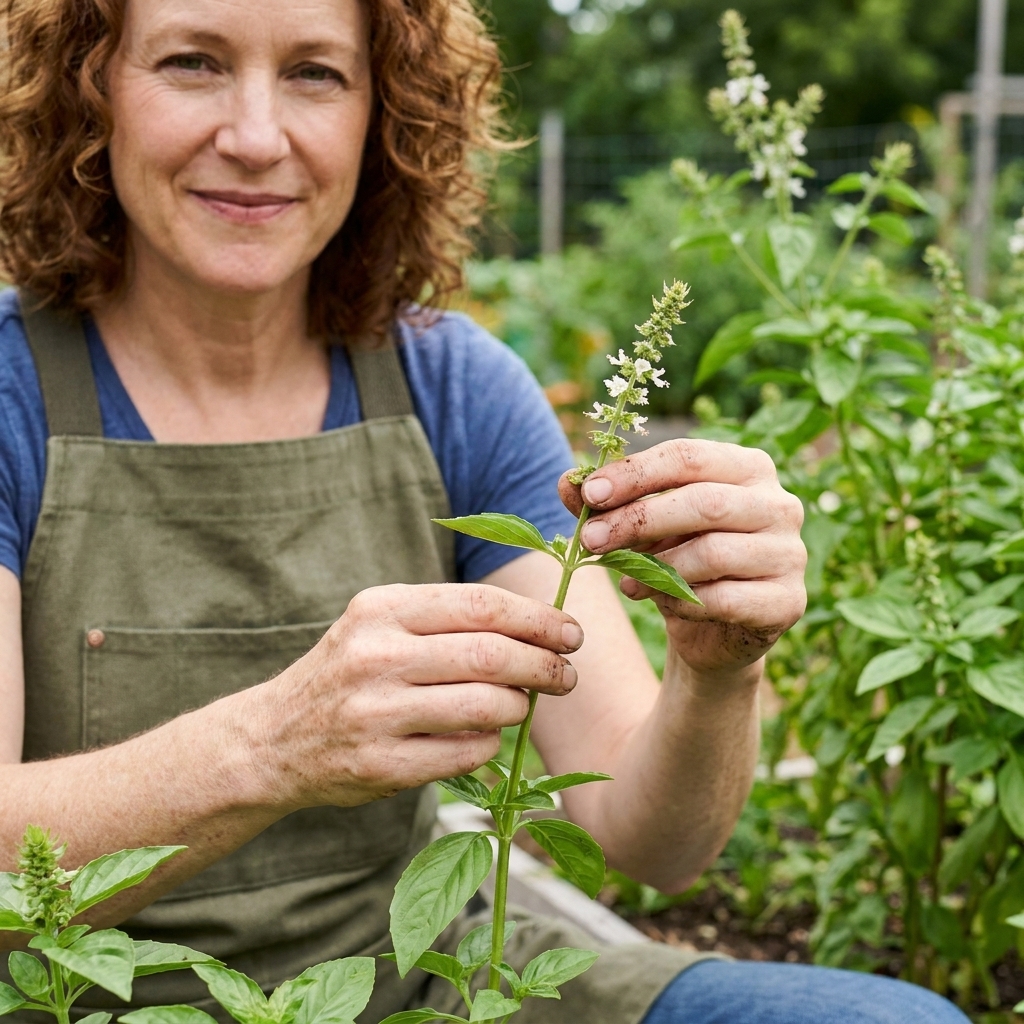
Basil’s default plan is to grow, flower, set seed, and call it a season. Once flower spikes form, leaf production and flavor often decline.
If you see flower buds
Pinch them out immediately, taking the stem back to the next node below the flower spike. Do not just remove the little flowers at the top. Remove the whole flowering tip so the plant branches instead of trying again quickly.
If the plant is bolting hard
- Cut it back more firmly, removing flowering stems down to a healthy set of leaves and nodes.
- Feed and water after the haircut. A little compost top-dress or a gentle organic liquid feed can help it rebound.
- Expect the leaves to be smaller at first. With consistent harvest, many basil plants settle back into leafy growth.
Common mistakes
- Mistake: Plucking big lower leaves first.
Fix: Start at the top and harvest stems above nodes so the plant keeps a leafy base. - Mistake: Taking all the growth from one side.
Fix: Rotate your harvest around the plant for balanced branching. - Mistake: Letting it flower “just a little.”
Fix: Remove flower spikes as soon as you spot them, then harvest more regularly. - Mistake: Ragged tears from dull scissors.
Fix: Use snips and make crisp cuts. Clean tools help prevent disease spread. - Mistake: Harvesting a stressed plant (wilting, dry soil).
Fix: Water first, let it recover, then harvest the next morning.
Container and indoor basil notes
- Containers: Pots dry out fast in summer, which can slow regrowth. Keep moisture even and harvest a little less aggressively if the plant is struggling.
- Indoors: Light is usually the limiting factor. If your basil is stretching, harvest lightly and prioritize stronger light (a very bright window or a grow light) so it can rebound.
After-harvest care
- Sun: Basil is happiest with 6 to 8 hours of sun.
- Water: Even moisture, not soggy soil. Containers dry out fast in summer.
- Soil: Rich, well-draining soil produces bigger leaves. A light compost top-dress midseason helps.
- Spacing and airflow: Good airflow reduces leaf spot and mildew, especially in humid stretches.
And one more small trick that pays off: when your plant is growing fast, harvest a little before you need it. Basil that is regularly trimmed stays tender and keeps pushing out fresh tips.
Storing what you harvest
- Short-term: Treat basil like a bouquet. Trim the stem ends and keep it in a glass of water at room temperature, loosely covered if your kitchen is dry.
- Avoid the fridge: Basil bruises and blackens easily when it is cold.
- For pesto or freezing: Harvest and process promptly for the best color and flavor.
FAQ
Can I harvest basil leaves without taking the stem?
You can, but it is not ideal. If you only pluck individual leaves, especially from the bottom, the plant will not branch well. For the healthiest plant, harvest the tender tip or cut a stem just above a node.
How low can I cut basil back?
As long as you leave healthy nodes and plenty of leaves for energy, basil can handle a decent haircut. I aim to leave at least a few sets of leaves on each main stem so it can rebound quickly.
Will basil grow back after harvesting?
Yes, and it often grows back bushier if you harvest above nodes. That is the whole branching trick in action.
Should I harvest basil from the top or bottom?
Mostly from the top, working your way down as the plant gets bigger. Top harvesting encourages branching and keeps the plant leafy from the base up.