Spot nitrogen, calcium, magnesium, potassium, phosphorus, iron, and sulfur issues in your veggies and fix them naturally with compost, gypsum, lime, and smar...
Veg Loom
October 17, 2026
By Maggie O'Connell
Granular vs. Liquid Organic Fertilizers for Vegetables
Granular or liquid organic fertilizer for veggies? Learn the pros and cons, how formulations differ, when each makes sense, and a simple feeding schedule for raised beds and containers.

Maggie O'Connell
Maggie O'Connell is a lifelong gardener and the voice behind Vegloom, dedicated to helping people grow their own food regardless of their yard size. With over 15 years of hands-on experience in backyard agriculture, she specializes in raised bed gardening, organic soil building, and seasonal planting calendars. When she isn't writing, Maggie can usually be found tending to her sprawling heirloom tomatoes or experimenting with new compost recipes.
I have fed vegetables in just about every way you can imagine, including a few experiments I will not repeat. Here is the honest truth from the raised-bed trenches: granular organic fertilizers are often your steady, slow pantry, while liquid organic fertilizers are often your quick, targeted snack. “Often” matters here, because formulations vary. Some liquids still need microbes to finish the job, and some granular blends contain a small fast-acting fraction. Most home veggie gardens do best with a mix of both, timed to match how plants actually eat.
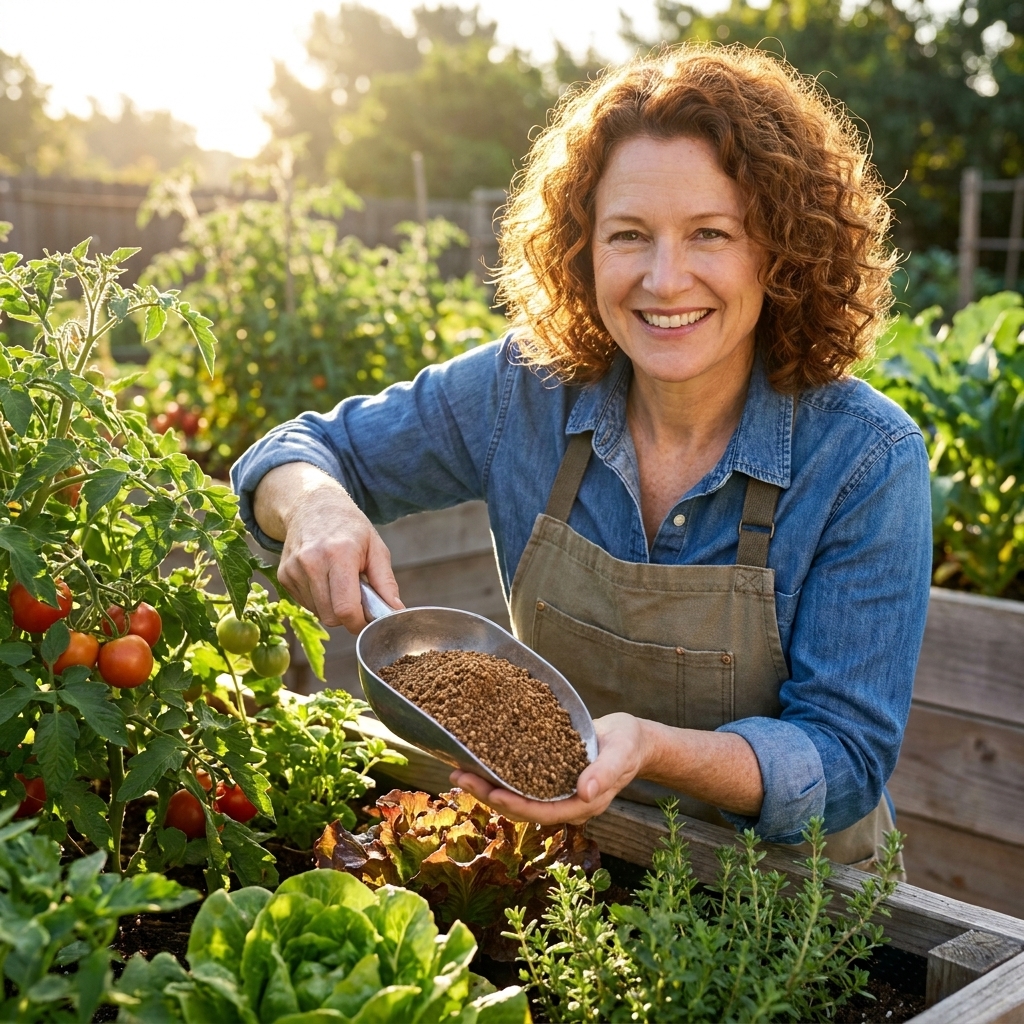
If you want the biggest win with the least drama, it is this: build a steady baseline in the soil, then use liquids as a steering wheel. Below, I will walk you through what each type does well, where it can let you down, and how to build a feeding routine that supports leafy growth early, strong flowering, and a long harvest without turning your soil into a salt lick.
Key takeaways
- Granular is best for baseline fertility and soil building.
- Liquid is best for quick support, containers, and midseason hunger.
- Not all liquids are “food”. Some are mostly biostimulants (like seaweed) with little N-P-K.
- Organic can still burn or salt up if you overapply, especially manure-based blends and containers.
- When in doubt, test soil (especially for pH and phosphorus) before you keep adding more.
Granular vs. liquid: the real difference
Both granular and liquid organic fertilizers can be wonderful for vegetables. The difference is not about which is “stronger.” It is about how nutrients become available and how long they last, and that depends on both the product and your soil conditions.
Granular organic fertilizers
Granular organics are typically meals and mineral blends like alfalfa meal, feather meal, blood meal, bone meal, kelp meal, crab or shrimp meal, and rock minerals, sometimes in pelleted form. In organic gardening, nutrients often become plant-available as soil life breaks them down. That means granules are usually:
- Slower and steadier than liquids
- Better for building long-term soil fertility
- Less likely to burn at label rates, but “organic” can still burn via excess salts or ammonia, especially poultry-manure-based blends and heavy applications in containers
Liquid organic fertilizers
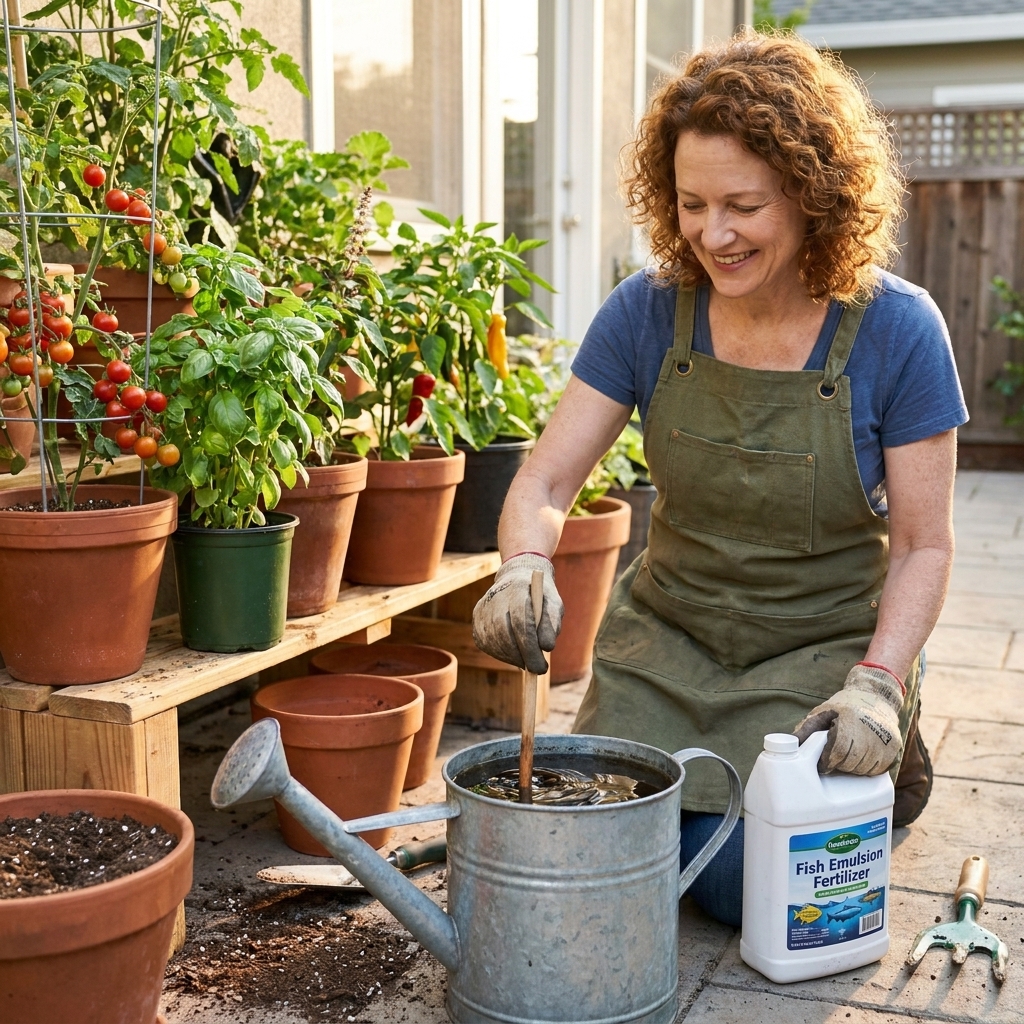
Liquids include fish emulsion, hydrolyzed fish, seaweed extracts, compost tea, worm casting “tea,” liquid meals, and bottled organic blends. Nutrient-bearing liquids can act faster because nutrients are already dissolved or easier for microbes to mineralize. But some liquids are light on actual N-P-K and work more like a plant “tonic” than a meal.
- Often faster acting, especially fish-based nutrient liquids
- Great for quick course correction when growth stalls
- Easier to wash out of containers and sandy beds if you overwater or fertilize right before heavy rain
One important note: many “organic” liquid products vary a lot. Some are mostly nutrients, some are mostly biostimulants (like seaweed), and some are a combo. That is not bad, but it explains why one bottle can feel like magic while another feels like expensive water.
Pros and cons for vegetable gardens
Granular: strengths
- Longer feed window. A good granular base can carry many crops for weeks, sometimes months, especially in raised beds with healthy microbial activity.
- Excellent for pre-plant soil prep. You can blend it into the top few inches where roots will actually forage.
- Supports soil biology. Many granular organics feed microbes, which then feed your plants.
- Low day-to-day effort. You do not need to mix a jug every week if you do not want to.
Granular: drawbacks
- Not instant. If your zucchini is pale today, granules may not green it up by the weekend.
- Performance depends on conditions. Cold soil, very dry soil, low microbial activity, or off-range pH can slow nutrient release and uptake.
- Harder to fine-tune. Once it is in the bed, it is in the bed.
Liquid: strengths
- Quick response. Nutrient liquids are my go-to when seedlings stall, transplants sulk, or fruiting plants hit that hungry midseason stretch.
- Easy to target. You can focus on heavy feeders (tomatoes, peppers, cucumbers) without feeding the whole bed.
- Container friendly. Containers run out of food faster, and liquids help you keep up.
Liquid: drawbacks
- Easy to overdo. “If some is good, more is better” is how you get lush leaves and not many tomatoes.
- More frequent applications. Most liquids do not last long, especially with regular watering.
- Odor and mess potential. Fish products work, but they can be… memorable.
Which is best? It depends
Raised beds with compost: granular as the base
Raised beds are my happy place because you can build a soil that behaves like a sponge and a buffet. If your beds get compost each season and you have a decent amount of organic matter, a granular organic fertilizer at planting time is often the most efficient base feed.
Then you layer in liquids only when the plants tell you they need it.
In-ground beds in tough soil: start steady, supplement smart
When I moved into clay that could have been used to patch a dam, liquids helped transplants get going while I worked on soil structure. In clay, nutrient availability can be weird, and roots can be slow to explore. A blended approach works well: granular for the long haul, liquid for the early boost.
Containers and grow bags: liquid is often the main event
Potting mixes drain fast, and frequent watering flushes nutrients. Granular products can still help, especially slow-release organic pellets, but many container gardeners get the best results with:
- a light granular mix-in at planting, plus
- a regular liquid feeding schedule through the season
One container-specific caution: salts can build up from any fertilizer (organic included) if you feed heavily and never flush. If you see crusty residue on the soil surface or leaf tips browning, back off and water deeply to rinse the pot.
Fast greens vs. long-season fruiting crops
- Fast greens (lettuce, arugula, spinach, baby bok choy) often do fine with compost plus a small amount of granular nitrogen, and maybe one light liquid feeding if they look pale.
- Long-season heavy feeders (tomatoes, peppers, eggplant, cucumbers, squash) benefit from a granular foundation plus midseason liquid support.
How to apply granular (no drama)
Granular organics are easiest when you treat them like part of soil prep.
1) Apply at the right time
- Before planting: Mix into the top 2 to 4 inches of soil.
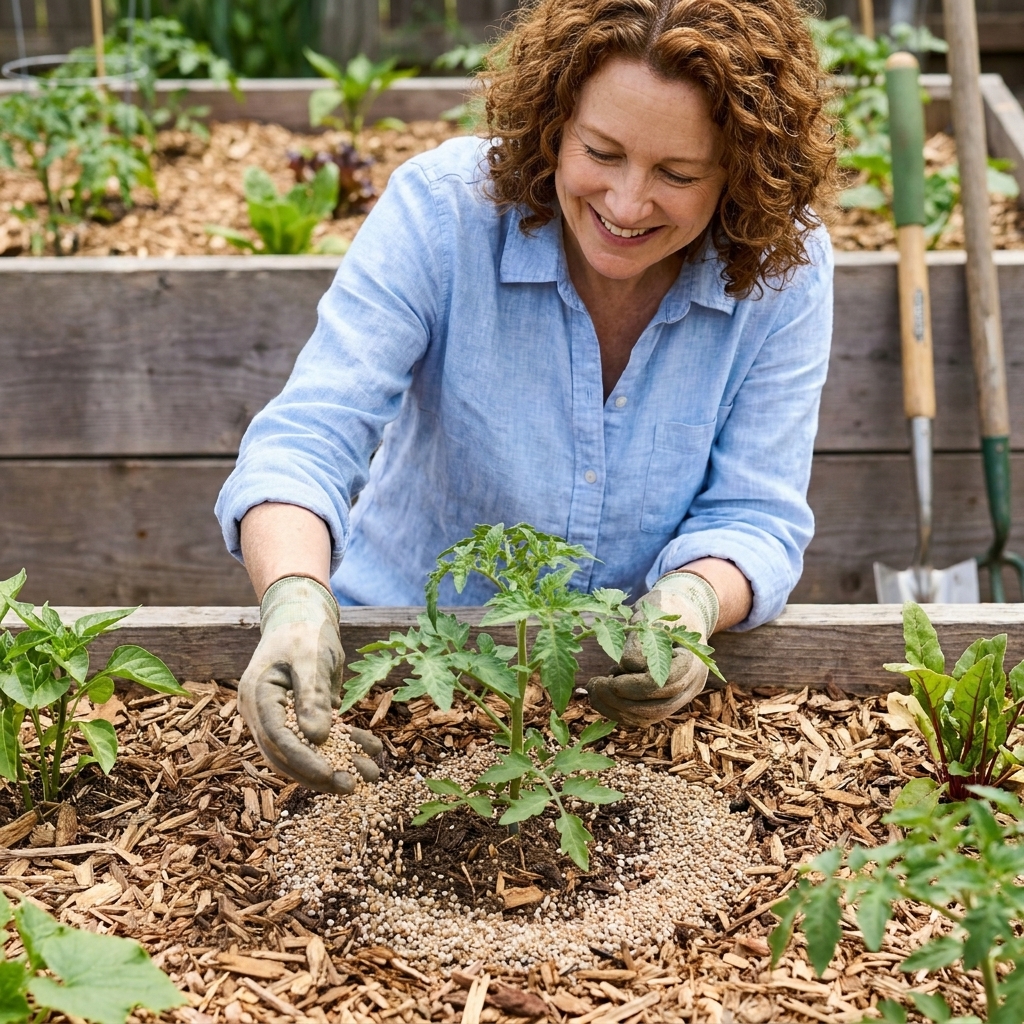
- Side-dress midseason: Sprinkle a ring a few inches away from stems, lightly scratch it into the surface, then water well.
2) Water after application
Granules need moisture. Watering helps start breakdown and moves soluble nutrients into the root zone.
3) Keep it off stems and leaves
Especially with stronger ingredients like blood meal or poultry-based blends. I aim for a donut around the plant, not a pile at the base.
4) Follow label rates, then watch the plant
Organic fertilizers are not magic dust. More is not better. Too much nitrogen can mean enormous plants with disappointing yields, especially in tomatoes and peppers.
How to apply liquid (without chasing problems)
1) Dilute correctly
Measure. Over-concentrated liquids can stress roots and can throw your plant out of balance, especially in hot weather or small containers.
2) Feed the soil, not just the leaves
Whenever possible, pour liquids at the soil line so microbes and roots both benefit.
3) Foliar feeding: useful, but not my default
Foliar feeding can help in a pinch, especially for acute micronutrient issues when roots are struggling. If you do it, keep dilution on the gentle side, spray in the cool part of the day, and do not treat it like a substitute for root nutrition.
4) Timing matters
- Morning is ideal so leaves dry quickly if you splash.
- After a deep watering can be gentler on plants, especially in hot weather.
- During active growth is when you will see the best response.
5) Avoid feeding right before heavy rain
Liquids can wash right through the root zone. If you are expecting a big storm, wait.
A simple feeding schedule
If you want one schedule that works for most home gardens, this is the one I use as a starting point. You will adjust based on your soil, your compost habit, and what you are growing.
At planting (or transplanting)
- Raised beds and in-ground: Mix compost into the bed, then add a balanced granular organic fertilizer per label directions.
- Containers: Use fresh potting mix, blend in a mild granular organic (or an organic slow-release pellet) at planting.
2 to 3 weeks after planting
- If plants look vigorous and deep green, do nothing.
- If growth is slow or pale, apply a light liquid feed (especially helpful for brassicas and early tomato growth).
When flowering begins (tomatoes, peppers, cucumbers, squash)
- Side-dress with granular only if you used a light pre-plant rate, your soil is lean, or plants look pale and hungry.
- Optionally add seaweed extract as a supplement. I treat seaweed as a support act, not the main fertilizer.
Midseason (about every 2 to 4 weeks for heavy feeders)
- Raised beds: Side-dress granules once if needed, then use liquid only if plants slow down or leaves lighten.
- Containers: Plan on a regular liquid feeding, often every 7 to 14 days depending on watering frequency and crop size.
Late season
- Dial back heavy nitrogen. You want ripening and steady production, not a burst of leafy growth.
- For tomatoes and peppers, I prefer small, consistent feedings rather than one big hit.
My personal rule: If the plant is growing well and setting fruit, I do not “fix” it. Overfeeding causes more headaches than underfeeding in a well-composted garden.
Choosing a product
Understand N-P-K, but do not obsess
N-P-K is nitrogen, phosphorus, and potassium. Leafy greens lean on nitrogen. Fruiting crops need a balanced supply, with enough potassium to support flowering and fruit fill. Organic fertilizers often have lower N-P-K numbers than synthetic ones, which is normal.
Check the nitrogen source
Feather meal, alfalfa meal, and fish-based inputs tend to be steady. Blood meal can be fast and strong. If you are new, start gentler.
Look for micronutrients and organic matter
Many blended granular organics include kelp meal or rock dusts for trace minerals. You will not always see instant results, but over time these inputs support plant resilience.
Be cautious with bloom boosters
Some high-phosphorus products are unnecessary if you already add compost and your soil is not deficient. Too much phosphorus can reduce availability of micronutrients like zinc and iron. If flowering is poor, the cause is often light, temperature swings, watering stress, or too much nitrogen, not a lack of bloom booster.
Soil tests and pH (the quiet superpower)
If you garden in the same beds year after year, an occasional soil test is one of the best reality checks you can buy, especially if you have been adding compost, manure-based fertilizers, or bloom boosters. It can catch phosphorus buildup, reveal low potassium, and flag pH issues before you waste a season “feeding” a problem that is really availability.
Also, pH matters more than most people think. If your pH is off, plants can struggle to take up nutrients even when the soil is technically fertile. Yellow leaves are not always a fertilizer problem.
Common mistakes (I have made them)
- Feeding a dry plant. Water first, then fertilize. Roots under drought stress do not appreciate a strong meal.
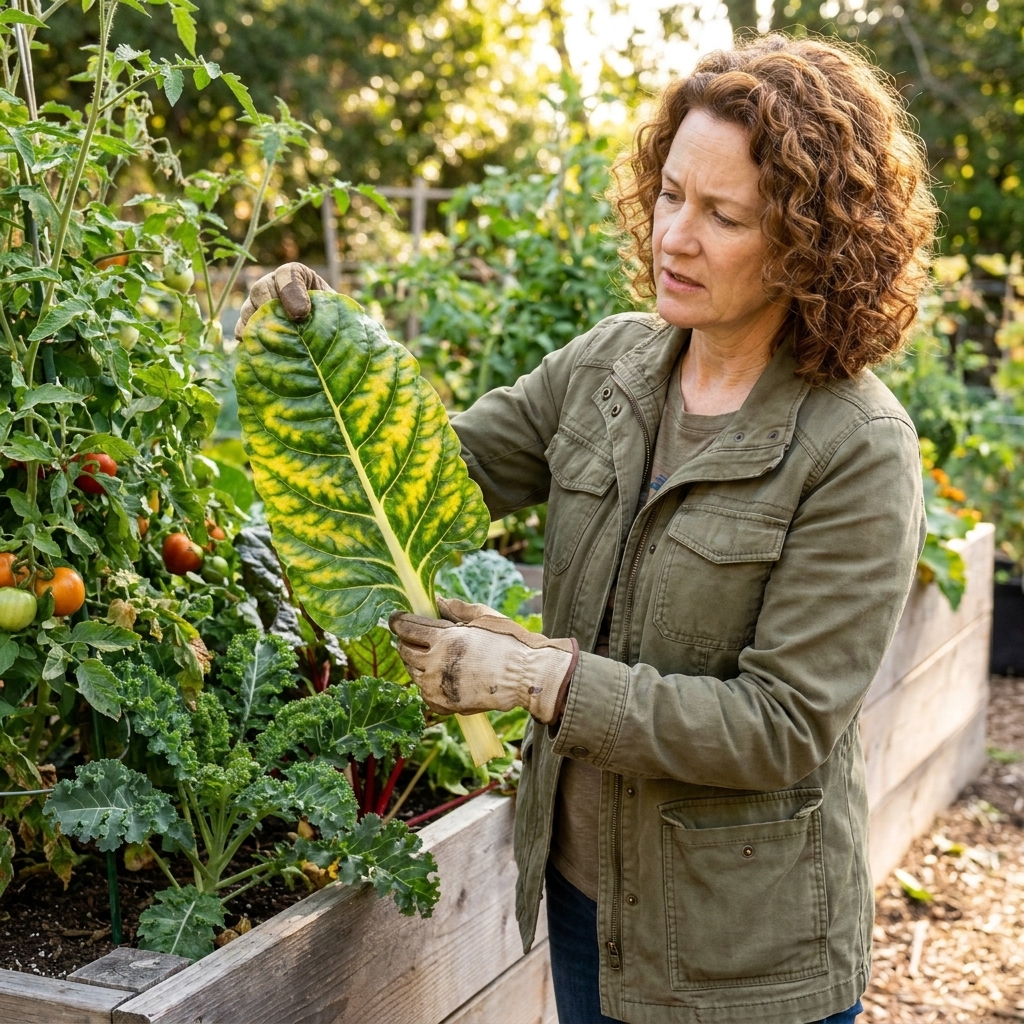
- Overcorrecting yellow leaves. Not all yellowing is nitrogen. Lower leaves yellowing late in the season can be normal aging. Yellowing with green veins can point to magnesium or iron issues, and pH can be the real culprit. Yellowing plus wilting can be water stress or disease.
- Using liquids as the only plan in raised beds. You can do it, but you will work harder than you need to. A granular foundation keeps things steadier.
- Assuming compost equals fertilizer forever. Compost is wonderful, but heavy feeders can still outpace it, especially in long seasons or densely planted beds.
Quick crop notes
Tomatoes
- Best approach: Granular at planting, then reassess at first fruit set. Side-dress only if growth is pale, slow, or you used a light pre-plant rate. Add a light liquid feed if plants stall midseason.
- Watch out for: Too much nitrogen, which delays fruiting.
Peppers and eggplant
- Best approach: Similar to tomatoes, but they are slower. A small nutrient liquid feeding during early growth can help if they are sitting still.
- Watch out for: Cold nights. Fertilizer cannot fix temperature stress.
Cucumbers and squash
- Best approach: Granular base plus a midseason side-dress if vines start to fade. Nutrient liquids help once vines are really running.
- Watch out for: Big leaves and no flowers often means excess nitrogen.
Leafy greens
- Best approach: Compost plus a light granular nitrogen source. Liquid is optional.
- Watch out for: Overfeeding, which can push soft growth and faster bolting in warm weather.
Carrots, beets, and radishes
- Best approach: Modest fertility. Too much nitrogen makes gorgeous tops and disappointing roots.
- Watch out for: Fresh manure or heavy high-nitrogen feeding.
FAQ
Can I use granular and liquid together?
Yes, and that is often the sweet spot. Use granular as your baseline and liquid as needed for midseason support or containers. The key is to keep the total nitrogen reasonable.
Which is safer for beginners?
Granular organic fertilizers are usually more forgiving because they release more slowly. Liquids are beginner-friendly too, but measuring and sticking to a schedule matters more.
How do I know if my veggies need fertilizer or just water?
If the soil is dry a few inches down, water first and wait a day. If plants perk up and color improves, it was likely moisture stress. If growth stays sluggish and pale in actively growing plants, a light feeding may help.
Do I need to fertilize if I add compost every year?
Sometimes yes, sometimes no. Compost improves soil and adds nutrients, but heavy feeders can still need extra. Think of compost as the foundation and fertilizer as the fine-tuning.
My bottom line
If you want the simplest answer: granular organic fertilizer is usually best for the main feeding of raised beds, and liquid organic fertilizer is best for quick boosts and container gardens. If you pair them thoughtfully, you get steadier growth, better yields, and fewer panic moments when plants hit their hungry phase in midsummer.
And if you take only one neighborly tip from all of this, let it be this: feed your soil like you plan to garden in it for years. Your vegetables will thank you, one tomato sandwich at a time.