A clear, practical square foot gardening spacing guide for raised beds, including plant counts per square, layout tips, succession ideas, and beginner-friend...
Veg Loom
October 17, 2026
By Maggie O'Connell
Square Foot Gardening in Raised Beds
Learn square foot gardening for raised beds: simple spacing, smart layouts, and succession planting tips to maximize harvests in a small space.

Maggie O'Connell
Maggie O'Connell is a lifelong gardener and the voice behind Vegloom, dedicated to helping people grow their own food regardless of their yard size. With over 15 years of hands-on experience in backyard agriculture, she specializes in raised bed gardening, organic soil building, and seasonal planting calendars. When she isn't writing, Maggie can usually be found tending to her sprawling heirloom tomatoes or experimenting with new compost recipes.
When my first garden attempt hit a wall of dense clay, raised beds saved the day. Square foot gardening is the method that made those beds truly productive. It takes the guesswork out of spacing, helps you plan your whole season on paper first, and turns even a modest bed into a steady salad and salsa factory.
Below is my practical, fence-leaning walkthrough for using square foot gardening in raised beds, from choosing bed dimensions to planting, succession sowing, and keeping your soil healthy year after year.
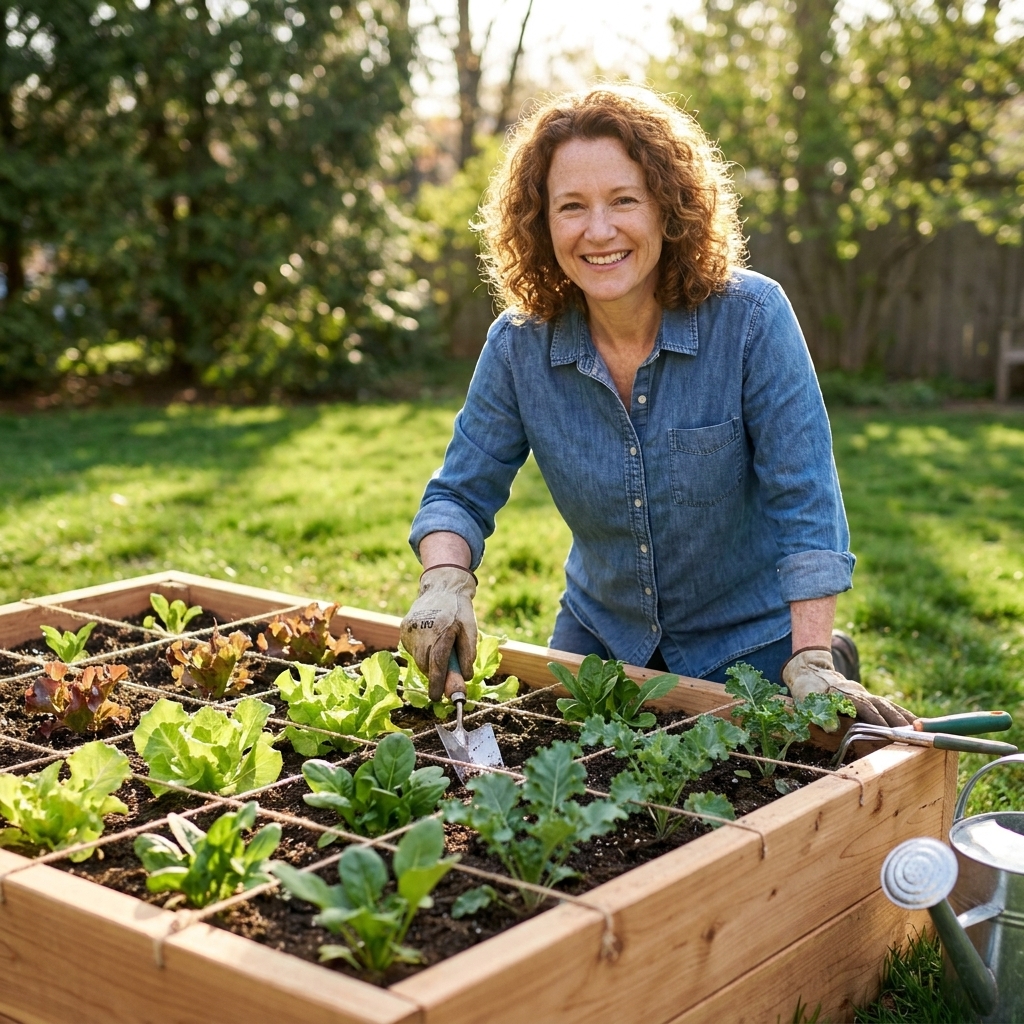
Before you start
Square foot gardening is forgiving, but a little pre-work saves a lot of mid-season scrambling.
- Sun: most vegetables want 6 to 8+ hours of direct sun. If your bed is closer to 4 to 6, lean into leafy greens, herbs, scallions, and radishes, and go easier on fruiting crops like tomatoes and peppers.
- Frost dates: know your average last spring frost and first fall frost. That one detail tells you when warm-season crops can safely go in and when you should pivot to fall greens.
- Grow what you eat: a single square of cilantro is exciting until it bolts and you realize you wanted basil the whole time.
Square foot gardening basics
Square foot gardening is exactly what it sounds like: you divide the surface of a raised bed into 1-foot-by-1-foot squares, then plant each square with a specific number of plants based on their spacing. Instead of long rows, you grow in a tidy grid.
Why it works in raised beds
- You waste less space. Wide row spacing is for walking paths and tractors, not backyard beds.
- You get fewer weeds. Plants fill in faster, shading the soil surface.
- It is easier to plan. Each square is a little “container” you can assign to a crop.
- You can stagger harvests. When one square finishes, you replant just that square.
Raised bed size
Square foot gardening is most satisfying when the bed is sized so you can reach every square without stepping on the soil. Stepping compacts soil, and compacted soil grows sad vegetables.
Best dimensions
- Width: 4 feet wide is the classic. You can reach 2 feet in from each side.
- Length: 4, 6, or 8 feet are common, but any length works.
- Depth: 10 to 12 inches is a good all-purpose depth for vegetables. Deeper is even better for carrots, potatoes, and tomatoes.
A 4x8 bed gives you 32 squares. That is plenty of room for a surprisingly complete kitchen garden.
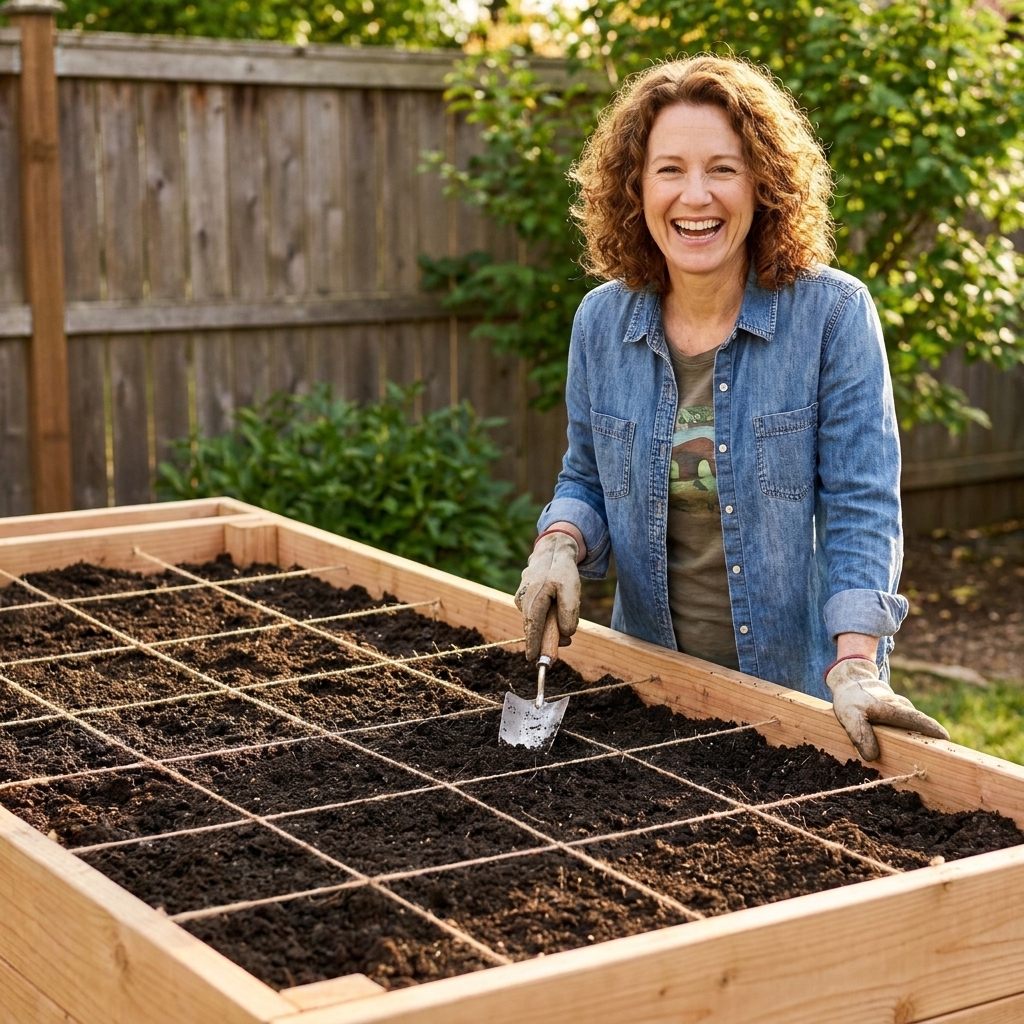
A grid that lasts
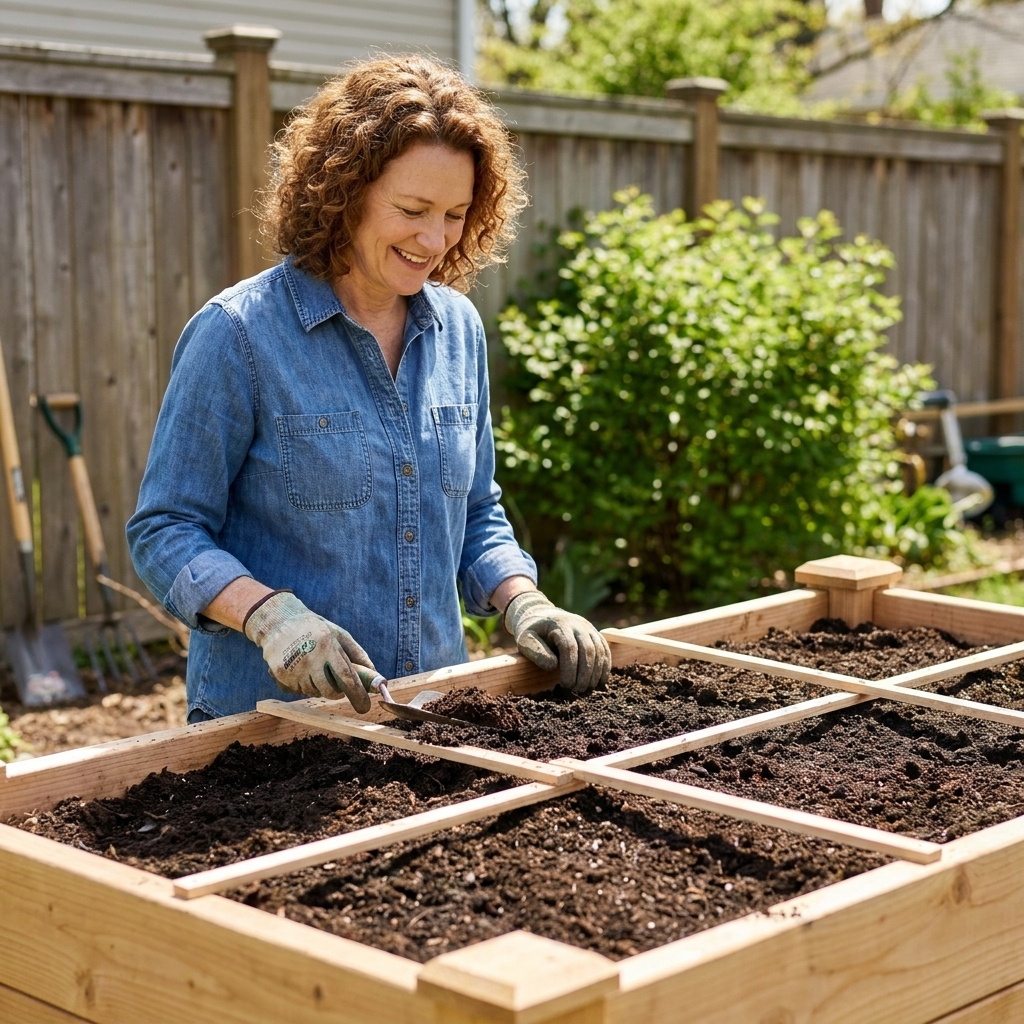
You can eyeball squares, but the grid is part of what makes the method beginner-friendly. It keeps spacing consistent and makes it easy to track what is planted where.
Simple grid options
- Twine or mason line: staple or screw small hooks into the bed frame and run string lines each season.
- Wood lath strips: thin strips laid on top of the soil are sturdy and removable.
- Conduit or thin PVC: works well in larger beds where string sags.
My tip: if you use string, pull it tight and check it after the first heavy rain. Wet soil settles and the lines can loosen.
Soil for high yields
Square foot gardening shines when the soil is loose, fertile, and full of life. High yields in small spaces mean you are asking a lot from that soil, so it needs regular feeding.
A dependable mix
For a brand-new bed, a reliable mix is:
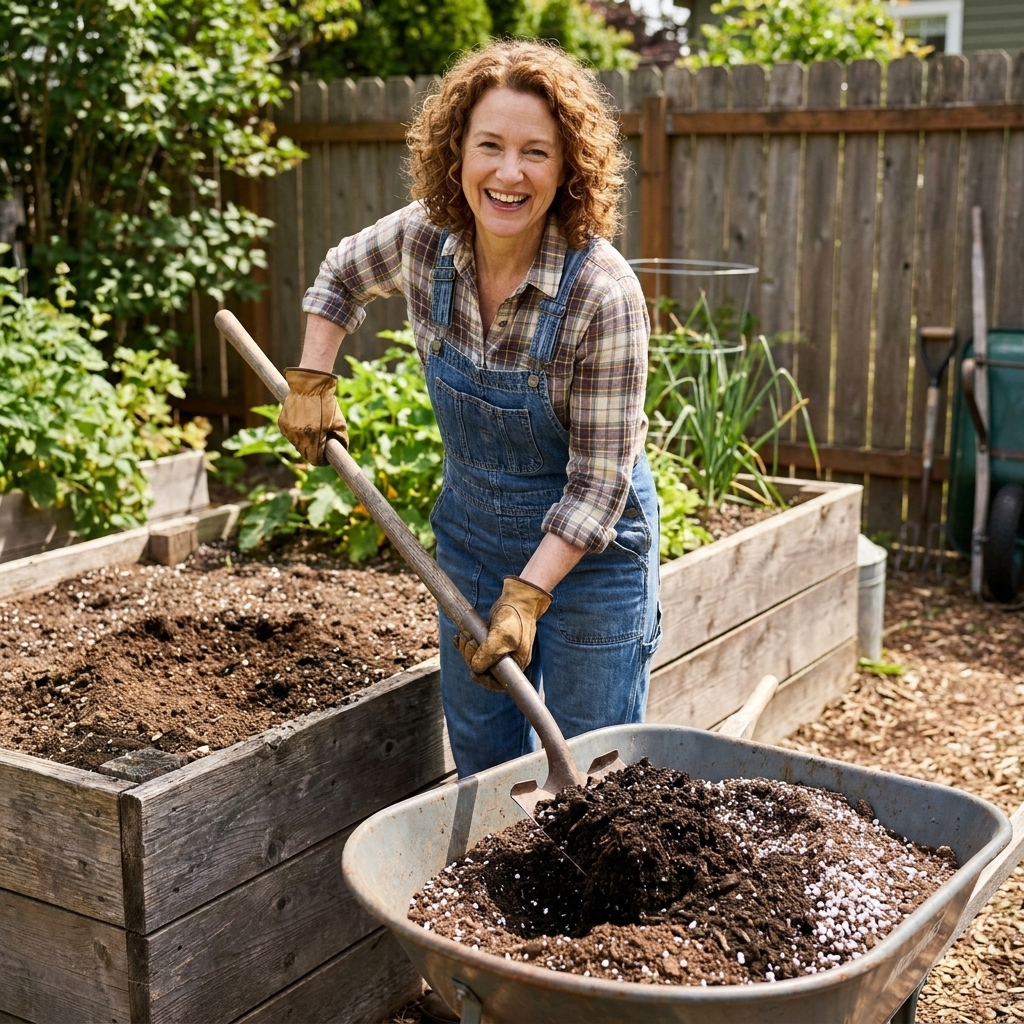
- Compost: about 30 to 50% of the mix, from a few different sources if possible
- Coconut coir or peat moss: improves moisture balance
- Vermiculite or perlite: keeps the mix airy and drains well
If you are aiming for the classic square foot gardening style, vermiculite is the closer match because it holds water well. Perlite can work too, but it is lighter and tends to float or migrate upward over time, so you may need to top-dress and re-balance as the seasons go on.
If you already have soil in place, you do not need to start over. Each season, top-dress every square with a scoop or two of finished compost and gently rake it in.
Fertility boosters
- Worm castings: a small handful per square at planting time
- Balanced organic fertilizer: especially for heavy feeders like tomatoes
- Crushed eggshells: a long-term calcium boost, best added to compost first
If plants look pale mid-season, I reach for compost tea or a fish-seaweed blend and water it in. It is like a pep talk for tired greens.
Spacing cheat sheet
Spacing is the heart of the method. Each 1-foot square gets a set number of plants depending on how much room they need.
Important: treat these as starting points, not laws. Variety, climate, fertility, and whether you trellis and prune all change what “fits.” When in doubt, give a little more space. Crowding is harder to fix than an extra square.
Quick spacing rules
- 1 plant per square: staked tomatoes (especially compact or determinate types), peppers, eggplant
- 1 plant per 2 squares: full-size broccoli, cabbage, cauliflower (compact varieties can sometimes work at 1 per square, but big heads usually need more elbow room)
- 2 plants per square: lettuce heads (small to medium), Swiss chard (often 1 per square for large varieties), kale (variety-dependent)
- 1 plant per square (trellised): cucumbers and other vigorous vining crops, unless you are growing a compact variety and staying on top of training and pruning
- 4 plants per square: leaf lettuce, beets, bush beans, spinach
- 9 plants per square: scallions and small onions
- 4 to 9 plants per square: garlic, depending on your goal. Use 4 per square for larger bulbs (about 6-inch spacing). Use tighter spacing for smaller bulbs or greens, and expect size to shrink if you pack them in.
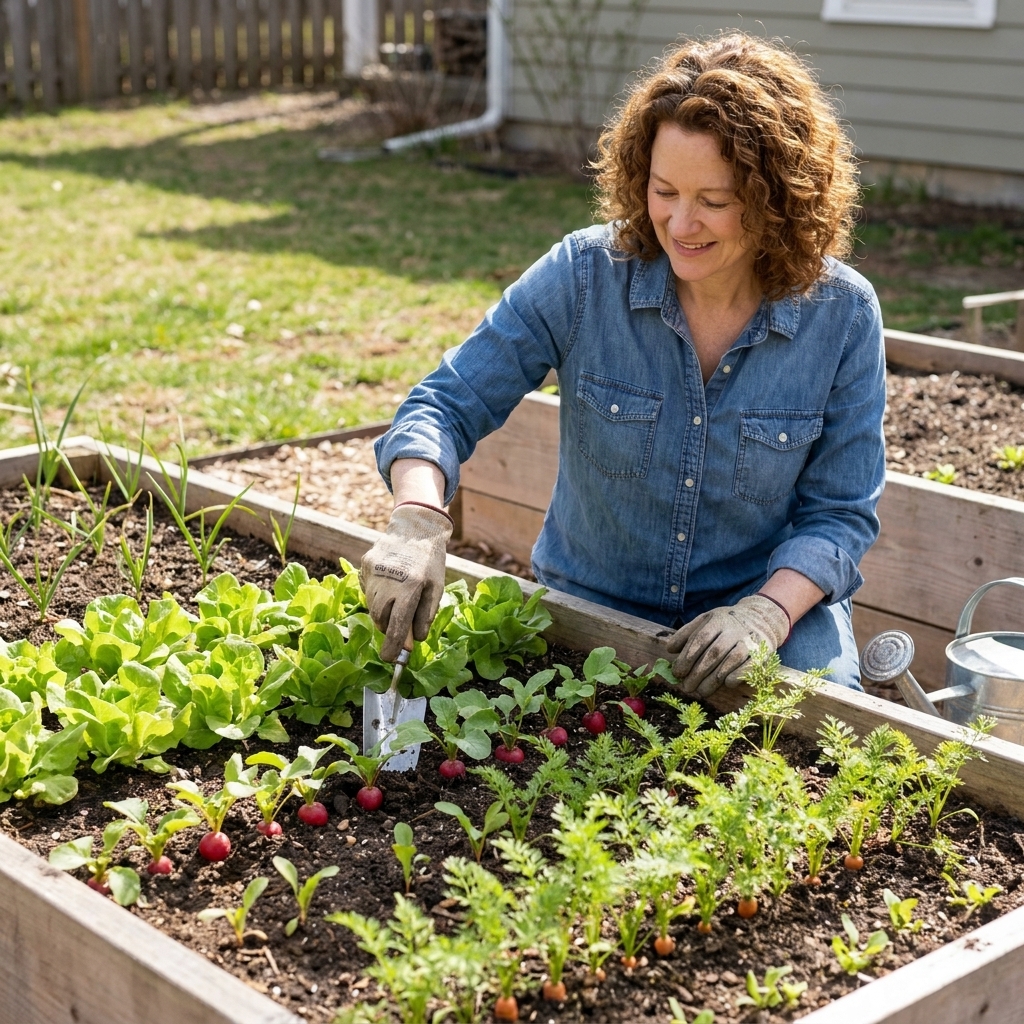
- 16 plants per square: carrots, radishes, baby turnips (thin as needed)
One more real-world guideline: if a plant repeatedly flops into neighboring squares, it is not a moral failing. It is just the plant telling you it wants a bigger square next time.
Plan before planting
The easiest way to maximize harvest is to plan your squares like you are planning meals. Start with what your household actually eats, then fit crops into the bed like puzzle pieces.
Step-by-step planning
- Draw your grid. For a 4x8 bed, draw 32 squares.
- Pick your anchors. These are tall or long-season crops like tomatoes, peppers, pole beans, cucumbers, and brassicas.
- Put tall crops on the north side. That way they do not shade everything else (in the northern hemisphere).
- Assign trellis crops to an edge. Cucumbers and pole beans love to climb along the back or side.
- Fill the remaining squares with quick crops. Radishes, salad greens, scallions, and spinach keep the harvest coming.
A simple 4x8 layout
This is one of my favorite “family dinner” layouts that balances salads, stir-fries, and summer classics:
- North edge: 4 squares tomatoes (staked) + 2 squares peppers + 2 squares basil (basil can be 1 plant per square, or multiple if you keep pinching)
- One short end with trellis: 2 squares cucumbers (trellised)
- Middle: 4 squares bush beans + 4 squares beets
- Front/south edge: 6 squares mixed salad greens + 4 squares carrots + 4 squares onions
Is this the only right way? Not at all. It is just a realistic example of how quickly 32 squares fill up when you plant with intention.
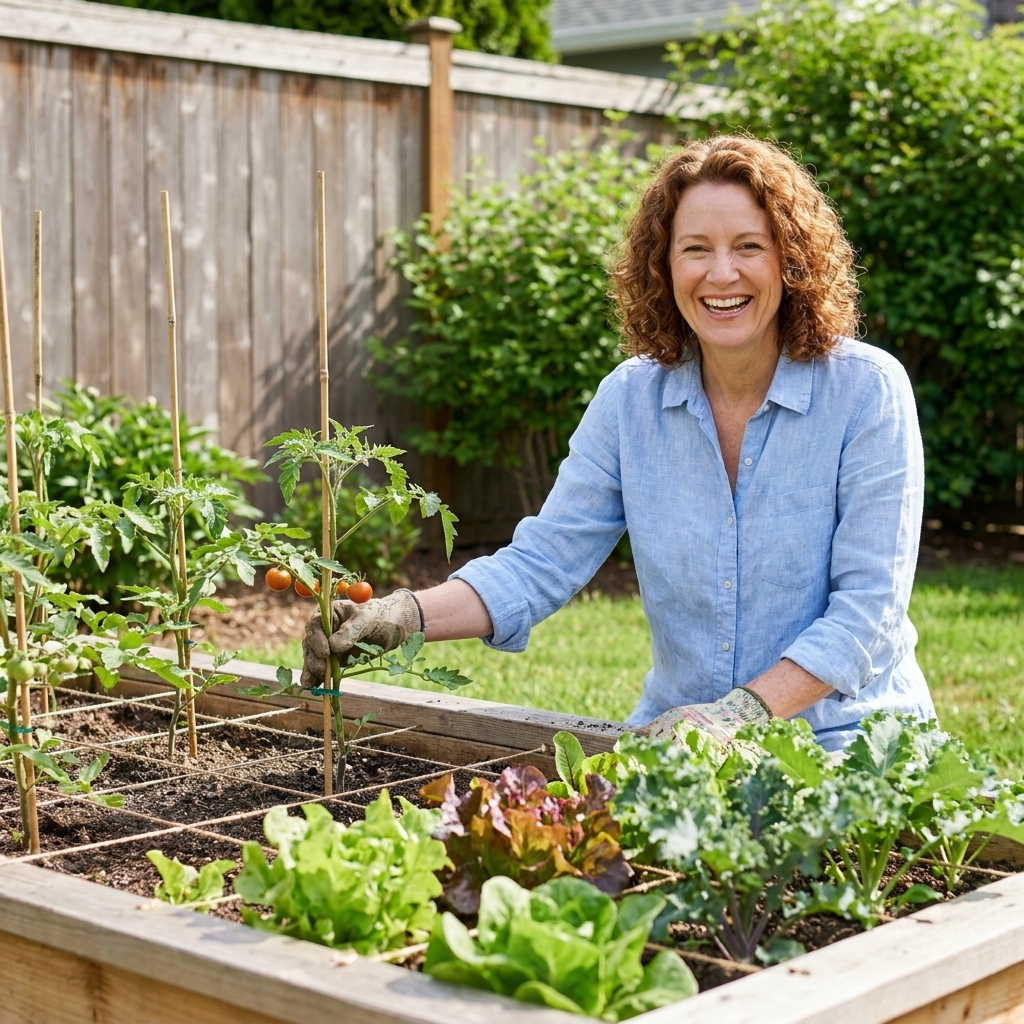
Succession planting
If you want the largest harvest from a small bed, succession planting is your best friend. The idea is simple: when a square finishes producing, you replant it. You keep the bed working all season, not just in spring.
Three easy strategies
- Follow fast with slow. Plant radishes or spinach early, then replace with peppers or basil once it warms up.
- Stagger sowings. Sow a square of bush beans, then sow another square 2 to 3 weeks later for a longer picking window.
- Replant after harvest. When garlic comes out in summer, drop in a late crop like carrots, beets, or fall greens.
My quick replant routine
- Pull the old crop and shake excess soil back into the square.
- Add a scoop of compost and lightly fluff the top couple inches.
- Plant seeds or tuck in a waiting transplant, then water slowly and deeply.
What to keep on hand
- A small container of finished compost for topping off squares
- Extra seeds of fast crops (radish, arugula, lettuce mix, bush beans)
- A few starter pots so you can raise seedlings while a square is still occupied
My personal rhythm: I keep a little “nursery corner” of seed trays going so I can slide new plants into the bed as soon as a square opens up.
Companion planting
Square foot gardening naturally puts plants close together, so companions matter. The goal is not perfection. It is stacking the odds in your favor for fewer pests and better pollination.
Friendly pairings
- Tomatoes + basil: classic for the kitchen, and some gardeners find the scent helps make it a little harder for pests to zero in.
- Carrots + onions: their scents may help mask each other from certain pests.
- Cucumbers + nasturtiums: nasturtiums can act as a “distraction” plant for aphids and bring in pollinators.
- Brassicas + dill or cilantro: flowering herbs attract beneficial insects later in the season.
Be cautious with
- Mint in the bed: it spreads aggressively. Grow it in a pot.
- Big squash in tiny beds: zucchini can swallow a grid unless you trellis and prune.
- Fennel near most vegetables: it can inhibit growth for some plants. I keep fennel in its own spot.
Trellises
Vertical growing is a small-space superpower. Any crop that can climb should be encouraged to do so. You free up squares and improve airflow, which helps reduce disease.
Great candidates
- Cucumbers
- Pole beans
- Peas
- Indeterminate tomatoes (with sturdy support)
- Small melons (only with strong trellising and slings)
One sturdy cattle panel or a simple twine trellis on the north side of a bed can turn 2 squares of cucumbers into weeks of crunchy harvest.
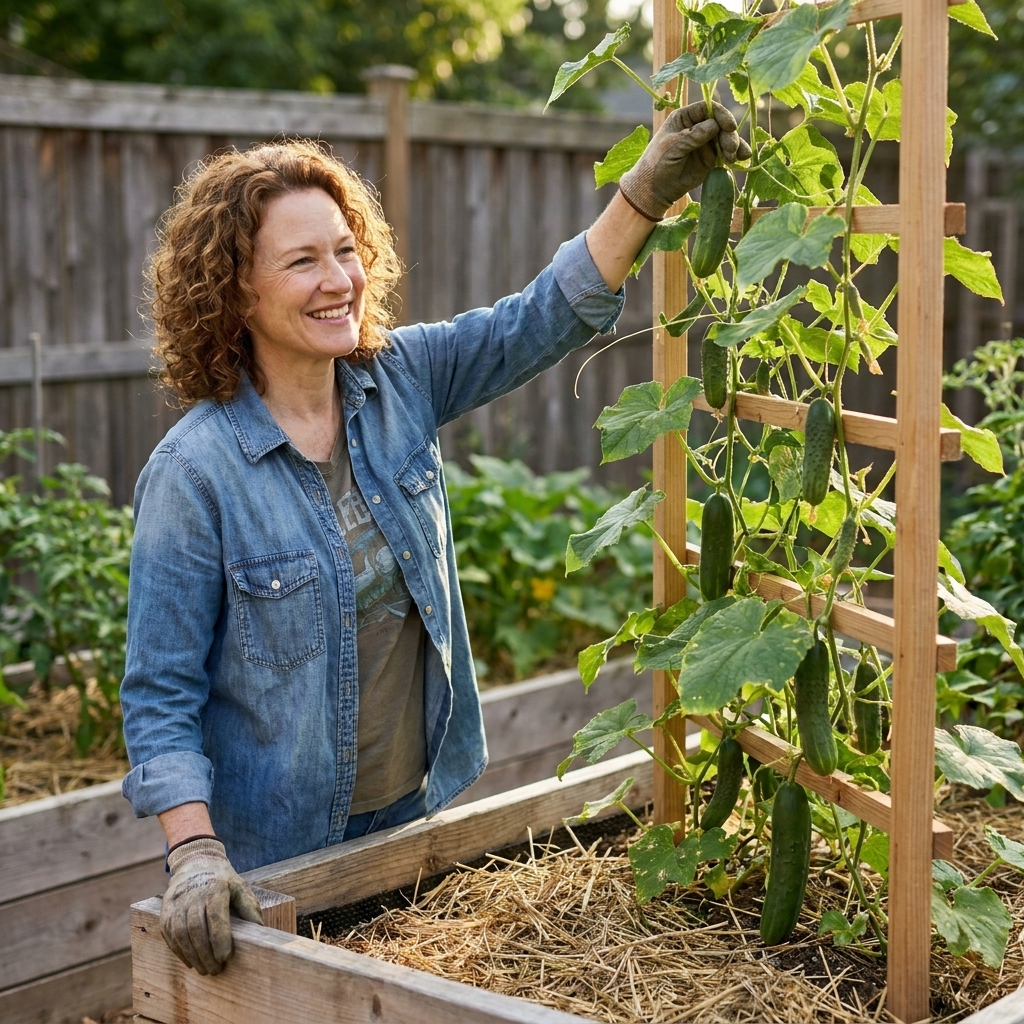
Watering and mulch
Closer spacing changes how you water. Leaves overlap, soil stays shaded, and evaporation drops. That is good news, but it also means you should water at the root zone to avoid mildew and fungal issues.
Best practices
- Water deeply, less often. Encourage deeper roots.
- Morning watering is ideal. Leaves dry faster during the day.
- Use drip lines or soaker hoses if you can. They deliver water where you need it and keep foliage dry.
- Mulch after seedlings are established. Straw, shredded leaves, or untreated grass clippings work well.
If you hand-water, aim the stream low and slow. I like to count to five in each square for a gentle soak, then circle back and repeat on hot days.
Pests and airflow
Tight plantings can be wildly productive, but they reward gardeners who pay attention. A two-minute daily glance beats a Saturday morning panic every time.
- Thin when you need to. If carrots or beets are too dense, thin early. Crowding can invite disease and shrink your harvest.
- Prune for breathing room. Keep tomato leaves off the soil and remove a few lower leaves if airflow is poor.
- Watch for mildew. Cucumbers and squash are famous for powdery mildew. Trellising, watering at the base, and removing badly infected leaves can help slow it down.
- Scout pests. Check undersides of leaves for aphids and eggs. Catching issues early is half the battle.
Keep soil productive
High yield in a small bed means nutrients get used up faster. Think of your bed like a pantry you restock regularly.
End-of-season refresh
- Pull spent plants and compost what is healthy.
- Add 1 to 2 inches of compost over the bed.
- Cover the soil. Use mulch, leaves, or a cover crop if your climate allows.
Crop rotation
In a small bed, perfect rotation is not always realistic. What matters is avoiding planting the same family in the same square over and over:
- Nightshades: tomatoes, peppers, eggplant
- Brassicas: broccoli, cabbage, kale
- Alliums: onions, garlic
- Legumes: peas, beans
Even a simple “move it one square over each year” approach is better than repeating the same spot forever.
Common mistakes
Planting too much of one thing
It is tempting to give half the bed to tomatoes. Then July hits and you have more sauce than friends. Balance long-season crops with steady, harvest-often plants like greens and beans.
Ignoring mature size
A seed packet might say 12 inches, but some varieties get bigger. If a crop constantly flops into neighboring squares, reduce the plant count in that square next time.
Skipping support
Tomatoes, peas, beans, and cucumbers need support early. Add stakes or a trellis at planting time, not after plants have sprawled.
Letting squares sit empty
Empty squares are missed harvest. Keep a short list of quick “gap fillers” like radishes, arugula, baby bok choy, and scallions.
FAQ
Do I need exactly 12-inch squares?
No, but close helps. The point is consistent spacing. If your squares end up 11 or 13 inches because of your bed dimensions, just be consistent across the grid.
Can I do this in a 3-foot-wide bed?
Absolutely. A 3x6 bed is 18 squares. It is still a great setup, especially if one side is against a fence and you only access it from one direction.
What about sprawling crops like zucchini or pumpkins?
You can grow them, but they need a plan. In small beds, I recommend either trellising a compact variety or giving zucchini a corner and training it outward into open space. Otherwise it will swallow your grid by mid-summer.
Can I grow corn in a raised bed?
You can, but corn is a little fussy in small spaces. It pollinates best in blocks, not single rows, so plan on a patch of at least 12 to 16 plants (for example, a 4 by 4 block of squares planted with 1 corn plant per square). In a single small bed, corn often crowds out more reliable producers, so I only plant it when I really want fresh corn and have the squares to spare.
How many plants can I harvest from one bed?
It depends on what you grow and how often you replant. A single 4x8 bed can produce salad greens weekly, multiple rounds of radishes and carrots, herbs all summer, plus tomatoes and peppers if you keep fertility and watering consistent.
A simple challenge
If you want to feel the magic of square foot gardening fast, pick one raised bed and commit to the grid for a season. Plant just three types of squares: a trellis crop (like cucumbers), a steady producer (like bush beans), and a quick crop (like salad greens). Once you see how much food comes out of that tidy little checkerboard, it is hard to go back to guessing.
And if you run into the classic mid-season question, “Wait, what did I plant in that square again?”, welcome to the club. A couple of cheap labels plus a bed sketch tucked in the seed box will save you more grief than you would think.