A practical, season-long succession planting plan: what to sow every 2 to 3 weeks, when to switch crops, and how to keep beds producing from spring to frost.
Veg Loom
October 17, 2026
By Maggie O'Connell
Square Foot Gardening Spacing in Raised Beds
Use the square foot gardening method to plan raised beds with confidence. Get spacing rules, practical plant counts per square, and easy layouts for higher yields in small spaces.

Maggie O'Connell
Maggie O'Connell is a lifelong gardener and the voice behind Vegloom, dedicated to helping people grow their own food regardless of their yard size. With over 15 years of hands-on experience in backyard agriculture, she specializes in raised bed gardening, organic soil building, and seasonal planting calendars. When she isn't writing, Maggie can usually be found tending to her sprawling heirloom tomatoes or experimenting with new compost recipes.
I still remember my first raised bed: a tidy wooden rectangle perched on top of my unplantable clay, filled with the prettiest “garden soil” I could afford. I planted like I always had in rows, left big pathways “just in case,” and somehow still ended up with crowded lettuce and lonely tomato plants. Square foot gardening fixed that for me. It turns your raised bed into a simple grid so every inch earns its keep, without turning your garden into a math class.
This guide will walk you through spacing in the square foot method, what to plant per square, and how to lay it out so your bed stays productive, tidy, and easy to harvest.
Square foot basics
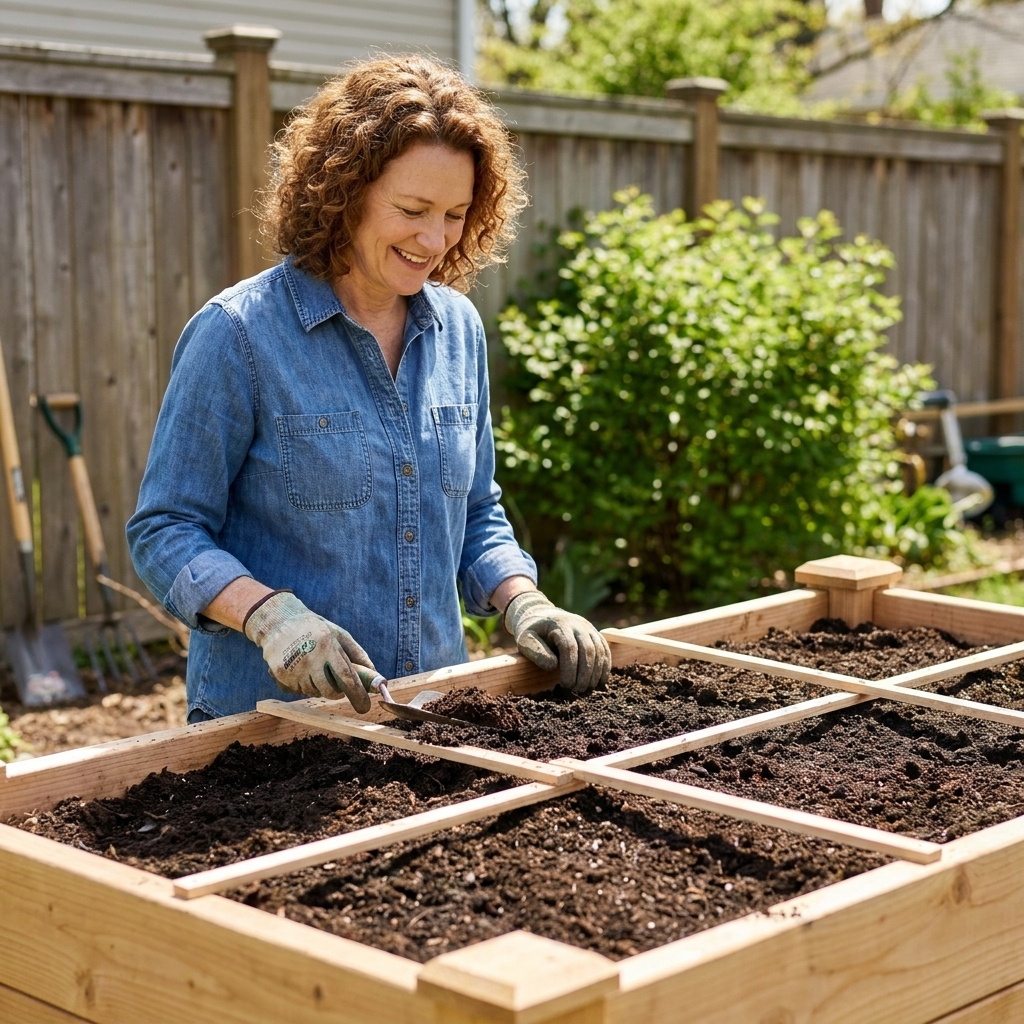
Square foot gardening is exactly what it sounds like: you divide the top of your raised bed into 1-foot-by-1-foot squares, then plant each square at a specific density based on the mature size of the crop. Instead of long rows, you grow in blocks.
Why it works so well in raised beds:
- Raised beds already have defined edges, so the grid is natural.
- Looser soil means tighter spacing is realistic because roots can spread and water can soak in evenly.
- Less wasted space since you are not reserving wide row paths inside the bed.
- Easy succession planting, since each square becomes its own “mini plot.”
Set up for success
Bed size
The classic square foot garden is a 4x4 bed (16 squares), but the method works for any size as long as you can comfortably reach the center from the edge. For most people, that means:
- Width: 3 to 4 feet wide (so you do not step in the bed)
- Length: anything you like, 4 to 8 feet is common
- Depth: 10 to 12 inches works well for many vegetables; 12 inches or more helps long carrots. Potatoes are less about “depth” and more about loose soil volume and room to hill, which is why many gardeners grow them in a dedicated bed or grow bag.
Soil matters more when you plant closer
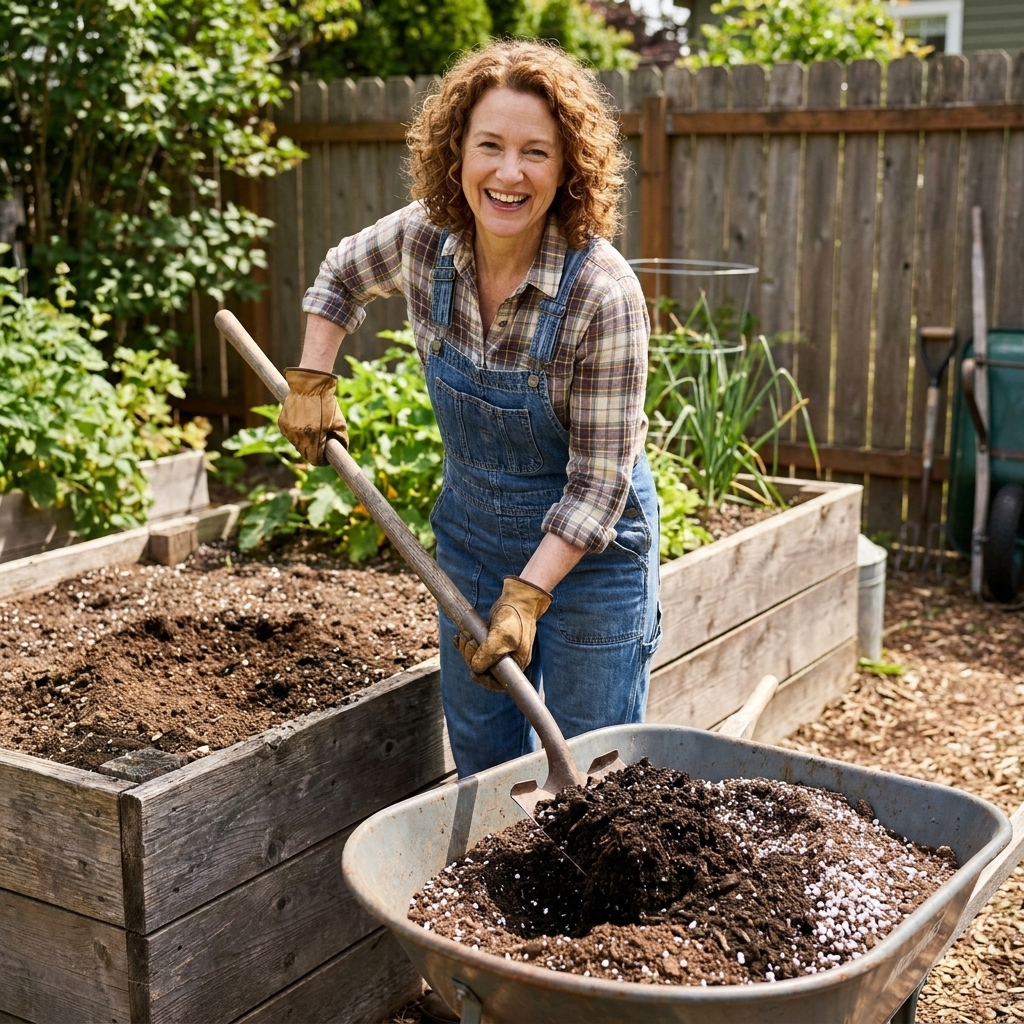
Closer spacing only works if your soil is fluffy, fertile, and drains well. In a raised bed, I aim for a mix that is rich in organic matter and holds moisture without staying soggy.
A simple rule I use: top-dress with 1 to 2 inches of compost each season, then gently rake it in. Tight spacing is basically a high-performance garden, so you have to feed it like one.
Watering for tight spacing
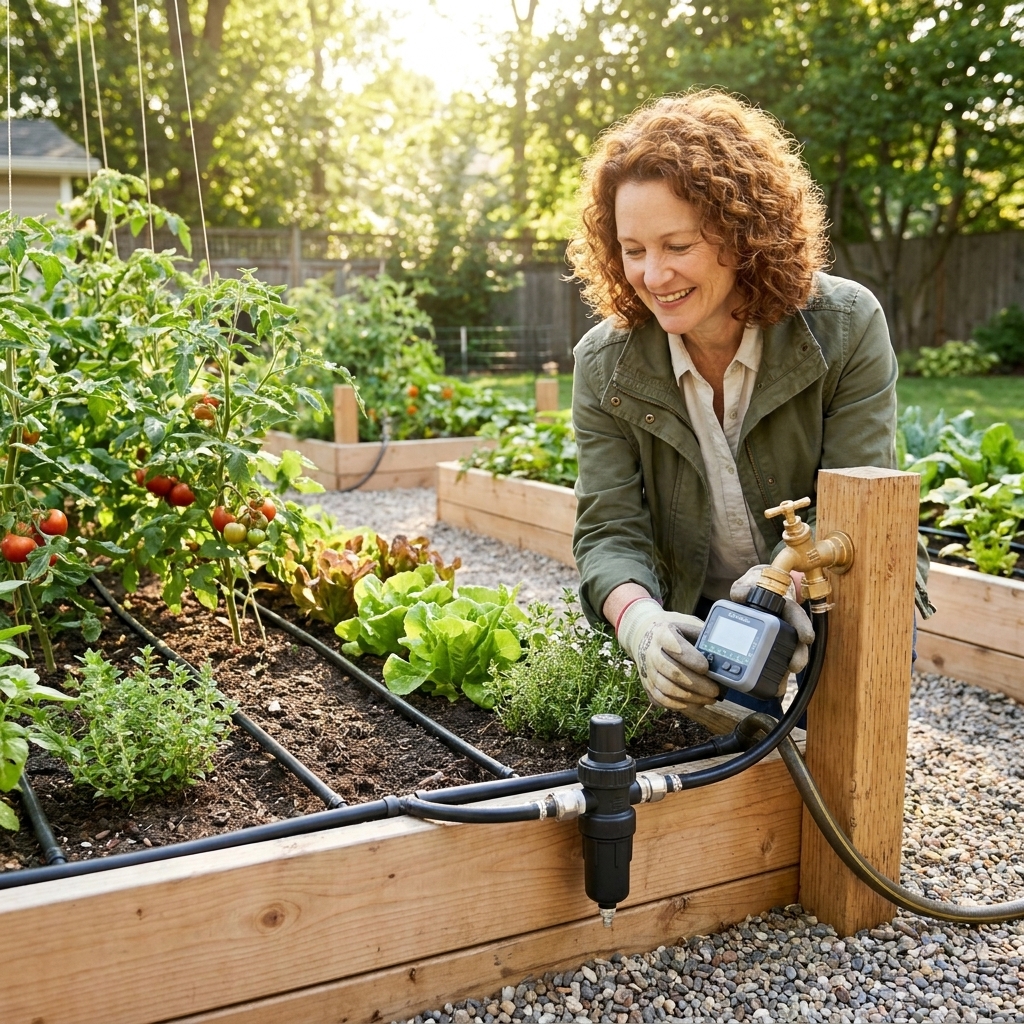
High-density beds dry out faster, especially once leaves start overlapping. Mulch helps a lot, but consistent watering matters even more. If you can, run a soaker hose or drip line down the bed (or two lines for a 4-foot-wide bed), then keep 1 to 2 inches of mulch over bare soil. Water at the soil line, and try to keep leaves dry when humidity is high.
Make the grid (keep it simple)
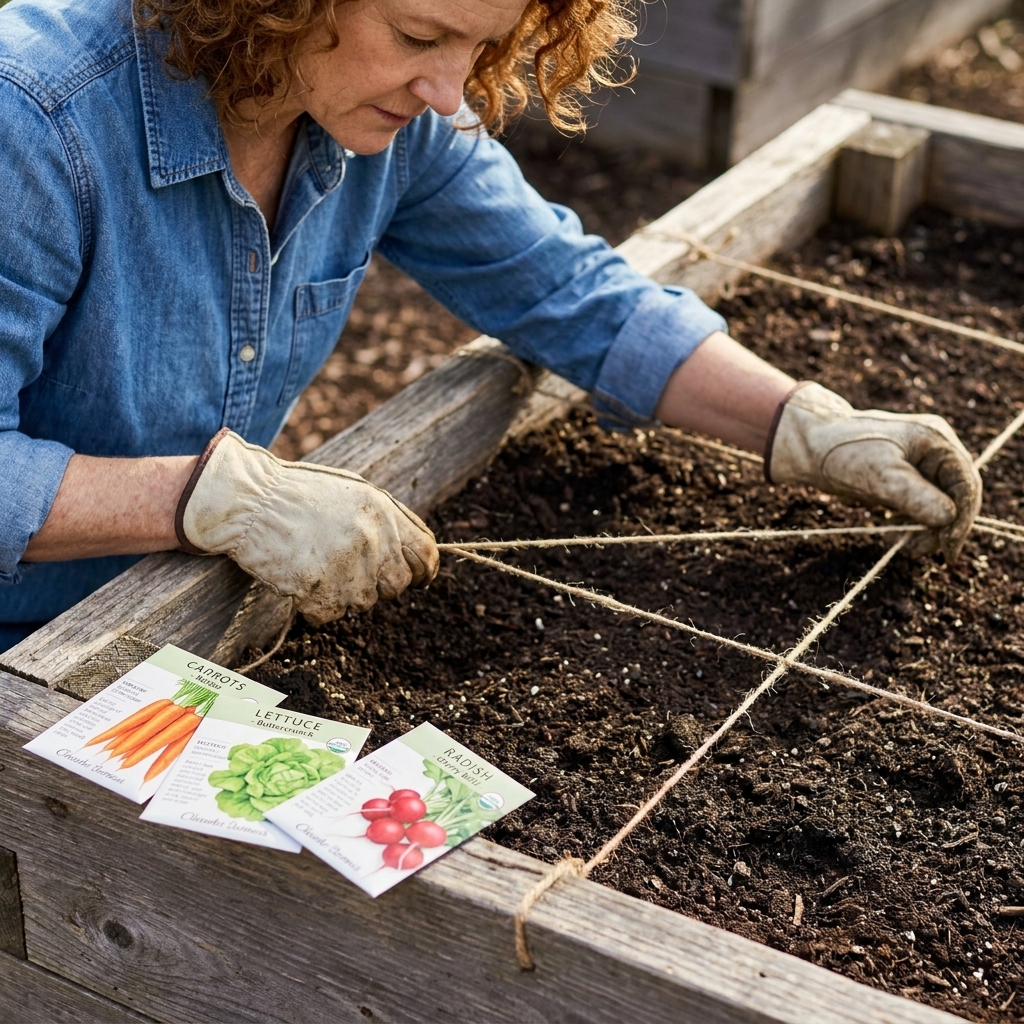
You can make your grid with thin wood strips, twine, or even a tape measure and a few quick marks. Keep it easy to remove for soil refreshes.
The spacing rule
In square foot gardening, plant spacing is based on how many mature plants fit in a 12-inch-by-12-inch square. The most common planting densities are:
- 1 per square (big plants)
- 2 per square
- 4 per square
- 6 per square (a little less common)
- 9 per square
- 16 per square (small, quick crops)
Here is the shortcut I teach beginner gardeners: count plants by their “handspan.” If a plant needs about a foot of room, it gets one whole square. If it is smaller, it gets divided into halves, quarters, or more.
- 12-inch spacing equals 1 per square
- 6-inch spacing equals 4 per square
- 4-inch spacing equals 9 per square
- 3-inch spacing equals 16 per square
My practical spacing tip: Square foot numbers assume healthy soil, consistent water, and harvesting on time. If you tend to forget to pick, or your summers run brutally hot and dry, give yourself a little breathing room.
Plant counts per square
Use this as a reliable starting point, then tweak based on your varieties and your climate. When in doubt, choose slightly fewer plants per square and keep the bed well mulched.
1 per square (about 12 inches apart)
- Tomato (1, staked or caged; strong support is not optional here, and plan to prune hard or train to one or two main stems to avoid a crowded, disease-prone jungle)
- Pepper (bell or hot)
- Eggplant
- Broccoli (1 compact variety; for full-size heads, many gardeners get better results with 1 plant per 2 squares)
- Cabbage (1 compact; for large heads, consider 1 per 2 squares)
- Cauliflower (1 compact; larger types often need 2 squares)
- Kale (1, or 2 only if you plan to harvest young and often)
- Okra
- Celery (1 is common; in mild climates with steady water, you can trial 2 per square for slimmer stalks)
- Swiss chard (1, or 2 if you harvest baby leaves)
- Bulb fennel (usually 1; for large bulbs, 1 per 2 squares can be easier)
2 per square (about 8 inches apart)
- Cucumber (1 to 2 on a trellis; compact or pickling types can often do 2, while many slicers are happier at 1)
- Kohlrabi
- Romaine lettuce (2, depending on variety)
4 per square (about 6 inches apart)
- Leaf lettuce (4)
- Beets (4, more only if harvesting baby beets)
- Bok choy (4 baby bok choy, or 1 to 2 full-size)
- Onions (4 for large bulbs)
- Garlic (4 for full-size bulbs, especially with many hardneck types)
- Spinach (4)
- Turnips (4)
- Leeks (4 for full-size leeks)
6 per square (about 5 inches apart)
- Scallions (6 to 9, depending on thickness)
- Leeks (6 for baby leeks)
9 per square (about 4 inches apart)
- Bush beans (9)
- Peas (up to 9 plants on a trellis; if you sow seeds, many gardeners plant 2 seeds per spot and thin to the strongest)
- Onions (9 for smaller bulbs, or for green onions)
- Garlic (9 only if you are aiming for smaller bulbs or an early “green garlic” harvest, and your soil and watering are dialed in)
16 per square (about 3 inches apart)
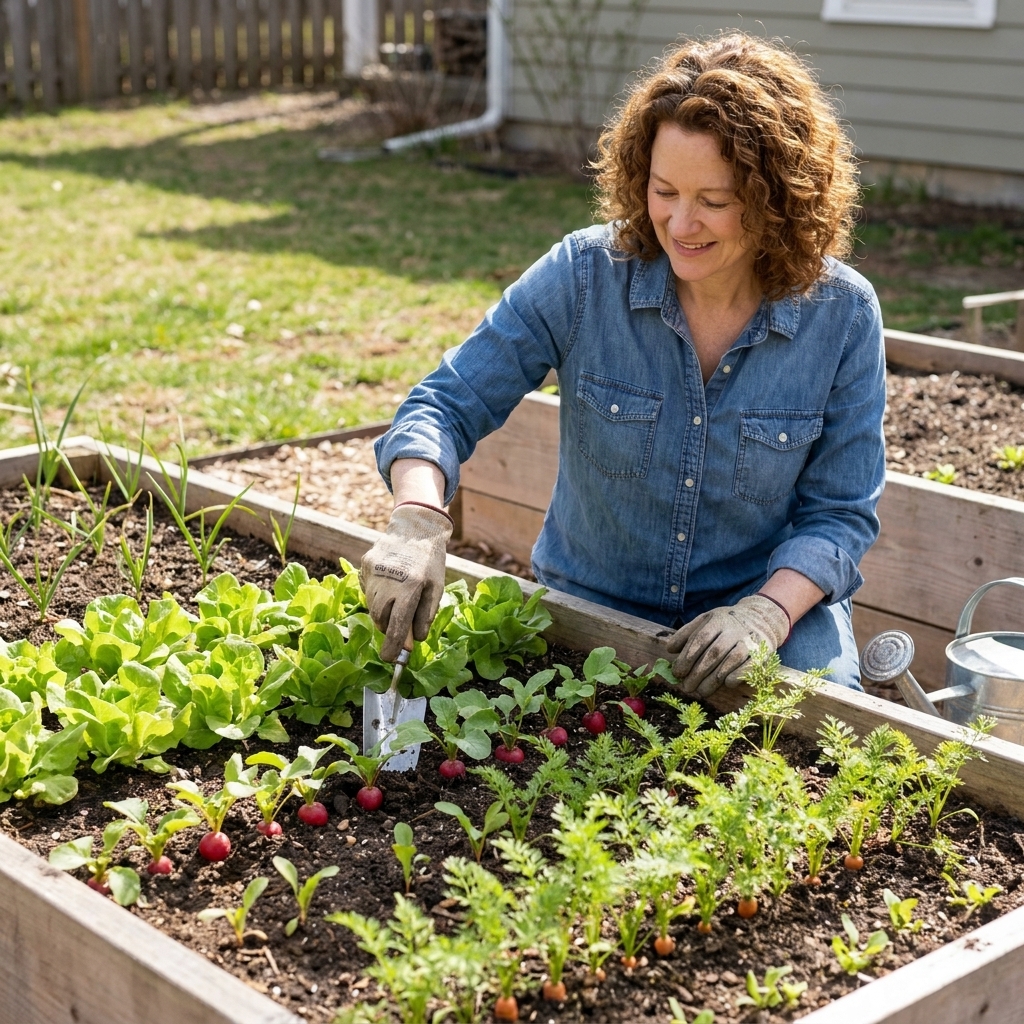
- Carrots (16, after thinning)
- Radishes (16)
- Baby salad greens (harvest young and often)
Needs multiple squares
Some plants are sprawlers or heavy feeders. You can still use square foot gardening, you just allocate more squares.
- Summer squash and zucchini: best as 1 plant taking 2 to 4 squares. If you trellis a compact variety and prune, you can sometimes keep it closer, but most beds do better when you give squash room.
- Winter squash and pumpkins: plan on 2 to 4+ squares per plant and use a sturdy trellis if you want to keep it in-bounds.
- Melons: 2 to 4 squares per plant with a strong trellis and fruit slings.
- Potatoes: variable. If you try them in a grid, think 1 plant per 1 to 2 squares, and remember they shine when they have space for hilling. Many gardeners prefer a separate potato bed or grow bag.
- Corn: not ideal in small raised beds, but if you try it, plant in a block of multiple squares for pollination.
Trellising
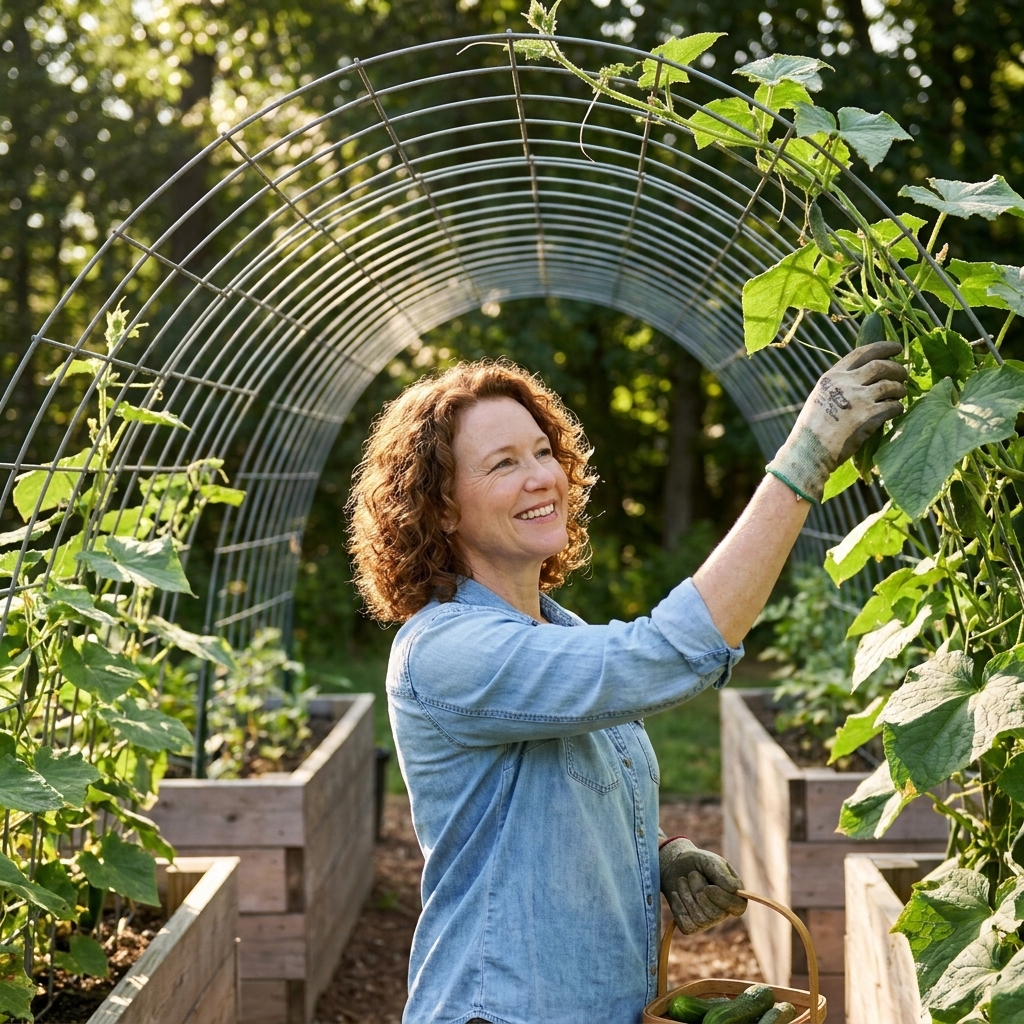
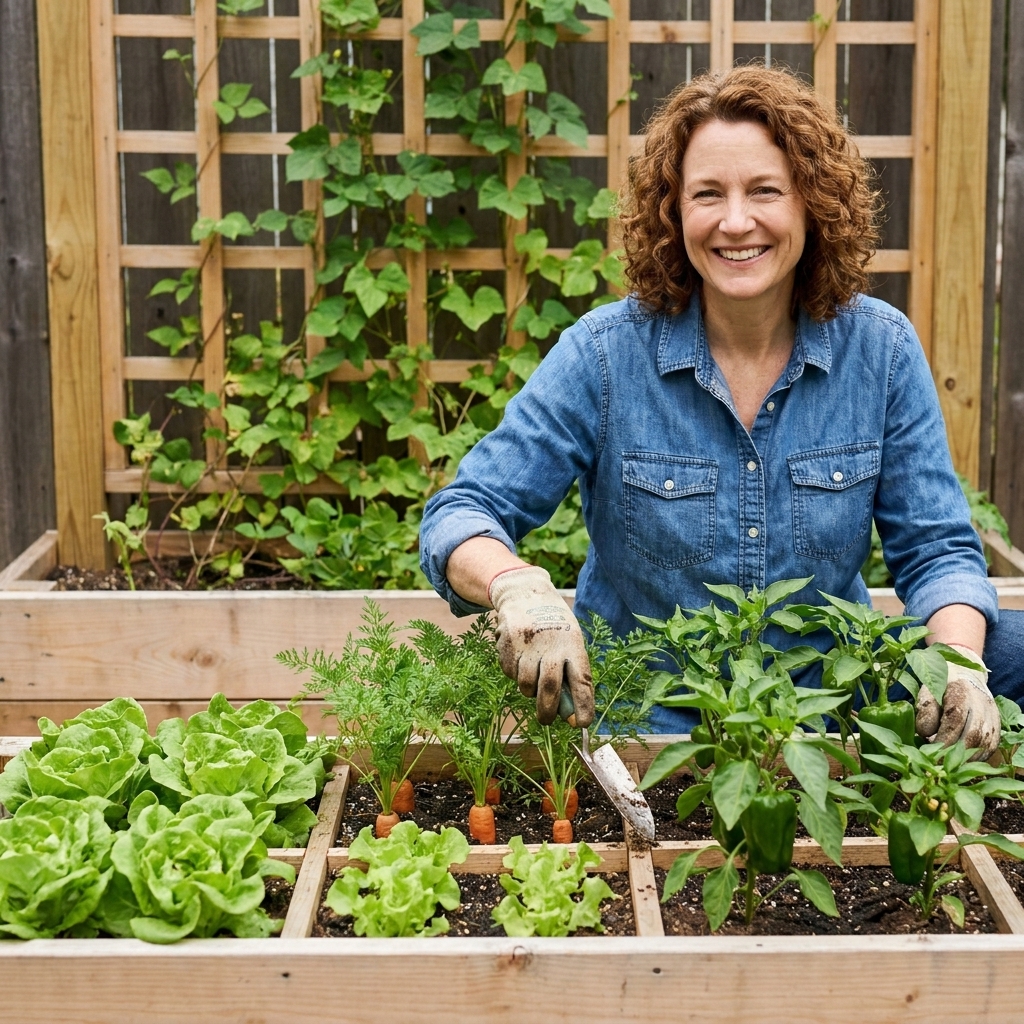
If I could teach only one trick for high yields in a small raised bed, it would be this: grow up. Trellising frees up squares and improves airflow, which helps with disease.
Great trellis candidates:
- Peas (up to 9 plants per square on a trellis)
- Pole beans (usually 6 to 9 plants per square at the base of a trellis; if your soil is average or watering is inconsistent, start at 6)
- Cucumbers (1 to 2 per square on a trellis, depending on variety)
- Indeterminate tomatoes (1 per square, vertically supported and kept under control with consistent tying and pruning)
Place tall crops and trellises on the north side of the bed (or the side that will cast the least shade in your yard) so they do not block sun from shorter plants.
Easy layouts
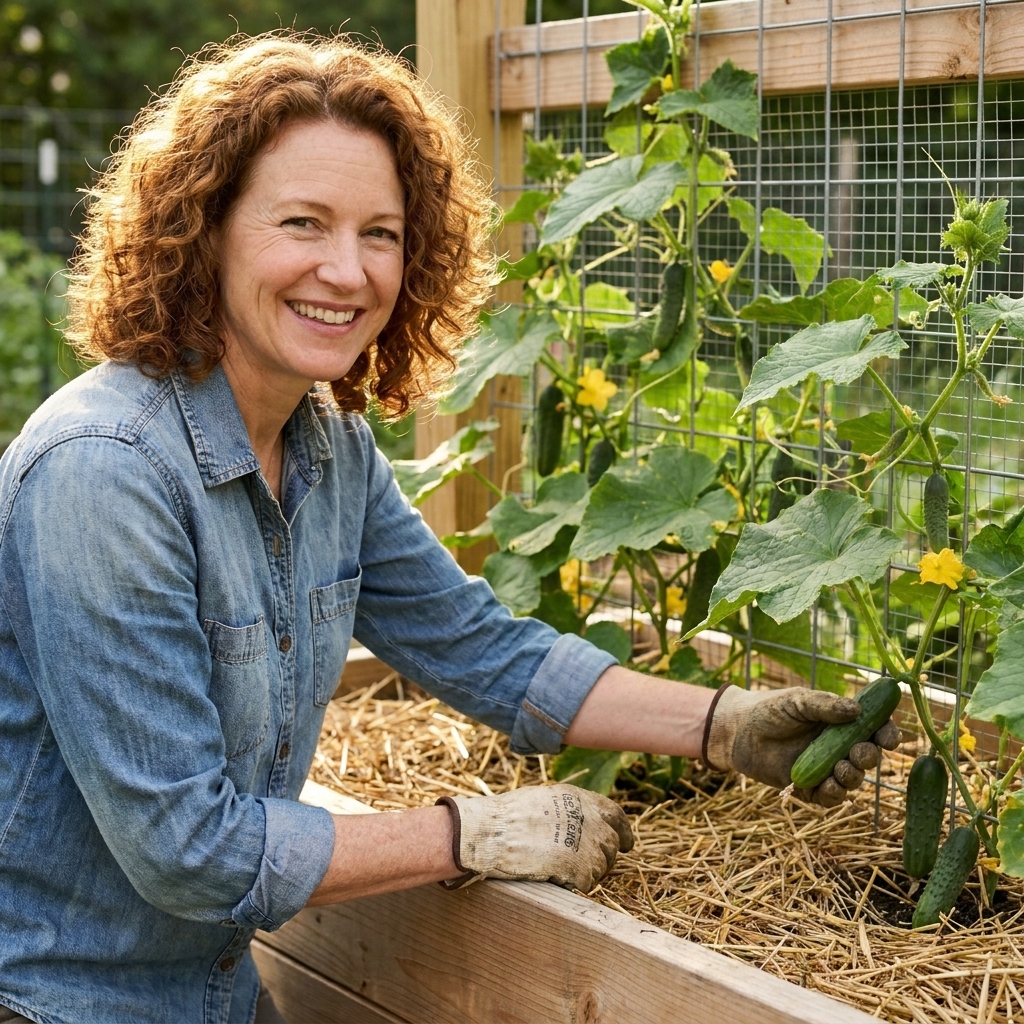
Think of these as starter ideas. Swap crops based on what your household actually eats, and also on what your season can actually support. (For example, peas and spinach love cool weather and sulk in heat, while tomatoes and peppers want steady warmth.)
4x4 salad bed
- Back row (north): 2 squares peas on trellis (up to 18 plants, or seeds thinned to 18 plants), 2 squares cucumbers on trellis (2 to 4 plants, depending on variety)
- Middle: 4 squares leaf lettuce (16 plants, or a thick sowing harvested young)
- Front: 2 squares carrots (32 plants after thinning), 2 squares radishes (32 plants), 2 squares spinach (8 plants, or seeds thinned to 8 plants), 2 squares scallions (12 to 18 plants)
4x8 cooking bed
- North edge trellis: 4 squares pole beans (24 to 36 plants, or seeds thinned as needed), 2 squares cucumbers (2 to 4 plants)
- Warm-season core: 4 squares peppers (4 plants), 4 squares tomatoes (4 plants, trained vertically), 2 squares basil (2 to 4 plants tucked near tomatoes)
- Roots and greens: 4 squares carrots (64 plants after thinning), 2 squares beets (8 plants after thinning), 4 squares leaf lettuce (16 plants), 2 squares kale (2 plants), 2 squares onions (8 large or 18 smaller)
- Herbs: 1 square parsley (1 to 2 plants), 1 square cilantro (4 to 9 plants, succession sown)
3x6 beginner bed
- 2 squares tomatoes (2 plants, staked and pruned)
- 2 squares peppers (2 plants)
- 2 squares bush beans (18 plants, or a sowing thinned to spacing)
- 4 squares leaf lettuce (16 plants, or harvest as baby leaf)
- 2 squares carrots (32 plants after thinning)
- 2 squares radishes (32 plants)
- 2 squares onions (8 large or 18 small)
- 2 squares herbs (basil, parsley, dill)
Succession planting
The grid makes succession planting almost automatic. When one square finishes, you replant that square and keep the bed moving.
A few easy “follow-on” swaps I use:
- Spring spinach then summer basil then fall lettuce
- Radishes then bush beans then quick fall greens
- Peas then cucumbers (same trellis, different season)
If you garden in a hot climate, this is also where flexibility matters. Wider spacing, a little afternoon shade, or shade cloth can outperform “perfect” square foot numbers when summer stress hits.
Companion planting
I like companion planting because it encourages diversity, confuses pests, and makes the bed feel alive. Square foot gardening makes it easy because you can tuck helpful plants right into the grid.
- Basil near tomatoes: fits well in nearby squares and attracts pollinators when it flowers.
- Scallions or onions near carrots: may help discourage some pests, and they are an easy fit in the grid.
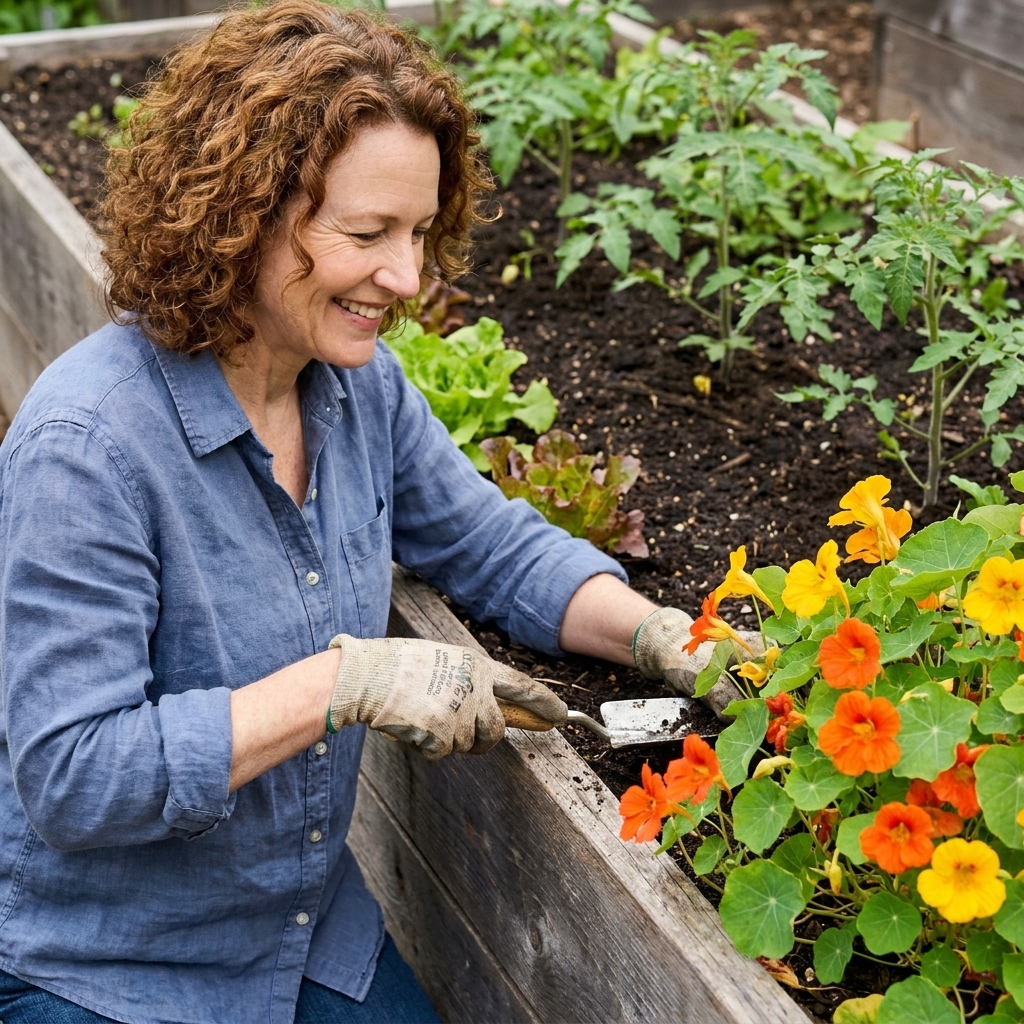
- Nasturtiums on an edge: they spill nicely and can lure aphids away from tender crops.
- Marigolds: one tucked into a corner can attract beneficial insects, but I use them sparingly so they do not steal light and root space.
Just remember: even “companion” plants need space. If a flower takes over a square and shades your lettuce, it is not being a good neighbor.
Common mistakes
1) Counting seedlings, not mature plants
It is tempting to tuck in extra starts. I get it. But square foot spacing is based on mature size. If you want to plant thickly, do it intentionally as “baby leaf” greens and harvest early.
2) Skipping thinning for carrots and beets
Carrots at 16 per square only work if you thin (or sow carefully) so they are evenly spaced.
Beets are their own thing because what looks like a “seed” is often a little cluster. Thin each cluster down to 1 plant for full-size beets, or leave 2 if you want smaller, baby roots.
3) Forgetting airflow
Tight spacing plus humid weather can invite powdery mildew and fungal issues. Solutions:
- Trellis vining crops
- Water at the soil line, not overhead
- Prune tomatoes if you grow indeterminate types
- Give slightly wider spacing for mildew-prone crops if your summers are sticky
4) Not feeding the bed
High-density beds produce a lot, which means they use a lot. Compost each season helps. If plants stall midseason, a gentle organic fertilizer or compost tea can bring them back without scorching.
FAQ
Do I need a permanent grid?
No. A grid is helpful, especially for your first season, but you can also measure and plant by spacing. Many gardeners keep a removable twine grid for spring planting, then take it off once the bed fills in.
Can I use square foot gardening with transplants and seeds?
Absolutely. I often transplant tomatoes and peppers, then direct-sow carrots, radishes, and beans right into their squares. Just remember the goal is the final number of plants, so thin as needed.
What about spacing for herbs?
Herbs vary a lot. As a starting point:
- Basil: 1 to 4 per square depending on variety and how often you harvest
- Cilantro: 4 to 9 per square (succession sow every 2 to 3 weeks)
- Parsley: 1 per square
- Dill: 1 per square (it gets tall)
- Thyme/oregano: best in a dedicated corner or container since they can sprawl and become perennial in some climates
Does square foot gardening increase yield?
It can, especially in small spaces, because you waste less room on paths and you tend to succession plant more naturally. The biggest yield boosters are still the basics: full sun, great soil, steady watering, and harvesting on time.
Start this weekend
If you are feeling a little overwhelmed, do this: pick one raised bed, lay out a 1-foot grid, and plant just four squares using the method. For example:
- 1 square peppers (1 plant)
- 1 square leaf lettuce (4 plants, or sow thickly and harvest young)
- 1 square carrots (16 seeds, thinned to 16 plants)
- 1 square radishes (16 plants)
That tiny experiment will teach you more than any chart ever could. And once you see how clean and efficient it feels, you will start looking at every raised bed like a delicious little checkerboard.