Five beginner-friendly trellis builds that fit inside raised beds, boost yields, and keep tomatoes, cucumbers, peas, and beans tidy and easy to harvest.
Veg Loom
October 17, 2026
By Maggie O'Connell
How to Prune Indeterminate Tomatoes for Healthy Plants and Great Yields
Learn how and when to prune indeterminate tomatoes by pinching suckers, improving airflow, and training vines for healthier plants and great harvests.

Maggie O'Connell
Maggie O'Connell is a lifelong gardener and the voice behind Vegloom, dedicated to helping people grow their own food regardless of their yard size. With over 15 years of hands-on experience in backyard agriculture, she specializes in raised bed gardening, organic soil building, and seasonal planting calendars. When she isn't writing, Maggie can usually be found tending to her sprawling heirloom tomatoes or experimenting with new compost recipes.
If you have ever stood in front of a thriving indeterminate tomato plant and thought, This looks like a small jungle, you are not alone. Indeterminate tomatoes want to grow forever, in every direction, and they are very good at it. The trick is guiding that energy into a plant you can support, keep healthy, and harvest easily.
Pruning indeterminate tomatoes is not about being harsh. It is about making smart, consistent cuts so your plant gets better airflow, stays healthier, and focuses on ripening clusters you can actually reach. Depending on your variety, spacing, and climate, pruning may not always increase total pounds of tomatoes, but it often improves fruit size, earliness, and overall manageability. I learned this the hard way when my first raised bed tomatoes turned into a humid hedge and promptly invited blight to dinner.
Indeterminate vs determinate: prune the right kind
Before you pinch a single sucker, confirm what you are growing.
- Indeterminate tomatoes keep growing and flowering until frost. They produce over a long season and can become very large. These are the ones you typically prune for best results.
- Determinate tomatoes grow to a set size, set most of their flowers and fruit over a shorter window, then slow down. Because they stop with a terminal cluster, heavy pruning can reduce your total harvest by removing potential flowering and fruiting growth.
If your tag says indeterminate (or the variety is known to be indeterminate like many beefsteaks and cherry types), keep reading. If it is determinate (often many paste and patio types), you can still remove lower leaves for airflow, but skip aggressive sucker removal.
What a tomato sucker is (and why it matters)
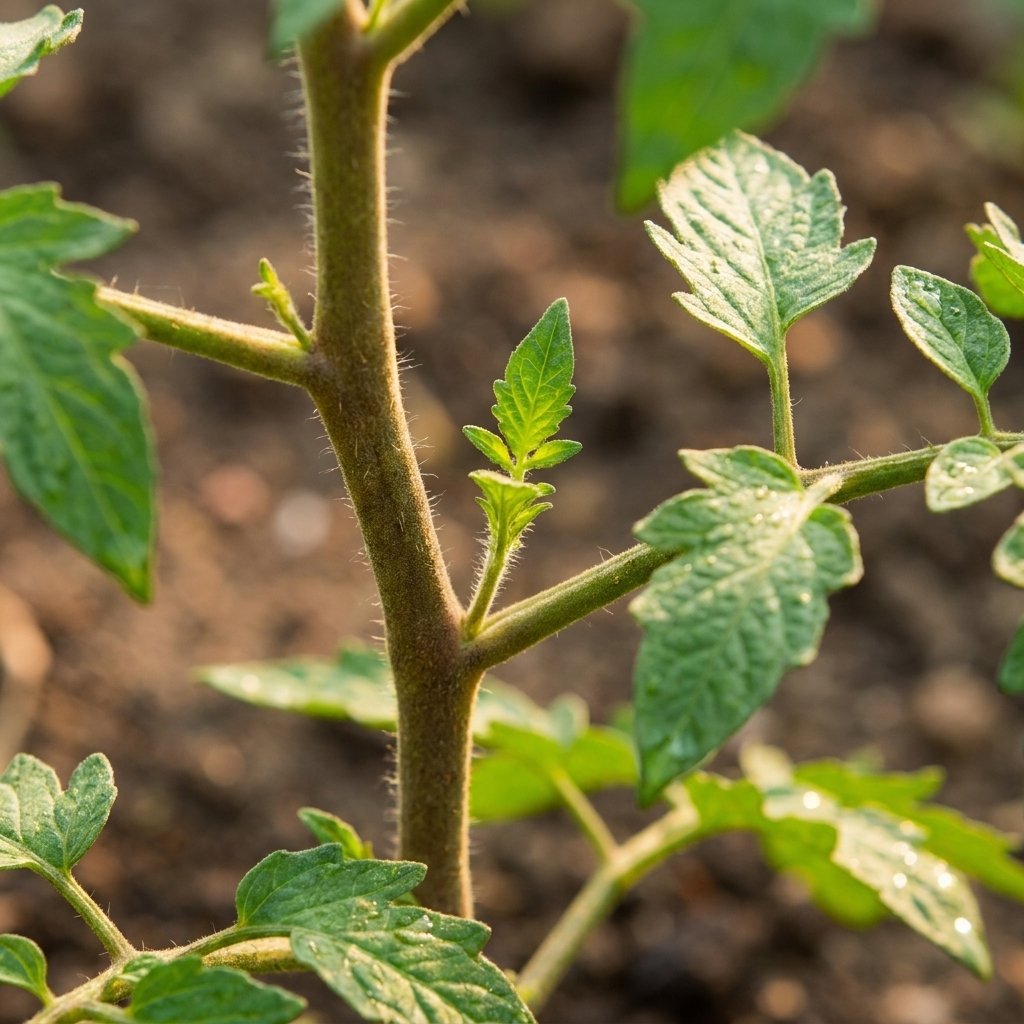
A sucker is a new shoot that forms in the leaf axil, right where the leaf petiole meets the main stem. Left alone, a sucker becomes a full-sized vine with its own leaves, flowers, and fruit.
So why remove them at all?
- Airflow: Fewer stems means less humidity trapped in the canopy, which helps reduce fungal problems.
- Light penetration: Sun can reach fruit clusters and inner leaves more evenly.
- Energy focus: The plant spends less effort building endless vines and more on sizing up and ripening fruit.
- Manageability: Pruned plants are easier to trellis, tie, water at the base, and harvest.
Tools and prep (keep it clean and simple)
For small suckers, you can use your fingers. For thicker growth, use snips.
- Clean, sharp pruning snips for anything thicker than a pencil
- Garden gloves if you prefer (tomato stems can be sticky)
- Twine or tomato clips to re-tie stems after pruning
Quick hygiene tip: If you are pruning plants that show disease (spots, yellowing, blackened stems), wipe snips with rubbing alcohol between plants. If you suspect a virus (mosaic patterns, twisted new growth, weird mottling), be extra cautious with hands and tools and consider removing the affected plant to protect the rest.
Step-by-step: prune indeterminate tomatoes for healthy plants and great yields
Step 1: Choose your training style (one, two, or three stems)
Your ideal number of main stems depends on your space, your support system, and your climate.
- One stem: Best for tight spacing, string trellises, and humid climates where airflow is everything. This often gives earlier, larger fruit and very manageable plants, but it can reduce total fruit count compared to letting more stems develop.
- Two stems: My favorite balance for many raised beds. Great yields, still easy to manage.
- Three stems: Works if you have strong cages or a sturdy trellis and more elbow room. More foliage can mean more disease risk in humid regions.
If you are unsure, go with two stems. It is forgiving and productive.
Step 2: Identify the main stem and the “keeper” suckers
The main stem is the original trunk coming up from the soil. If you are doing two stems, pick one strong sucker low on the plant to become your second leader. A common choice is the sucker in the leaf axil just below the first flower cluster.
Everything else, you will remove gradually.
Step 3: Pinch suckers when they are small
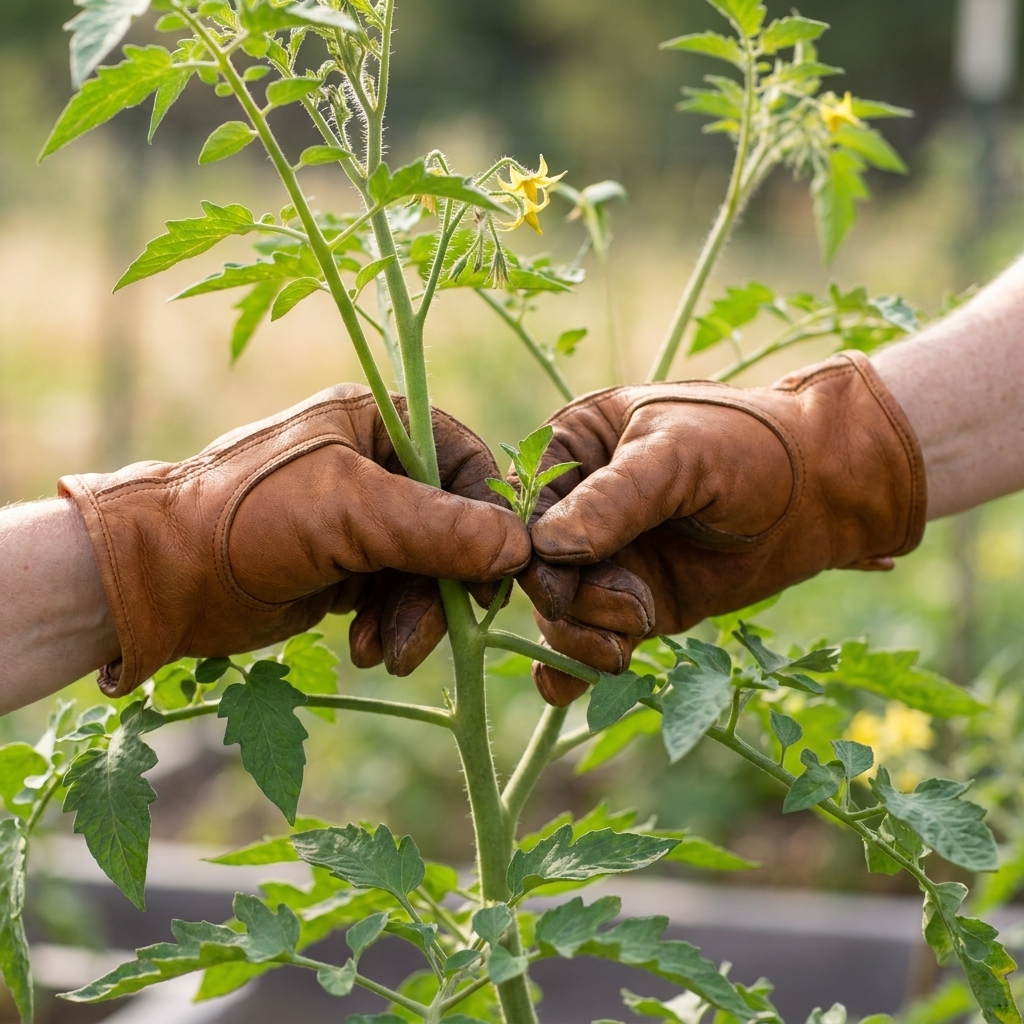
The easiest pruning is done when suckers are 2 to 4 inches long or still thin and flexible. At this size you can usually pinch them cleanly with your fingers. If a sucker is thicker than a pencil, use snips for a cleaner cut.
- Hold the main stem steady with one hand.
- Pinch the sucker at its base with your thumb and forefinger.
- Snap it off with a quick, clean motion.
Try not to leave a long stub. A tiny nub is fine, but big stubs can die back and invite disease.
Step 4: Remove lower leaves to prevent soil splash disease
Once the plant is established and fruit clusters are forming, remove leaves that touch the soil and thin the lowest foliage to improve airflow.
- Target: Keep the bottom 8 to 12 inches of the stem free of leaves once the plant is tall enough.
- Why: Rain and watering can splash soil-borne pathogens onto lower leaves. Clearing that zone helps a lot.
If you garden in intense sun or extreme heat, you might leave a bit more lower foliage than this to help prevent sunscald. The goal is airflow without turning your fruit into a sunburn experiment.
Always prune in dry weather if you can. Wet leaves plus fresh cuts are a risky combo.
Step 5: Keep tying as you prune
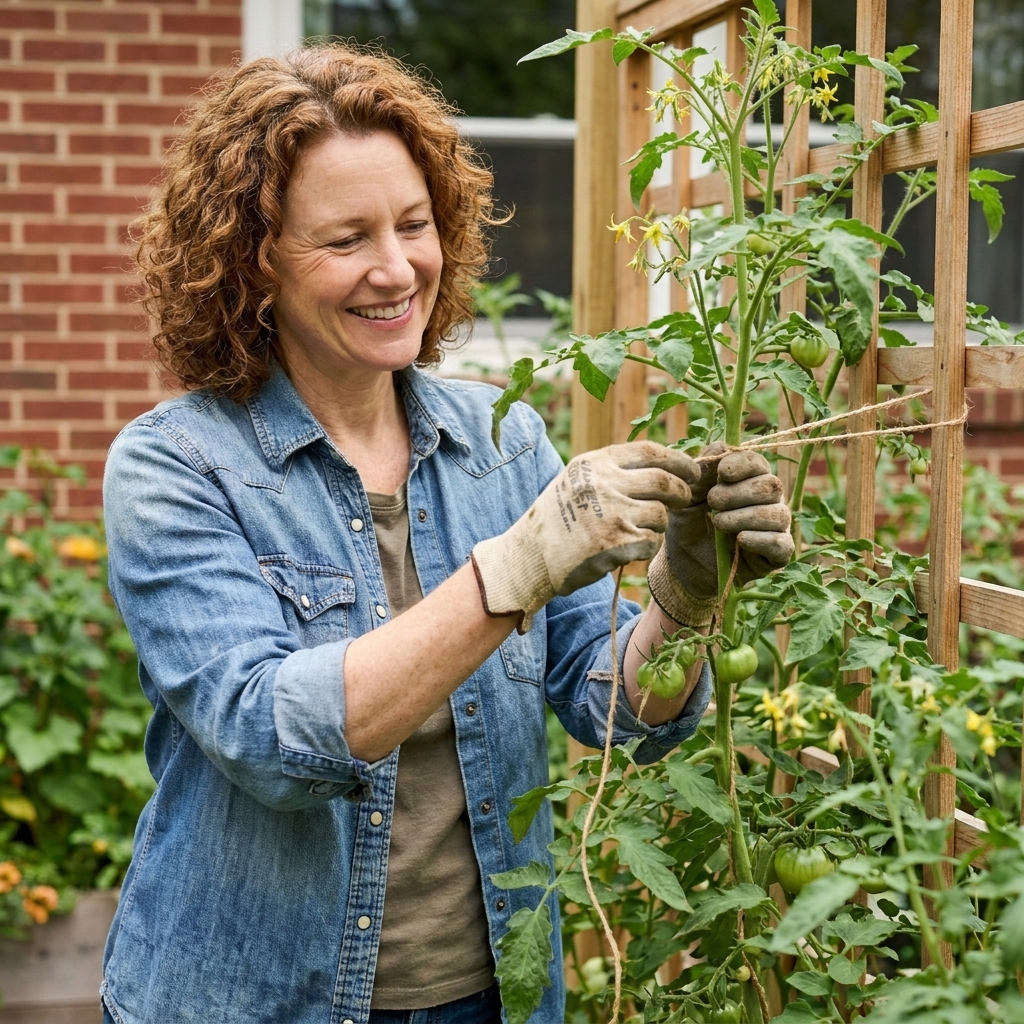
Pruning and training go together. After you remove suckers, gently re-tie the remaining leaders to your trellis or cage so the plant is supported and vertical.
Use soft ties and avoid tight knots. Tomato stems thicken quickly, and a tight tie can girdle a vine.
How often to prune (a simple schedule)
In peak summer growth, indeterminate tomatoes can pop new suckers faster than you can say “BLT.” The good news is you do not need to obsess daily.
- Check plants once or twice a week for new suckers.
- Do quick pinch pruning while suckers are small.
- Limit heavy pruning to a light session every week or two.
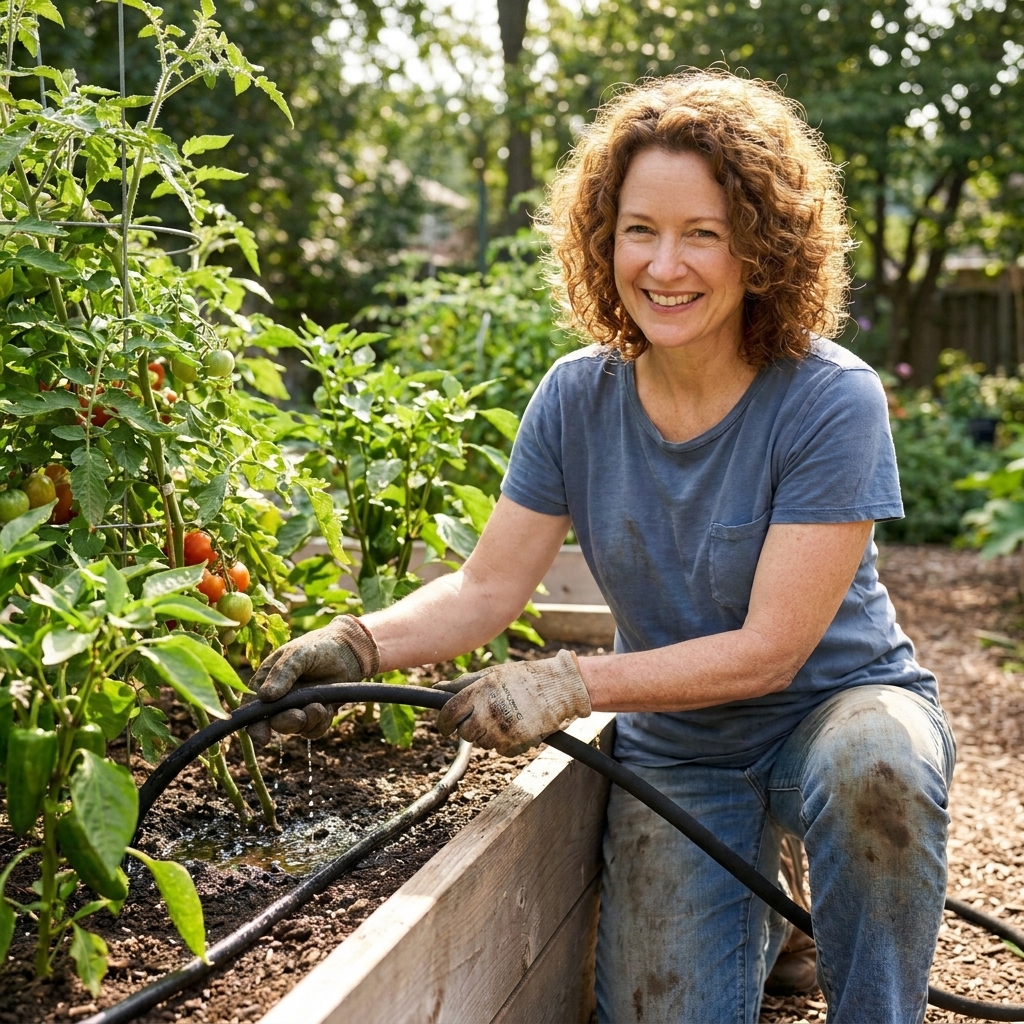
I like to pair pruning with my regular trellis check. I walk the bed, tie what needs tying, pinch what needs pinching, then water. It becomes a calm little routine.
Where to stop: topping late in the season
Indeterminate tomatoes will keep trying to make new flowers even when you are running out of warm days. Late in the season, it can help to top the plant so it focuses on ripening what it already has.
When to top: About 4 to 6 weeks before your expected first frost.
How to top:
- Find the highest point you want the plant to continue.
- Locate a leaf node above the last good flower cluster you want to keep.
- Cut the growing tip off just above that node.
This is especially helpful for larger-fruited varieties that need more time to finish.
Common pruning mistakes (and what to do instead)
Removing too many leaves at once
Leaves power your harvest. If you strip too much foliage, fruit can get sunscald and plants can stall.
Instead: Aim for gradual pruning. A helpful rule of thumb is to avoid removing more than 20 to 30 percent of the plant’s foliage in one session.
Pruning determinates like indeterminates
Determinate tomatoes do a lot of their fruiting on growth you might be tempted to remove, and they do not keep replacing it forever.
Instead: On determinates, focus on removing diseased leaves and any foliage touching the soil.
Letting suckers become thick branches
Big suckers are harder to remove cleanly, and removing them creates a larger wound.
Instead: Pinch early and often. It is faster and gentler.
Pruning during wet conditions
Moisture helps diseases spread, and fresh cuts are vulnerable.
Instead: Prune when plants are dry, ideally in the morning so cuts dry quickly.
Two pruning approaches gardeners swear by
Missouri pruning (a gentler option)
If you want more foliage to protect fruit from harsh sun but still want airflow, try a compromise called Missouri pruning.
How it works: Instead of removing the whole sucker, pinch the tip off and leave one or two leaflets behind. This reduces the sucker’s vigor while keeping some leaf cover.
This can be handy in very hot climates where sunscald is a constant threat.
Strict single-leader pruning (maximum control)
This is the tidy, high-airflow method used in many intensive gardens.
- Train one main stem up a trellis.
- Remove all suckers consistently.
- Remove lower leaves as the plant grows upward.
It takes discipline, but it is wonderfully manageable in small spaces.
FAQ
Should I prune cherry tomatoes?
If they are indeterminate cherry tomatoes, light pruning helps a lot because they can turn into a thicket. I usually keep cherries to two or three stems and prioritize removing lower leaves for airflow. That said, if you have plenty of space and a big sturdy support, some vigorous cherries can still produce well with minimal pruning as long as airflow stays decent.
What if I accidentally removed a flower cluster?
It happens. The plant will make more flowers. Focus on good watering, consistent feeding, and steady training so the next clusters develop well.
Do I prune above or below a flower cluster?
When topping late season, cut above the last cluster you want to keep so the plant directs energy into ripening it. For sucker removal, remove the sucker at its base where it emerges.
Is pruning enough to prevent blight?
Pruning helps by improving airflow and drying leaves faster, but it is not a magic shield. Combine pruning with watering at the base, mulching, spacing plants properly, and removing diseased leaves promptly.
My simple pruning routine for raised beds
If you want the least complicated path to excellent yields, here is the routine I use most summers:
- Plant indeterminate tomatoes 18 to 24 inches apart with a sturdy trellis.
- Train to two main stems.
- Pinch suckers weekly while they are small.
- Remove leaves touching soil, then keep the bottom 8 to 12 inches clear (or a little more leafy in brutal sun).
- Re-tie leaders as they grow.
- Top plants 4 to 6 weeks before frost.
If you do need to remove diseased leaves, do not toss them in the compost. Bag them or trash them so you are not saving problems for next season.
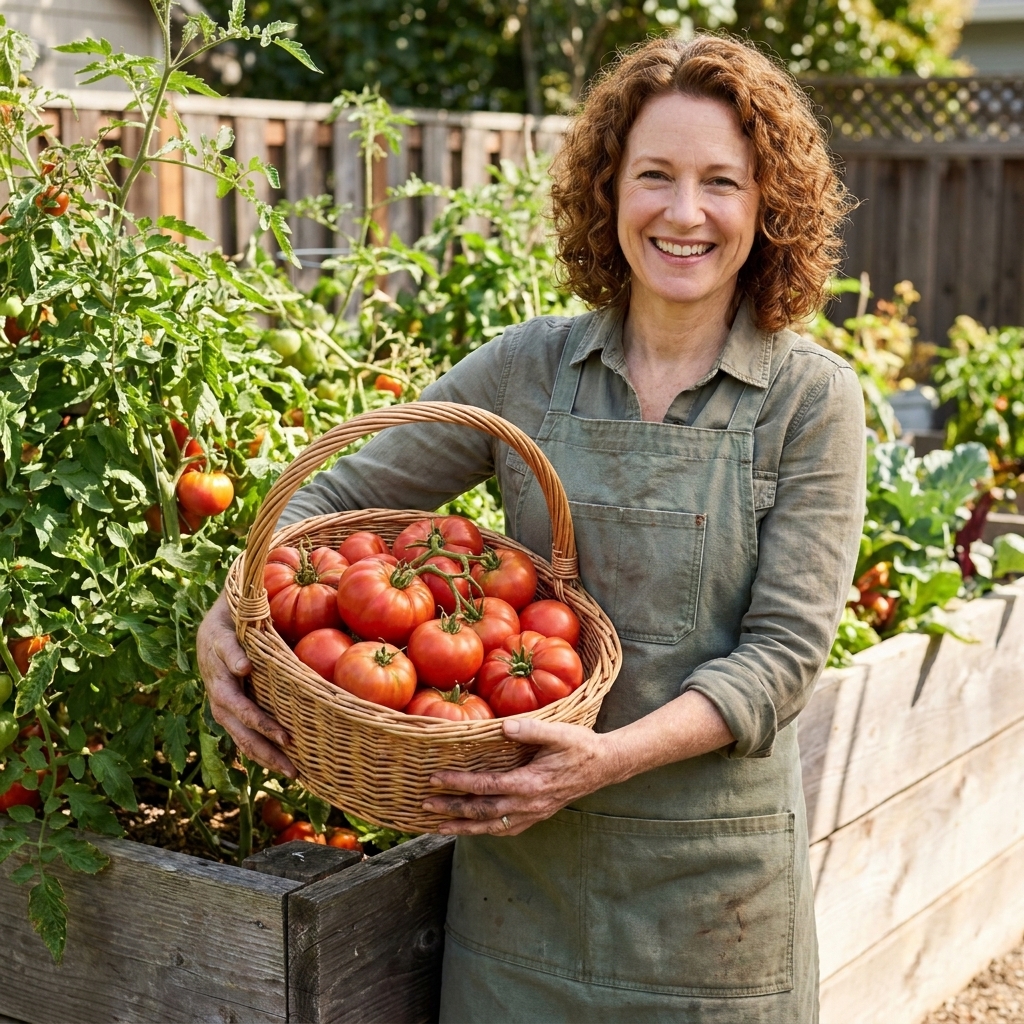
That is it. No perfection required. Tomatoes are surprisingly forgiving, and every season you will get a little better at spotting suckers before they become a whole new vine. Your future self, standing in the sunshine with a basket of ripe tomatoes, will be very grateful you took ten minutes to prune today.